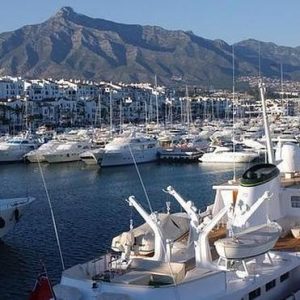
Puerto Banús is Marbella’s upmarket seaside resort, situated 6 km from the town centre, right on the Costa del Sol. It was opened in 1970 by the developer José Banús, and today it is one of the most popular spots on the Málaga coast thanks to its marina, its fashion boutiques and its seaside atmosphere. In this guide, we take a look at what to see in Puerto Banús, where to shop, its beaches, where to eat and the nightlife.
There is one detail that explains its appearance: the architect Noldi Schreck He suggested to José Banús that, instead of building skyscrapers overlooking the sea, he should build something that looked like an Andalusian village. Banús agreed, and that is where the whitewashed houses, the tiled roofs and the narrow streets surrounding the moorings come from. The harbour has been declared Centre of National Tourist Interest and has been awarded the Gold Medal for Merit in Tourism.
Puerto Banús is easy to explore on foot in a couple of hours, making it a convenient stop on a day trip to the area. In fact, it forms part of the day trip to Marbella and Mijas, which includes hotel pick-up and your own guide, so you don’t have to worry about transport or parking.
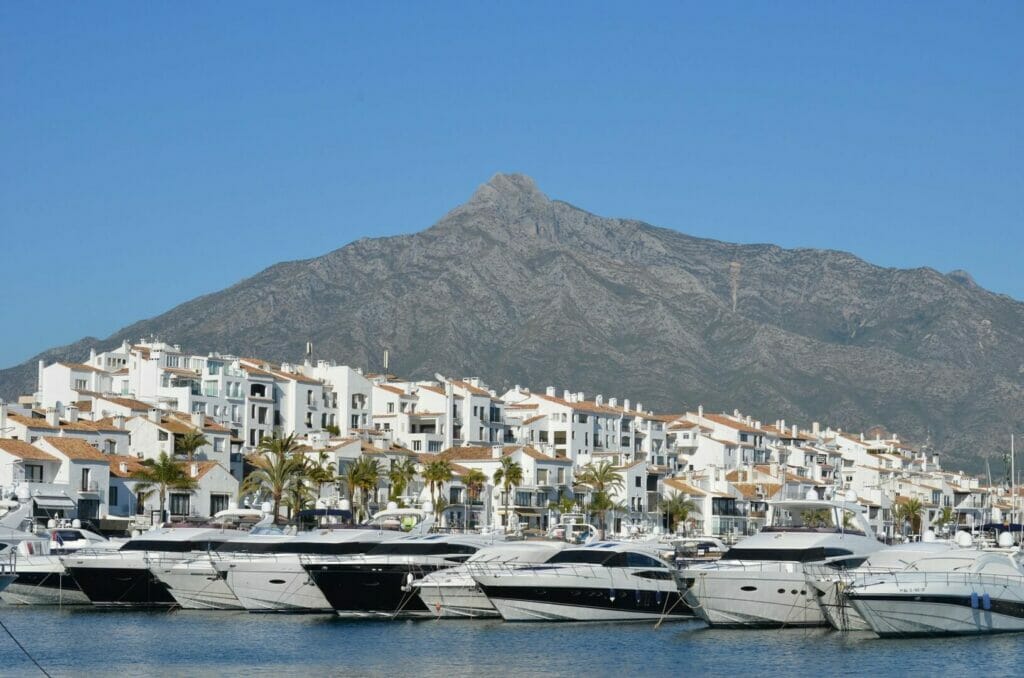
The harbour area brings together its main attractions within a small space. These are the places well worth seeing as you stroll around.
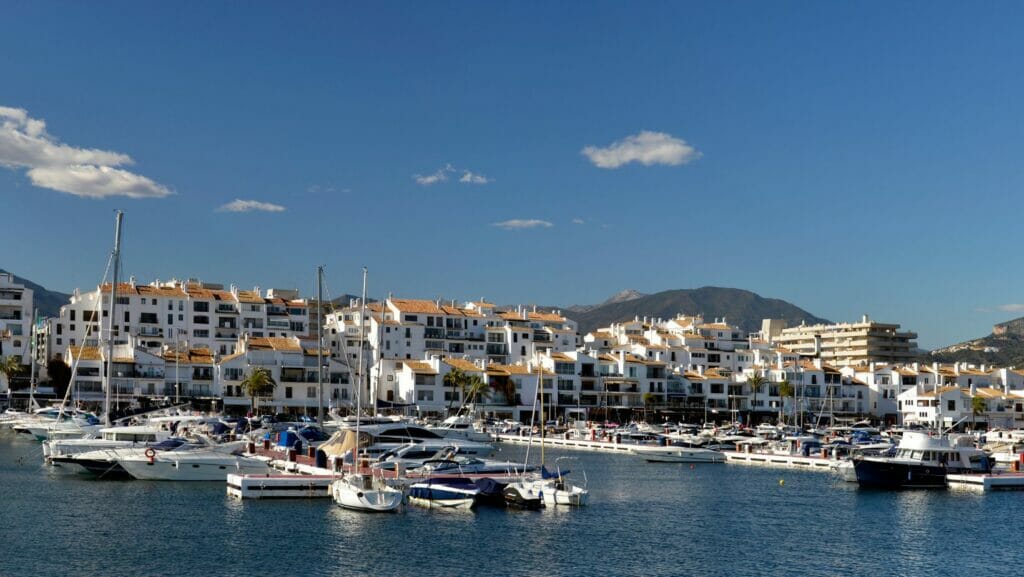
José Banús Avenue is the main thoroughfare running alongside the harbour, and it is here that the Walk of Fame, also known as the Walk of Fame. These are tiles shaped like starfish set into the ground, in an obvious nod to the Hollywood Walk of Fame.
Each star pays tribute to artists, sportspeople and other figures who have helped to promote Marbella both within and outside Spain. You can hop from one to the next, looking out for names such as Antonio Banderas, Julio Iglesias, Carmen Sevilla, Alejandro Sanz, Carmen Thyssen, Los del Río, Vicente del Bosque or the chef Dani Garcia. This is the usual place to start the walk and where most of the terraces with views of the boats are concentrated.
The José Banús marina is the heart of the area, and a stroll along its jetties is an experience in itself: a visual spectacle of yachts and luxury cars, making it one of the most sought-after moorings in the Mediterranean.
It’s well worth exploring the Alberto Vidiella Tudores seafront promenade, which is named after the former chairman of the marina and runs from the wooden footbridge at the Río Verde as far as the roundabout next to the harbour. From the Puerto Banús bridge, you can continue walking towards the centre of Marbella. At the end of the Benabola pier is the Control Tower, which, together with the Club del Mar, forms the harbour’s most distinctive architectural ensemble; and very close by there is a small chapel dedicated to Our Lady of Mount Carmel, patron saint of sailors.
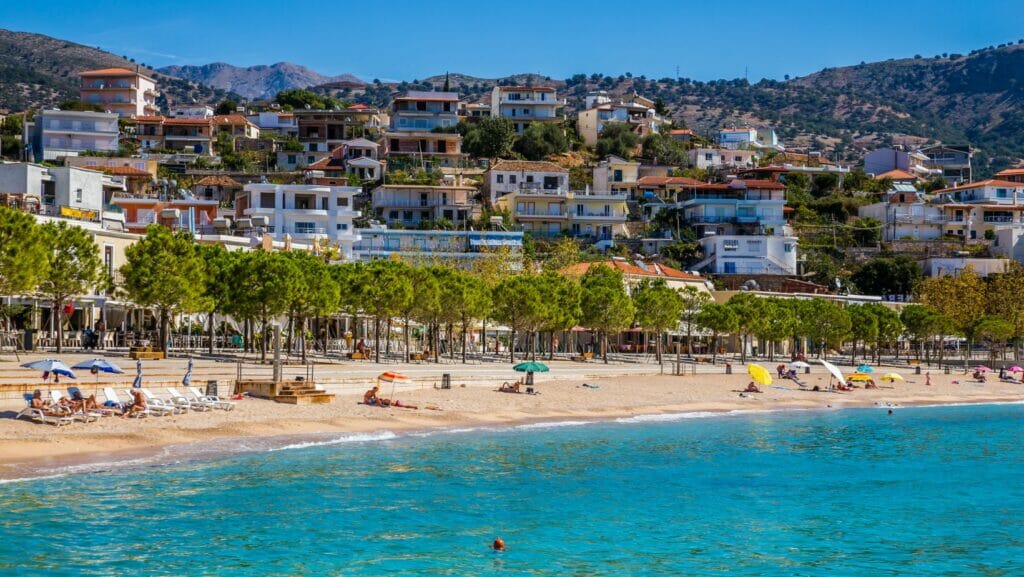
Next to the harbour, at the mouth of the Río Verde, lies Puerto Banús beach, also known as Río Verde beach. It is a semi-urban beach in golden sand, with around 1,500 metres long and 40 metres wide, and it looks blue flag, the award granted by the European Foundation for Environmental Education.
It has sun loungers, parasols and beach bars, with a family-friendly and relaxed atmosphere, and is just a few minutes’ walk from the restaurant area. If you’d like to compare it with the rest of the Marbella coastline, you can check out our guide to the best beaches in Marbella and Puerto Banús.
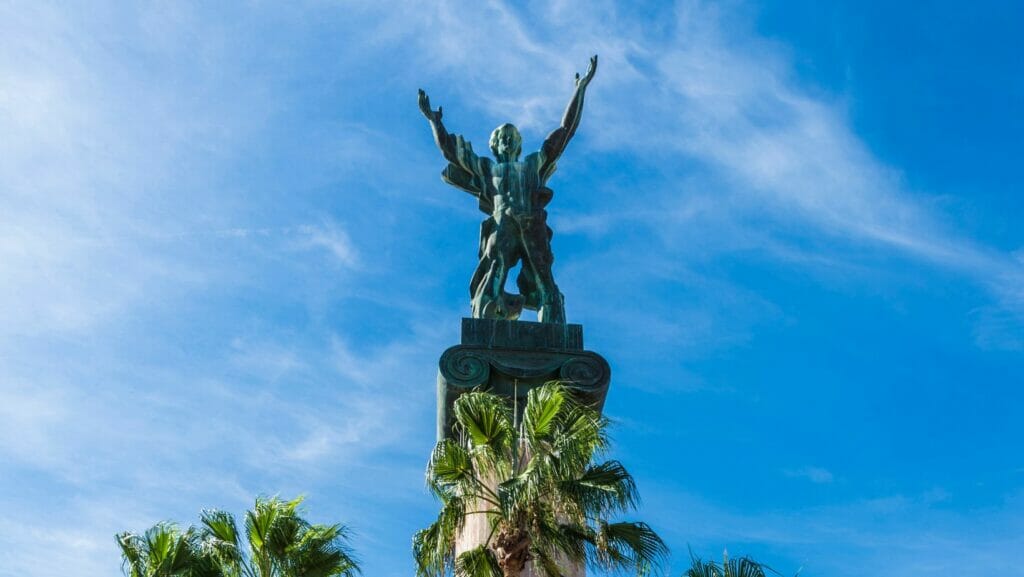
It stands at the roundabout where Avenida de Julio Iglesias meets Avenida de las Naciones Unidas La Victoria: a column of more than 30 metres topped by the figure of a man with his arms outstretched, gazing out to sea. It is the work of a Russian sculptor of Georgian origin Zurab Tsereteli, known for his large-scale monuments scattered across Russia, Europe, Israel and the United States.
In Marbella, however, nobody calls it by its official name: here it is «the statue of the Russian». If you ask about La Victoria, probably no one will know what you’re on about; if you ask about the statue of the Russian, anyone will be able to point you in the right direction.
Puerto Banús has more sculptures than you might think, and two of them are easily overlooked. The first is the «Rhinoceros Dressed in Lace» by Salvador Dalí: a bronze sculpture that the painter created in 1956, following the filming of his surrealist film about the lacemaker and the rhinoceros, and who settled in the port in 2004. Yes, there is a Dalí in Puerto Banús.
The second is the Statue of the Mermaid, hand-carved from marble and granite by Antonio Cañete, at the end of Avenida de las Naciones Unidas, right where the promenade connecting Puerto Banús with Marbella begins. Scattered throughout the area are also statues dedicated to Lola Flores, to Pilar Calvo — José Banús’s wife — and a bust of Don Juan de Borbón.
Marbella Town Council named this avenue after the singer in 2002, in recognition of their work in promoting the city internationally. And there is an additional reason: Julio Iglesias sang at the port’s opening ceremony in 1970. The avenue links the harbour to the beach, is home to some of the nightlife venues and ends at the La Victoria roundabout. It has also been used as a filming location.
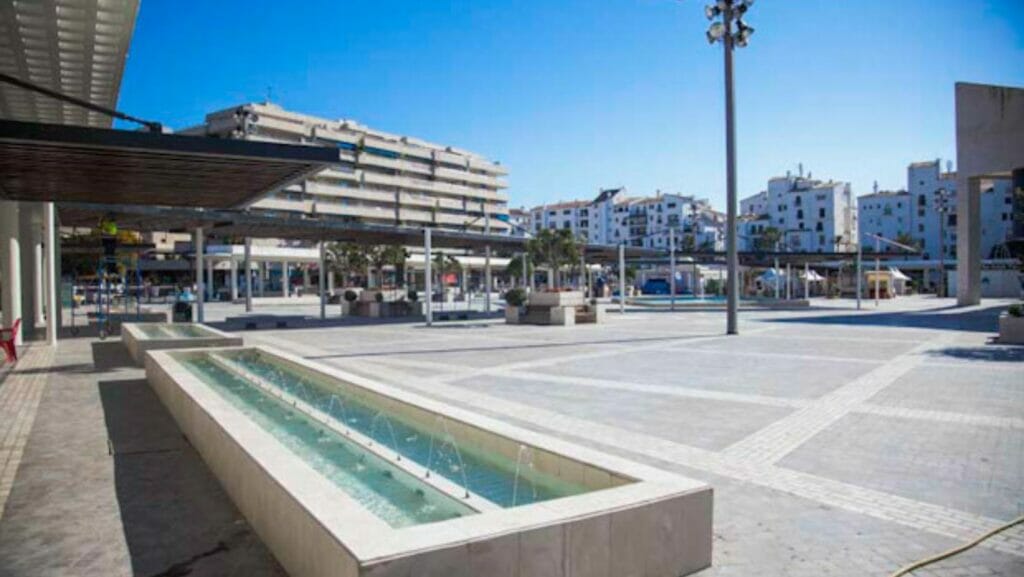
Right in the heart of Puerto Banús, this open square with palm trees and terraces is best known for hosting the International Craft Fair during the summer months, with a street market where you can find necklaces, bracelets and a variety of handicrafts. It’s a quiet spot to sit, especially early in the morning, and a good landmark to help you find your way around the site.
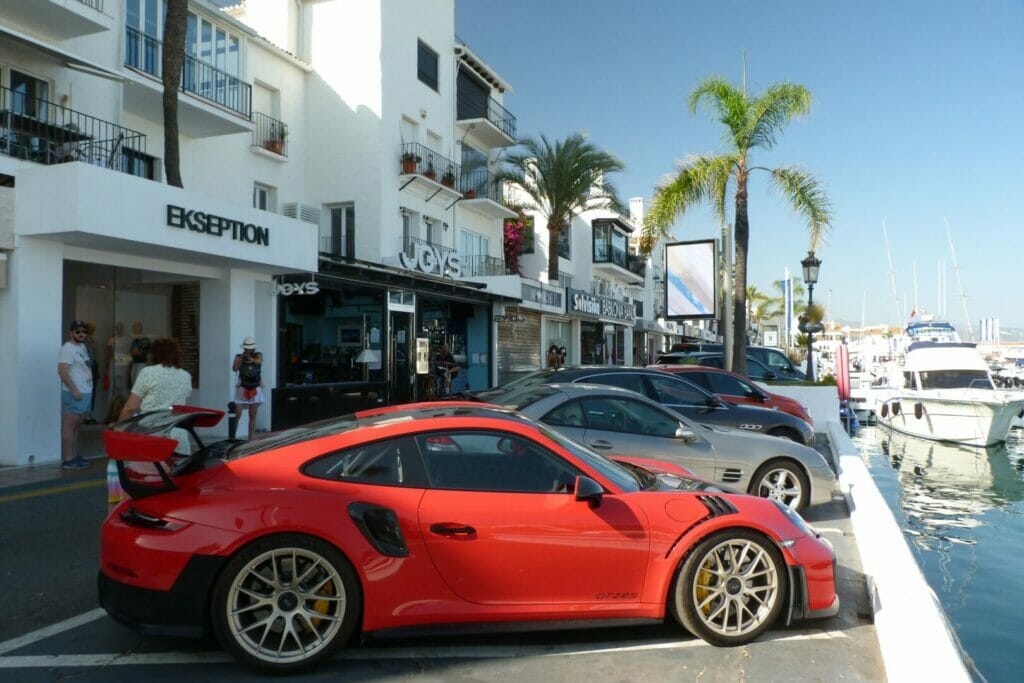
Puerto Banús is a leading shopping destination on the Costa del Sol and is home to some of the world’s most prestigious fashion brands. The main street is Ribera Quay, at the foot of the harbour, where you’ll find shop windows displaying brands such as Dior, Gucci or Dolce & Gabbana, alongside jewellers and boutiques selling accessories and home décor.
In addition to these, there are two shopping centres just a few metres from the port: El Corte Inglés y Marina Banús, featuring fashion, perfumeries and a supermarket. Combining the boutiques on the quay with the shopping centres means you can find both luxury brands and everyday shopping all in one outing.
A distinctive feature of the area: many shops offer personal shopper service to offer advice on trends, a service that’s in high demand here.
The range of dining options is extensive and very international: within a short radius you’ll find Lebanese, Italian, Belgian, Mexican, Japanese and American cuisine, as well as fish and seafood restaurants and rice speciality restaurants with terraces overlooking the harbour.
Three specific examples to help guide you. The Rosas Café It is one of the most photographed spots in the harbour, famous for its mural of 35,000 roses, and ideal for breakfast at any time of day. For local produce, La Bocana They serve the typical Malaga-style fried dish. And if you’re looking for haute cuisine, the DOM Restaurant It uses only locally sourced ingredients, and Marbella is home to the Michelin-starred restaurants of Dani Garcia.
If you’re looking for a peaceful atmosphere, the terraces in Plaza Antonio Banderas and the beach area are usually quieter than the harbour front. It’s advisable to book in advance during peak season and at weekends.
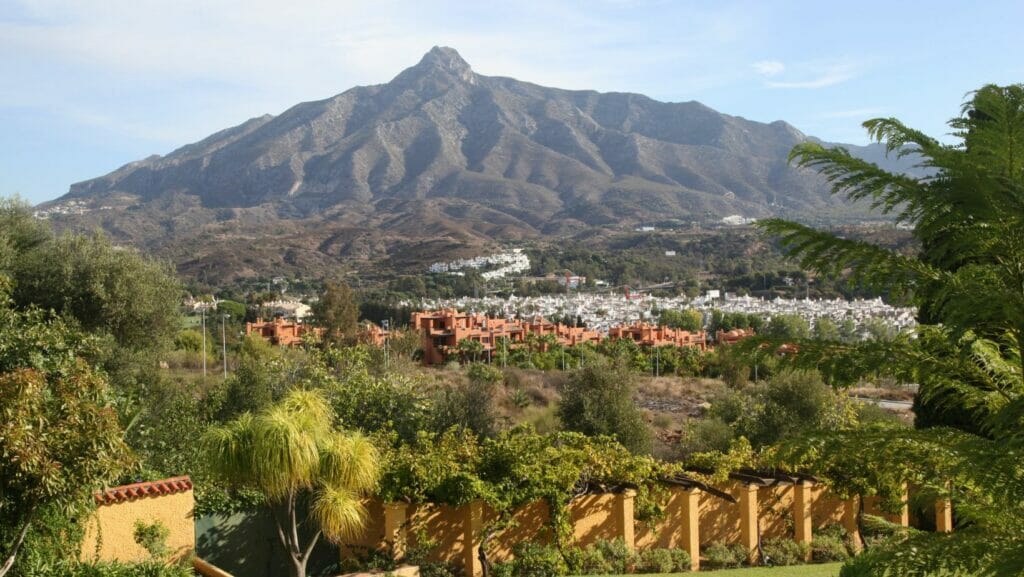
The coastal setting makes it possible to enjoy water sports for much of the year. On the Blue Flag beaches in the area, it is common to see parasailing, pedalos, kayaking, stand-up paddleboarding and water skiing, with several companies offering equipment and courses.
Another item in high demand is the yacht and boat hire to explore the Costa del Sol from the sea, many of which offer music, drinks and catering on board. And on land, as well as racket sports, the main attraction is the golf: the Nueva Andalucía area, the so-called Golden Triangle, is home to some of Europe’s finest golf courses, just a few minutes from the port.
It is advisable to book activities with authorised operators and to check the timetables depending on the time of year.
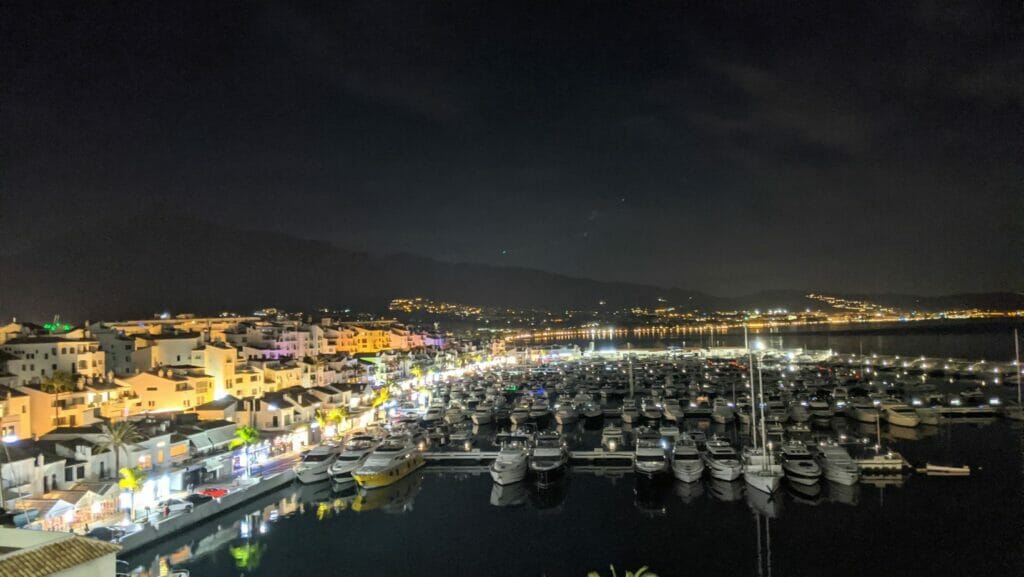
Nightlife is one of the hallmarks of Puerto Banús. As evening falls, the terraces give way to cocktail bars, music venues and nightclubs, many of which are concentrated along Avenida de Julio Iglesias and around the harbour. Here are some of the best-known venues:
The options range from relaxed seaside venues to bars that stay open until the early hours. In summer, the action goes on for longer, so it’s a good idea to check each venue’s programme.
Throughout the year, Puerto Banús hosts events that bring the area to life: regattas and sailing gatherings in the harbour, exhibitions of luxury cars, fashion shows and the International Craft Fair in Plaza Antonio Banderas in the summer, as well as activities during local festivals. The programme varies from month to month, so it’s worth checking the official Marbella calendar and the venues’ own schedules before your visit.
Puerto Banús is a good starting point for exploring the rest of the area. The old town of is 6 km away Marbella, with its Plaza de los Naranjos and pedestrianised streets; you can plan your day with our guide to What to see in Marbella in a day or with the 10 must-sees in Marbella.
Very close to the harbour, in Nueva Andalucía, is the King Abdulaziz Mosque, one of the most distinctive buildings in the municipality. And if you’d like to extend your exploration to the white villages and other attractions in the region, take a look at our selection of what to see near Marbella.
Puerto Banús is about 6 km from the centre of Marbella, within the same municipal area. By car, it can be reached via the A-7 and takes about 10–15 minutes from Marbella; the area has pay-and-display underground car parks next to the harbour and El Corte Inglés.
By bus, the local routes connecting Marbella with San Pedro de Alcántara stop near the harbour. And from Marbella, you can even walk there along the seafront promenade, crossing the Puerto Banús bridge. Another option is to join an organised day trip with hotel pick-up, which saves you the hassle of finding a parking space during the high season.
We recommend making the most of the day trip to Marbella and Mijas from Málaga and the Costa del Sol so you don’t miss a thing when it comes to what to visit and what to do in Puerto Banús:
If you’re staying in the Marbella and Puerto Banús area and would like to explore other parts of Andalusia, here are the day trips available with a pick-up point nearby:
In a single day, you can stroll along Avenida José Banús and the Paseo de las Estrellas, wander along the jetties at the marina to see the yachts, look out for Dalí’s ‘Rhinoceros’ and the ‘La Victoria’ sculpture, go shopping on Calle Muelle Ribera and have a meal at one of the waterfront restaurants. If it gets late, Río Verde beach and the outdoor terraces are the perfect way to round off the day. This itinerary goes well with a visit to Marbella town centre, 6 km away.
Puerto Banús is about 6 km from the centre of Marbella. By car, it takes about 10–15 minutes via the A-7; by city bus, the routes connecting Marbella with San Pedro de Alcántara stop near the port. You can also walk there along the seafront promenade, or join an organised tour with hotel pick-up.
Puerto Banús has several pay-and-display underground car parks scattered around the harbour area and next to El Corte Inglés. During the high season, it’s best to arrive early, as there are only a limited number of above-ground parking spaces. Leaving your car in a car park and getting around on foot is the most convenient option.
Next to the harbour is Puerto Banús beach, also known as Río Verde beach: a semi-urban beach with golden sand, some 1,500 metres long, with a Blue Flag, sun loungers and beach bars. A short distance away are the beaches of Nueva Andalucía and, towards San Pedro de Alcántara, wider stretches of sand.
La Victoria is the work of the Russian sculptor of Georgian origin, Zurab Tsereteli. It is a column over 30 metres tall, crowned by the figure of a man with outstretched arms, situated at the roundabout where Avenida de Julio Iglesias meets Avenida de las Naciones Unidas. In Marbella, it is popularly known as «the Russian statue».
Because that is how it was designed. The architect Noldi Schreck suggested to the developer José Banús that, rather than building skyscrapers overlooking the sea, he should construct a development that resembled an Andalusian village. Hence the whitewashed houses, the tiled roofs and the narrow streets surrounding the moorings, which were opened in 1970.