Setenil has 2,700 inhabitants and more history per square metre than almost any other village in the mountains.
Ten things which explain why, giving specific names, dates and streets.
That’s where the name comes from. From Latin septem nihil, «seven times nothing», referring to the seven Christian settlements that failed.
It began with John II of Castile in 1402 and it didn’t fall until the 21 September 1484, by the time of the Catholic Monarchs: eighty-two years of attempts.
And this latest siege has a name: faced the Marquis of Cádiz against Abu al-Qasim ibn Muhammad al-Kurdi, governor of the Nasrid fortress.
Why it was so difficult: The village is nestled in the river gorge, and the fortress was renowned for impregnable. Its fall, together with that of Álora, changed the course of the War of Granada.
«De las Bodegas» is not merely decorative. The caves and tunnels in the gorge, which maintain a stable temperature all year round, were used for centuries such as wineries.
It was phylloxera that destroyed the vineyard, the insect that ravaged Spain’s vineyards in the late 19th century. The crops were replaced by olive trees and cereals, but the name remained.
And there’s one last nod: local wine «7,000 Steps» refers to to seven thousand, «seven Roman miles», in homage to the vineyard’s origins.
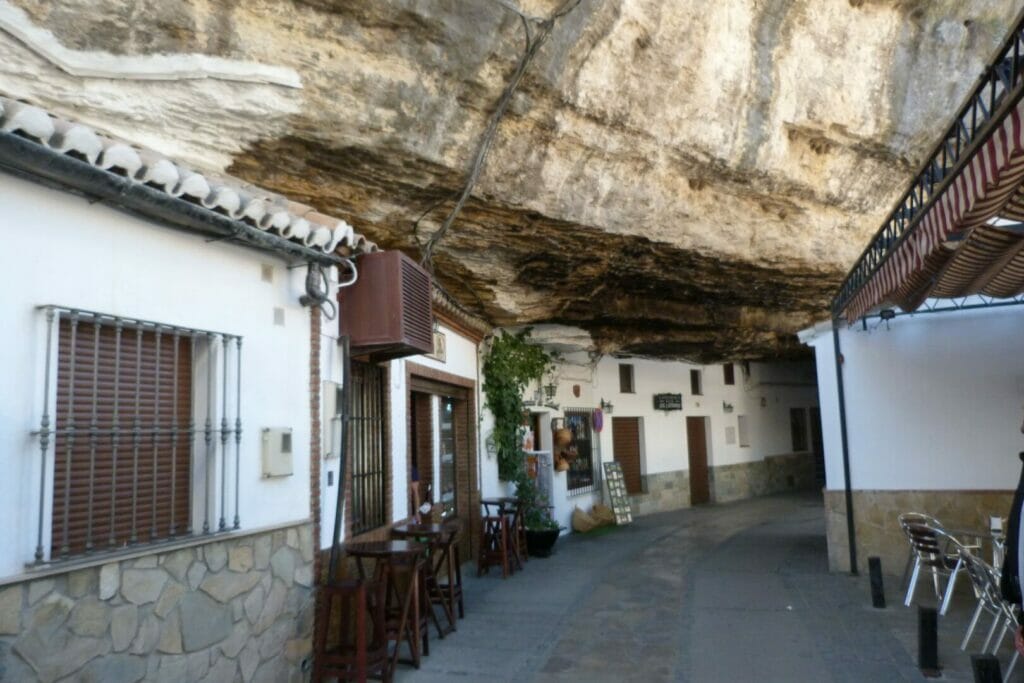
This is the most common misunderstanding. They are not cave dwellings carved out of the rock: the neighbours covered the natural shelters with a façade which the river had carved out in the gorge. The rock is the roof, not the play.
The technical term is «semi-troglodyte», and the architecture is known as «shelter beneath the rocks».
And it works: generates a natural microclimate which keeps the interior cool in summer and warm in winter.
The river has two names, just in case you get confused: Guadalporcún, also known as Trejo River. It’s the same one.
The oldest surviving house It is in the neighbourhood of Saint Benedict, next to its chapel, and dates from the XVIth century.
Following the conquest, Setenil came under the jurisdiction of Ronda, and he didn’t like it.
The village had a significance all of its own: church, hospital and even a seminary, something not all the residents of the mountainous region could say. After numerous lawsuits, gained independence by a royal decree signed in 1630.
Before that, during the Muslim period, the fortress was called Xatanil and was part of the Cora of Takurunna, with its head office in Ronda.
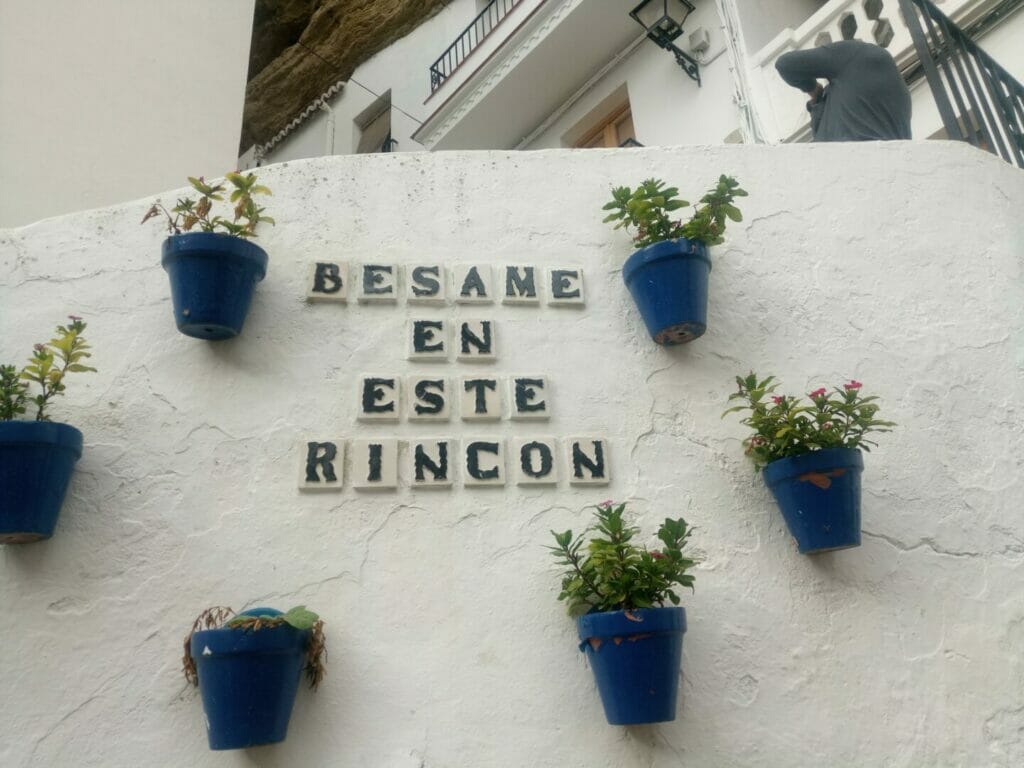
Look for it on Calle Herrería. There’s a wall with that phrase painted on it, and it reads the spot where all the couples have their photo taken.
And there is a legend that gives it depth: It is said that Isabel la Católica gave birth to a boy during the siege, who died a few hours later. His name was Sebastián, and that is why the village’s first church was dedicated to San Sebastián, now the patron saint of Setenil.
Cabrerizas Street is featured on television. That’s where the episode was filmed «The Servant of Justice» from Curro Jiménez, the TVE series which was broadcast between 1976 and 1979 starring Sancho Gracia, Pepe Sancho and Álvaro de Luna.
And that wasn’t the only film shoot: the film «La Sabina», by José Luis Borau, used the Jabonería Street.
There is no certainty as to the origin of the street’s name: some say there used to be a soap factory there, whilst others say that women used to go down there to wash their clothes.
A bit of background: The village has its origins in a farming and livestock settlement following the decline of Acinipo, in the 4th century. The route literally links the past with the present.
Our Lady of Mount Carmel is the patron saint of sailors, and here it has its own chapel at 640 metres above sea level and a long way from the sea.
The explanation is a promise: in the 17th century, the the Cabrales brothers they got into serious trouble on a trip to America and They promised that, if they returned alive, they would build a chapel for him. They came back and built it.
It’s nothing like it looks: are the two brotherhoods of the Holy Week in Setenil, declared an Event of Tourist Interest.
And this rivalry has a specific focus: marching bands that accompany each image. That’s where prestige comes into play.
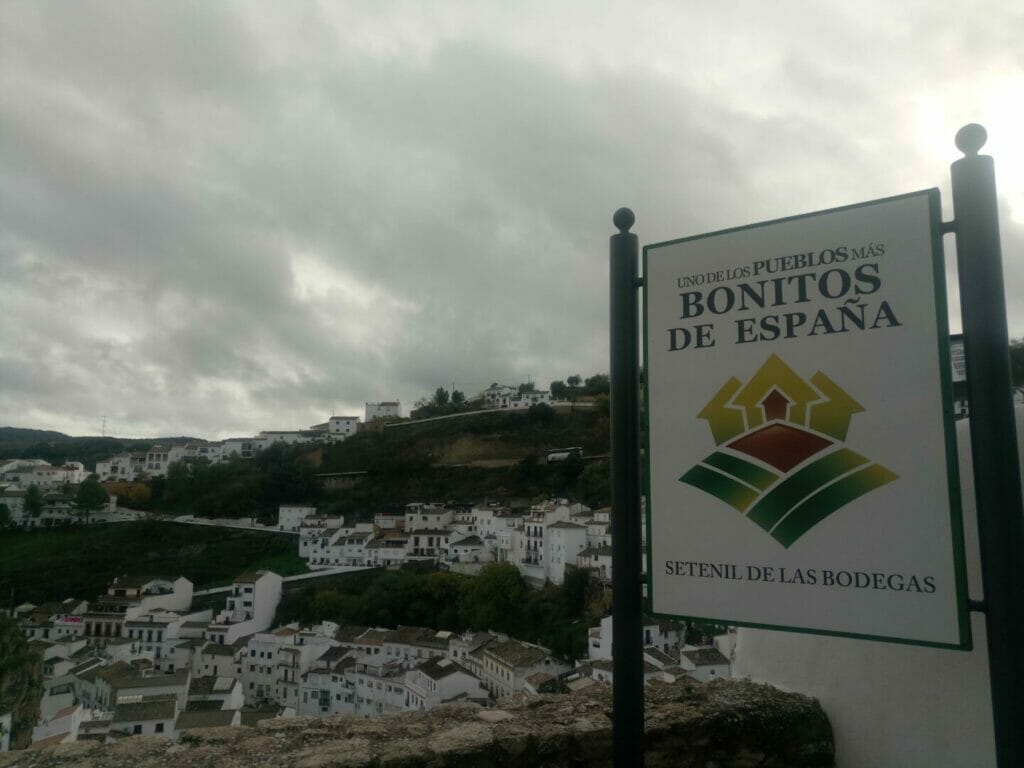
Two awards: at 2019 entered the Association of the Most Beautiful Villages of Spain, y European Best Destinations chose him Europe’s best-kept secret destination.
The whole «secret» thing no longer holds water: It is one of the most popular ‘white villages’, and during the high season the Cuevas del Sol are packed.
Three mountain dishes that really are from here:
And for breakfast, breakfast in Setenil.
You can walk around the town centre in a few hours: It leads down from the castle to the river gorge, so it’s all downhill on the way there.
The essentials: the streets Caves of the Sun y Cuevas de la Sombra Street, the Keep —from the 13th century—, the Church of the Incarnation and the San Sebastián Chapel.
The full itinerary, at What to see in Setenil de las Bodegas and in the village guide.
We are a local tour operator based in Málaga with over 50 years’ experience organising trips around Andalusia. Setenil is 18 kilometres from Ronda, so it’s normal to do both on the same day:
With pick-ups in Málaga and on the Costa del Sol. The other villages in the mountains, in The White Villages Route from Ronda, and the starting point of the route is at What to see in Ronda y the New Bridge.
«Setenil» derives from the Latin septem nihil, «seven times nothing», in reference to the seven Christian sieges that failed prior to the conquest of 1484. The surname «de las Bodegas» alludes to the area’s wine-growing past: the caves carved into the cliff face, with their stable temperature, were used for centuries as wine cellars. Phylloxera wiped out the vineyard in the late 19th century, but the name has remained.
No, and that is the most common misconception. The locals built a façade to enclose the natural shelters that the River Guadalporcún —also known as the River Trejo— had carved out in the gorge, so that the rock acts as a roof. They are known as semi-troglodyte dwellings and their architecture as «shelter beneath the rocks». The result is a microclimate that keeps the interior cool in summer and mild in winter.
On 21 September 1484, during the seventh siege. Attempts to capture the city had begun in 1402 under John II of Castile, meaning that the resistance lasted eighty-two years. The final assault pitted the Marquis of Cádiz against Abu al-Qasim ibn Muhammad al-Kurdi, the governor of the Nasrid fortress, and its fall proved decisive in the War of Granada.
In 1630, by royal decree, following numerous legal disputes. Until then, the municipality had been incorporated into the jurisdiction of Ronda following the conquest of 1484, despite having its own church, hospital and seminary.
TVE’s series *Curro Jiménez* filmed the episode «El servidor de la justicia» on Calle Cabrerizas. José Luis Borau’s film *La Sabina* was also filmed there, on Calle Jabonería. The silhouette of the houses against the rock face has made this a recurring filming location.
Because in the 17th century, the Cabrales brothers, finding themselves in dire straits during a voyage to the Americas, vowed to build a chapel in her honour if they returned alive. They kept their promise, and so a village situated at an altitude of 640 metres and 157 kilometres from the coast came to have as its patron saint the traditional patron of sailors.