Jerez de la Frontera Within just a few kilometres, it brings together four hallmarks of Andalusia that are not found in any other city: the flamenco, the sherry wine, the classical horsemanship and the Motorcycle Grand Prix. It was founded by the Phoenicians over 3,000 years ago.
The historic centre is compact and can be explored on foot, so A well-organised day leaves time for the main things. And as Cádiz city centre is only half an hour away, you can combine the two into a single getaway.
The line-up that works:
Book in advance the winery and, if you’re interested, the show at the Royal School: both have fixed opening times and specific days. And do check the wineries’ closing times, as they don’t all coincide: we’ve set this out in detail in the best wineries in Jerez.
All of the following are within a short radius and can be reached on foot, except for La Cartuja, which is on the outskirts:
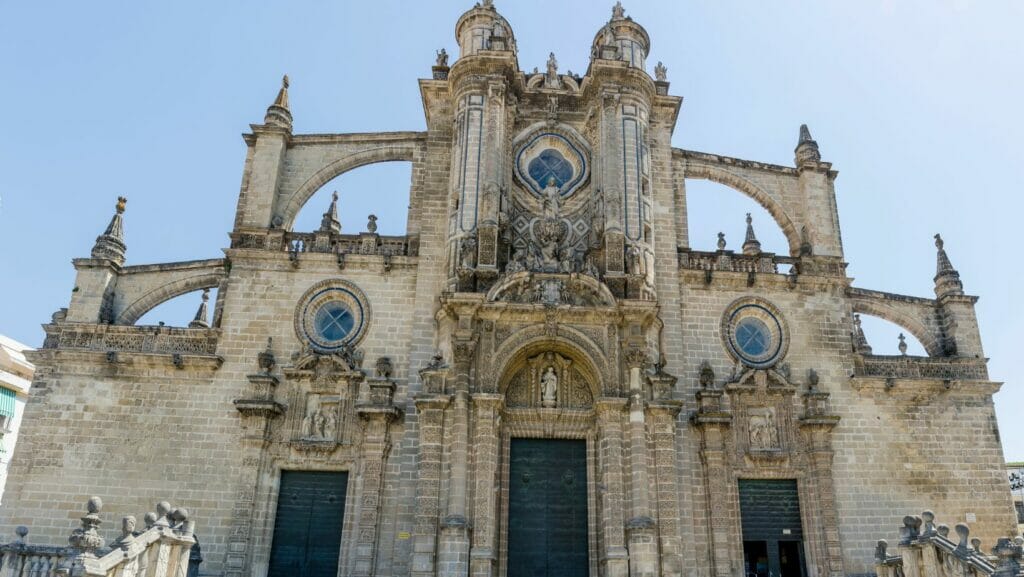
It stands on the site of the former collegiate church and blends Gothic, Baroque and Neoclassical, the result of two centuries of construction. Its most striking feature is the free-standing bell tower, separate from the mosque and built on the foundations of a former minaret.
Inside, there is a collection of sacred art and the Christ of La Viga, one of the city’s most revered sights. The very wide entrance staircase is one of the most photographed spots in Jerez.
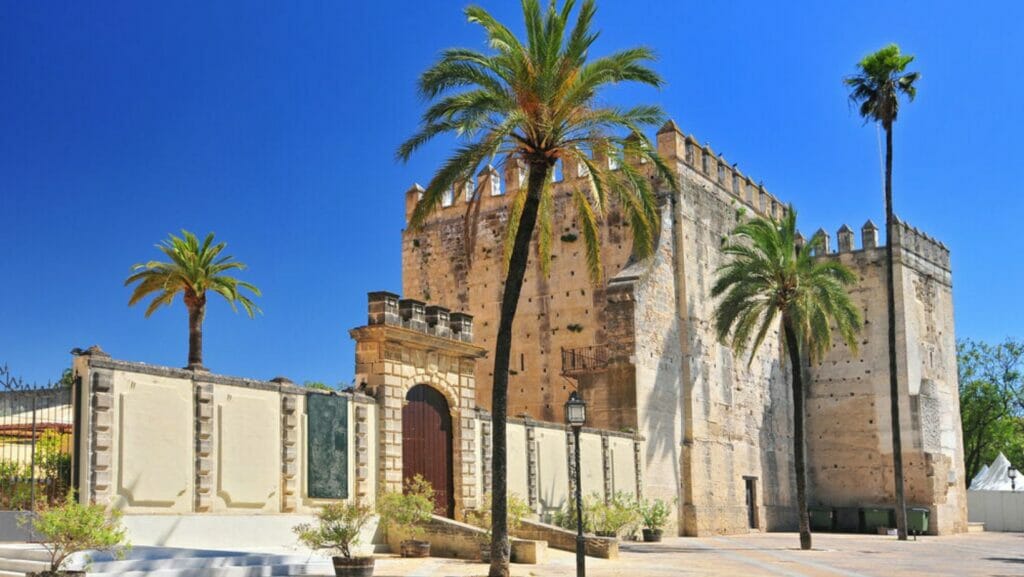
Place of origin Almohad, dating from the 12th century, and the complex that best illustrates Al-Andalus in Jerez. It still preserves the section of city wall, the towers, the Arabic baths and a a mosque converted into a chapel following the Christian conquest, with its mihrab still visible.
Don’t miss the camera obscura at the Palacio de Villavicencio: using a system of lenses and mirrors, it projects a live panoramic view of the historic centre. It’s the best way to get your bearings before setting off on a walk. And the gardens are modelled on an Islamic garden, with scents and water taking centre stage.
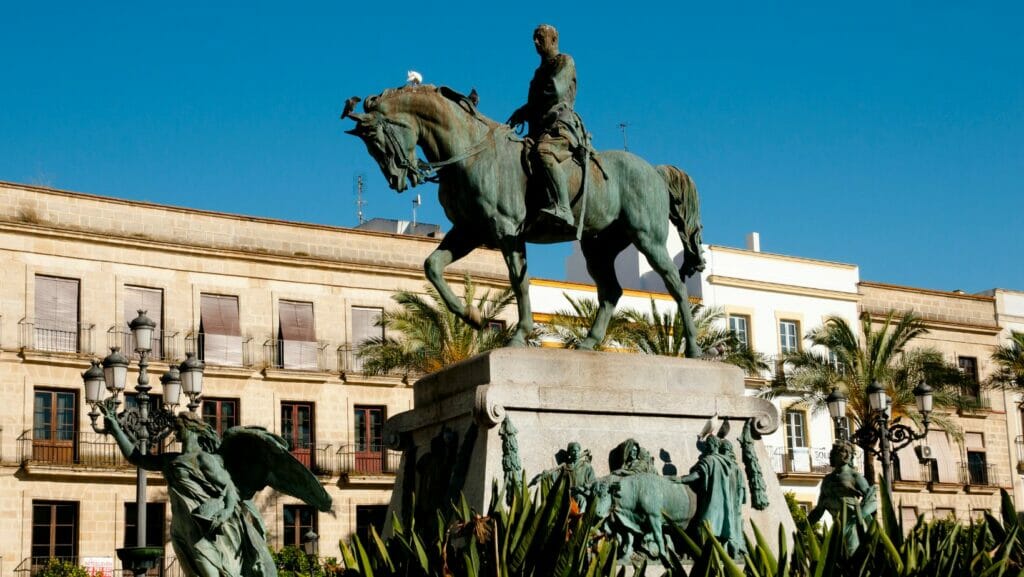
The Arenal Square It is the heart of Jerez, where markets, tournaments and festivities were once held. Today it is a spacious square with a fountain and the equestrian statue of Alfonso X «the Wise», surrounded by terraces, and the main pedestrian streets lead off from it.
Just a few minutes away is the Plaza de la Asunción, which is more intimate and, for many, the prettiest in the city: it brings together the former Renaissance town hall and the Church of St Dionysius, in the Mudejar style and dedicated to the patron saint of Jerez.
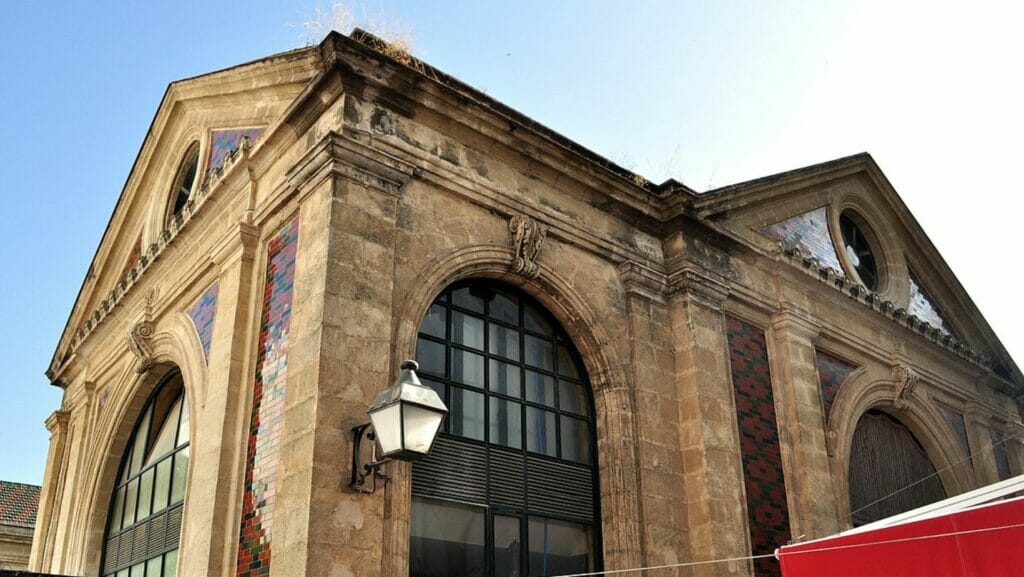
From here, you can walk to the Long Street, the main shopping and pedestrian street, and with the Central Market of Abastos, a good place to stop for some local food at lunchtime.
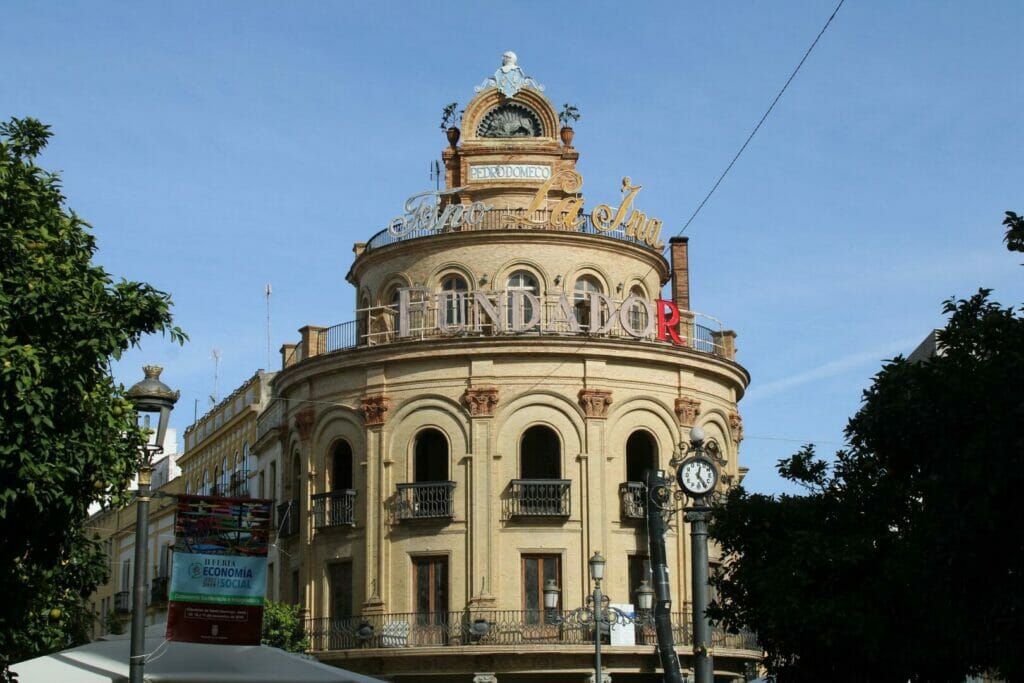
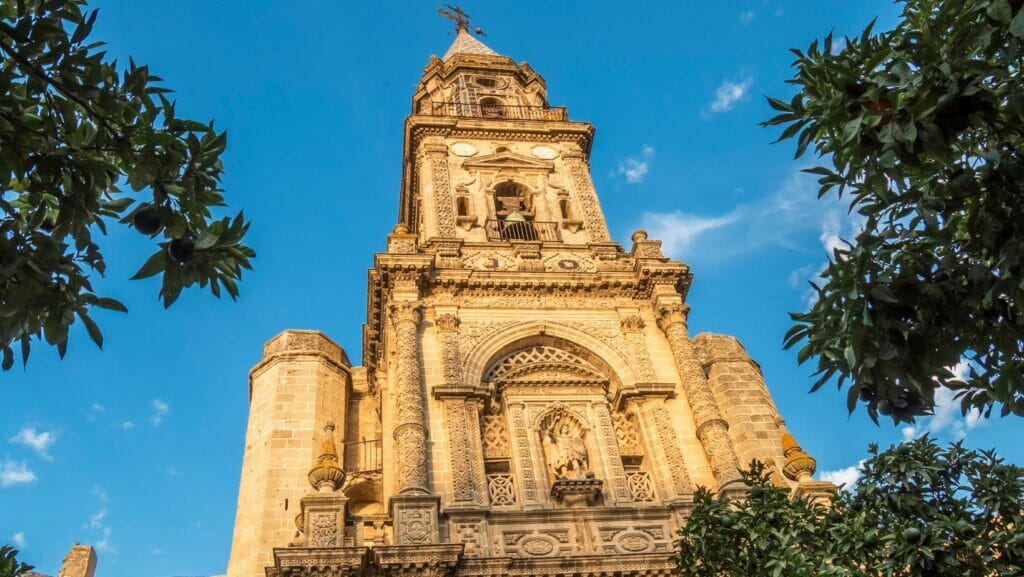
The Church of St Michael, next to Plaza del Arenal, is Gothic-Elizabethan and it has one of the most intricately carved façades in the city, as well as a highly valuable high altarpiece.
The Basilica of La Merced, Baroque, monstrance to the patron saint of Jerez, the Virgin of La Merced, and it’s a bit off the beaten track, which is a welcome change.
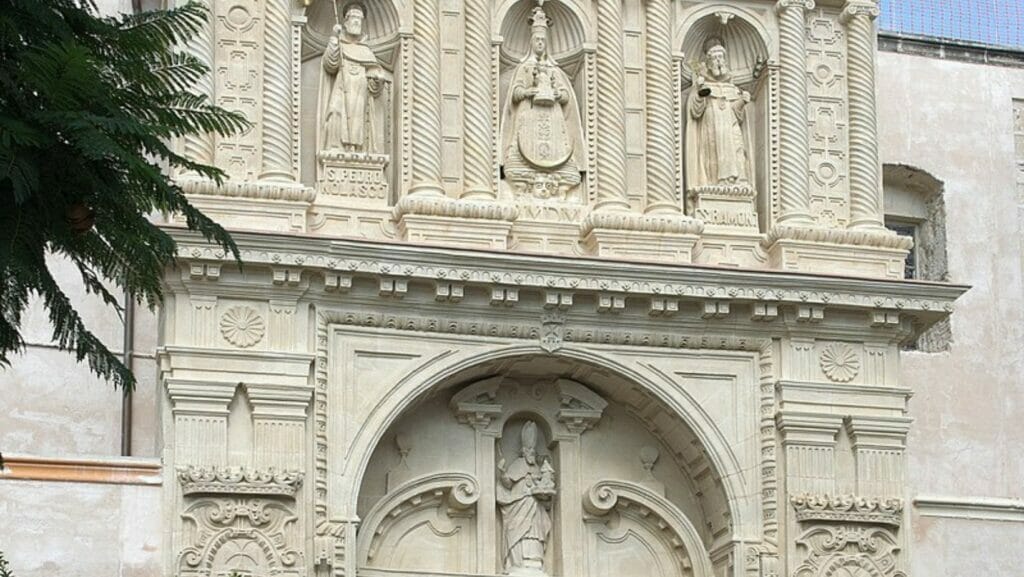
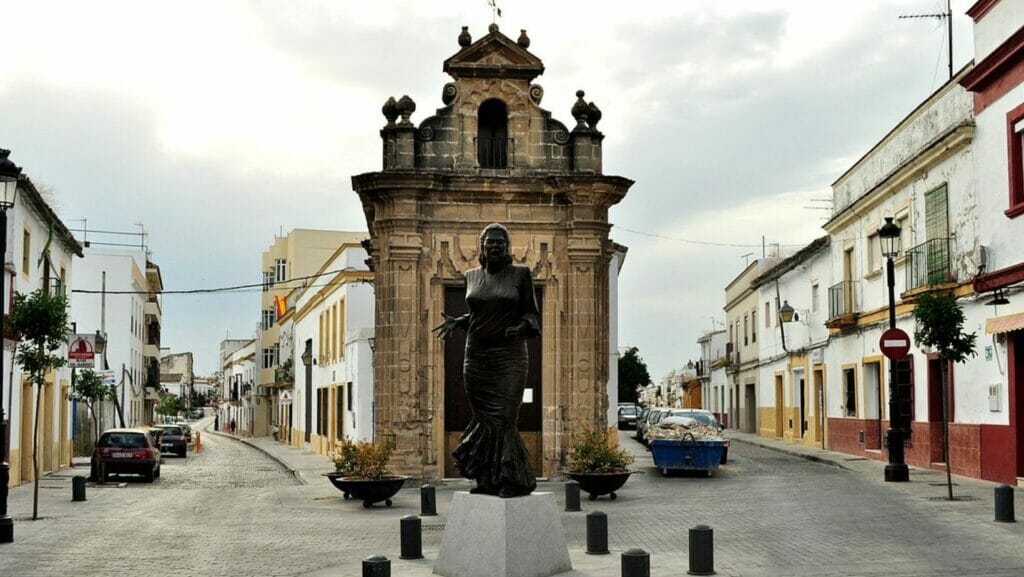
And the Barrio de Santiago It’s the stop that doesn’t appear on postcards but does matter: the the Roma neighbourhood in Jerez, one of the places where flamenco originated. Narrow streets, whitewashed houses and communal courtyards. Entire dynasties of flamenco singers have come from here.
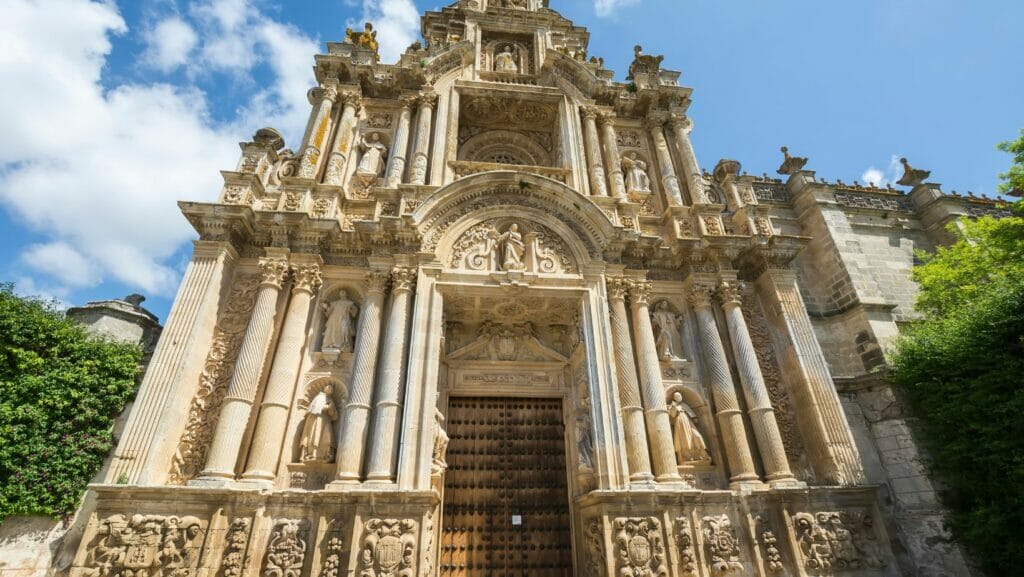
The Carthusian monastery on the outskirts, with a Renaissance façade Considered one of the finest in Andalusia, with a remarkable cloister. You’ll need a car or a taxi to get there, but it’s well worth the detour.
It also has a link that explains half the city: The Cartujano horse was selected for his stud farm, the purest bloodline of the purebred Spanish horse. This is where Jerez’s equestrian tradition comes from.
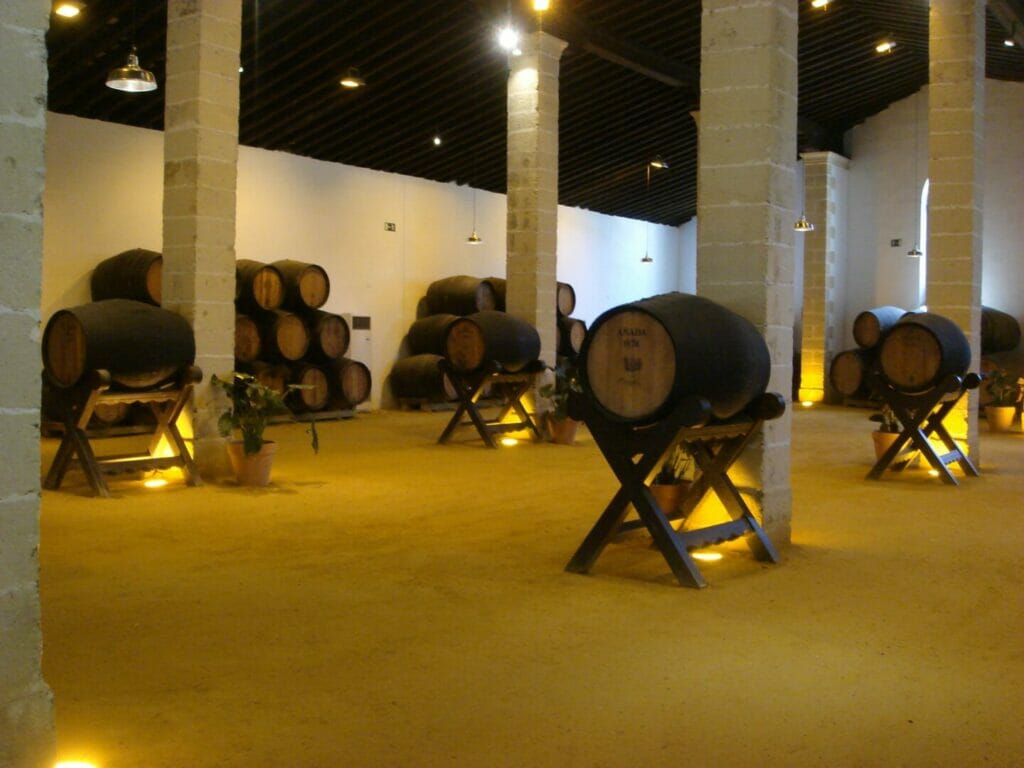
Sherry has two designations of origin: «Jerez-Xérès-Sherry» and «Manzanilla-Sanlúcar de Barrameda». Its nature stems from the system of criaderas and soleras, in which the wine is transferred from one cask to another over the years, so that each bottle is a blend of different vintages.
That’s where the fino and the chamomile, aged under a flor layer, and those aged through oxidation: Amontillado, Oloroso and Pedro Ximénez. Large-scale exports began with British trade from the 18th century onwards, and it was this that led to the construction of the large ageing cellars that can be visited today.
Visits last an hour or an hour and a half and end with a tasting. All require booking, and the closing days vary from one winery to another: the largest one is closed at weekends. You can find a breakdown of this at the best wineries in Jerez de la Frontera.
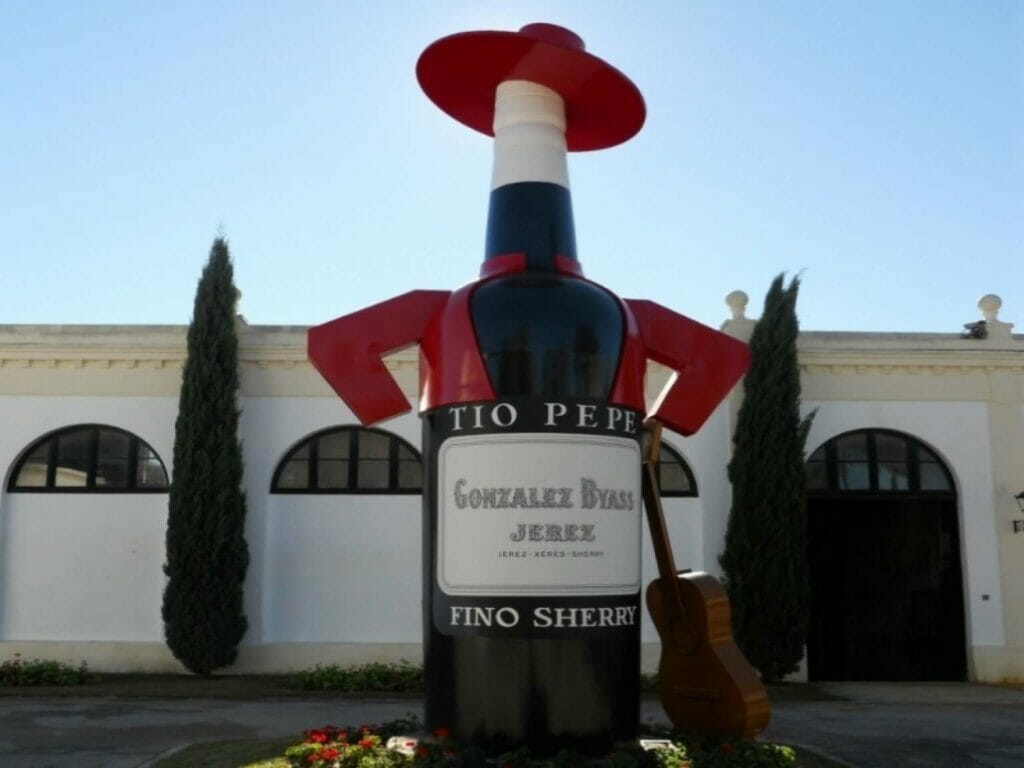
If there’s only one thing you can do in Jerez, let it be this. The tabancos These are the city’s traditional taverns, the successors to the old wine shipments: small establishments where food is served wine in bulk from the wineskin, with a lid, and where flamenco is sung with no stage or entrance.
The route of tabancos It involves popping from one place to another in the historic centre. It’s cheap, it’s local, and it’s where wine and flamenco – the two things Jerez is famous for – truly come together. Many venues schedule performances at set times, so it’s worth asking when you go in.
The five historic wineries in Jerez, with addresses, opening hours and the days on which each one is closed
The Royal Andalusian School of Equestrian Art is based in the Palace of El Recreo de las Cadenas and specialises in training and breeding Andalusian horses. His show, «How the Andalusian horses dance», is a classical equestrian performance set to 18th-century music and featuring 18th-century costumes, and is performed on specific days of the week.
Outside performance times, you can visit the grounds: the gardens, the stables, the Horse-Drawn Carriage Museum and the training sessions, which are free to watch and considerably more intimate than the main show. Check the calendar at the Royal School’s website before you go, as performance dates vary depending on the season.
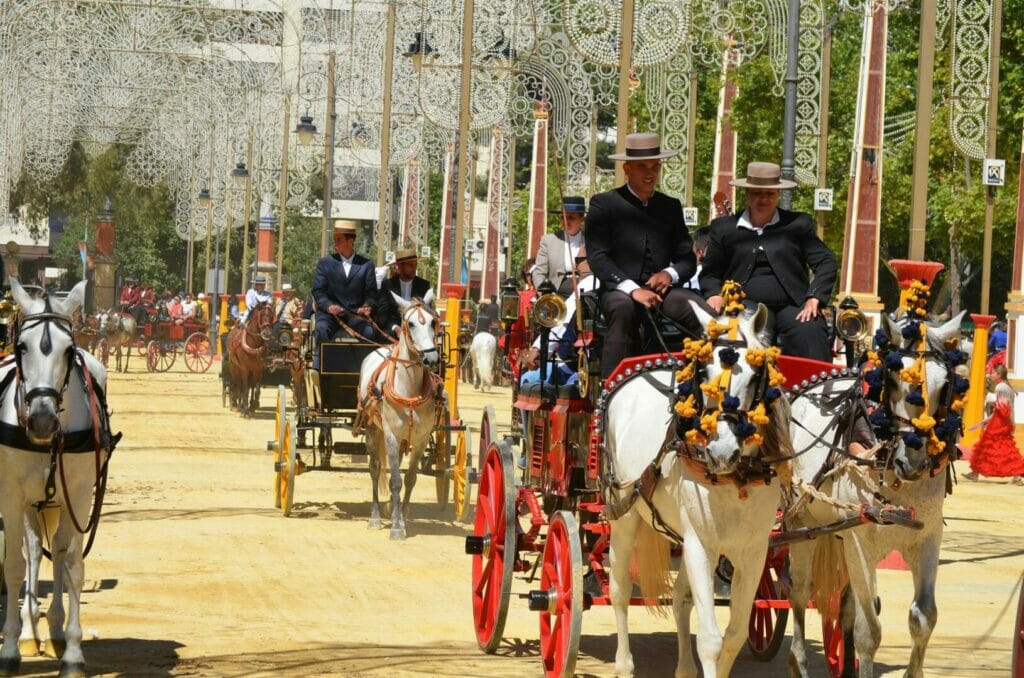
The horse is also at the heart of the Horse Fair, in May, in González Hontoria Park. It is declared of International Tourist Interest And for a week, the city is filled with festival stalls, horse-drawn carriages, horse rides, flamenco dresses and fino. If your trip coincides with this, it will dictate everything else: book your accommodation well in advance.

The Jerez-Ángel Nieto Circuit, opened in 1985 and renamed in 2018 in honour of the driver, it hosts the MotoGP Spanish Grand Prix, one of the most popular events on the calendar. The Peluqui bend and the Ángel Nieto bend These are the liveliest spots in the stands.
Virtually all the greats have raced on its tarmac: Ángel Nieto, Àlex Crivillé, Valentino Rossi, Dani Pedrosa, Marc Márquez and Fabio Quartararo. The circuit also hosted the Formula 1 Grand Prix in the 1990s, although today its calendar focuses on motorcycling, domestic motor racing and pre-season testing.
It is just a few kilometres from the city centre and you can visit the inside on days when there are no competitions: there is guided tours of the circuit. If you’re travelling over the Grand Prix weekend, expect the city to be packed and make sure you book everything well in advance.
Jerez is a good base from which to explore the rest of the province:
And if you’re interested in the city’s lesser-known history, we’ve got our Interesting facts about Jerez de la Frontera.
Here is a map showing the stops in this guide so that you can plan your walking route.
We are a local tour operator based in Málaga with over 50 years’ experience organising trips around Andalusia. These trips include pick-up points in the Campo de Gibraltar and Tarifa, just a stone’s throw from Jerez:
In the morning, the historic centre: the Cathedral and the Alcázar, which are right next to each other, the Plaza del Arenal, the Plaza de la Asunción and the Santiago neighbourhood. At midday, a visit to a winery with a tasting, which takes an hour or an hour and a half. And in the afternoon, the show at the Royal Andalusian School of Equestrian Art or a tour of the local wine bars. Book the winery and the show in advance, as they have fixed timetables.
Tabancos are the traditional taverns of Jerez, descendants of the old wine shops: small establishments where wine is served by the glass directly from the barrel, accompanied by a tapa, and where flamenco is performed without a stage or an entrance fee. The tour involves hopping from one to the next through the historic centre. It’s cheap, very local, and the best place where wine and flamenco come together.
A full day is enough to see the historic centre, a winery and an equestrian show. If you have a second day, you can visit more wineries, the Cartuja, the racecourse or take a day trip to El Puerto de Santa María or Cádiz. If your trip coincides with the Horse Fair in May or the Motorcycle Grand Prix, it’s a good idea to allow plenty of time and book your accommodation well in advance.
Yes, they’re about a 30-minute journey by car or train, and the train is particularly convenient as both stations are close to the city centre. It’s common to spend the morning exploring the historic centre of Jerez and visiting a wine cellar, and the afternoon in Cádiz. The two cities have very different atmospheres, so this combination works well.
It is an institution dedicated to the training and breeding of the Andalusian horse, based at the Palacio del Recreo de las Cadenas. Its show, «How Andalusian Horses Dance», is a classical equestrian performance set to 18th-century music and featuring period costumes, and is staged on specific days of the week. Outside of performance times, visitors can explore the gardens, the stables, the Carriage Museum and watch the training sessions.
It takes place over a week in May in González Hontoria Park. It has been declared a Festival of International Tourist Interest and is one of Andalusia’s most deeply-rooted festivals, featuring marquees, horse-drawn carriages, horse rides, flamenco dresses and fino sherry. If your trip coincides with the festival, it sets the tone for the whole city, so it’s advisable to book accommodation well in advance.