Córdoba’s must-see monuments are concentrated in the historic centre and begin with the Mosque-Cathedral, the building that defines the city. Surrounding it are the Alcázar de los Reyes Cristianos, the Roman Bridge, the Synagogue in the Jewish Quarter and, on the outskirts, the archaeological site of Medina Azahara. Almost all of these can be explored on foot in one or two days, as the historic centre is contained within just a few streets.
Córdoba brings together the legacy of three cultures that have overlapped within the same urban fabric: Roman Córdoba, which built the bridge over the Guadalquivir; the capital of the Umayyad Caliphate, which constructed the Mosque and Medina Azahara; and the Christian city, which converted the mosque and built the Alcázar. If you’d prefer to visit the main monuments without having to worry about transport or timetables, you can do so with an organised day trip to Córdoba from Málaga one day.
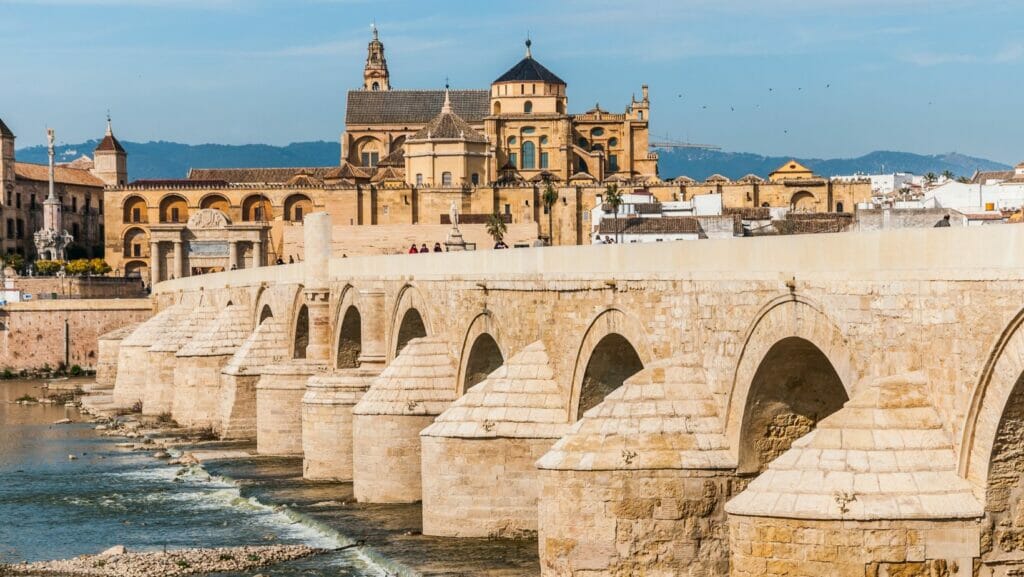
It is the city’s most important monument and one of the most visited in Spain. Construction began in 8th century built on the site of a Visigothic basilica and extended in several phases during the Caliphate, eventually forming the forest of columns and two-coloured horseshoe arches that fills its prayer hall. Following the Christian conquest of 1236, a Renaissance cathedral was built inside it, creating a superimposition of places of worship that is unique in the world.
The tour takes in the Patio de los Naranjos, the qibla wall with its mihrab and the cathedral’s transept. To understand how the Muslim prayer hall and the cathedral fit together, it is worth reviewing the parts of the Mosque-Cathedral before going in, and his bell tower A separate ticket is required to go up. It has been designated a UNESCO World Heritage Site.
A fortress-palace commissioned in 1328, under Alfonso XI on top of earlier Muslim buildings. It served as a residence for the Catholic Monarchs during the campaign against Granada, and it was here that they received Christopher Columbus before his first journey. Its stone walls, the Keep and the Lions’ Towers, and the rooms with Roman mosaics make up the interior tour.
Its main attractions are the terraced gardens, with ponds, fountains and hedges sloping down towards the river. It is next to the Mosque and the Roman Bridge, so the three sights can easily be visited in succession, and right next to it lies the San Basilio neighbourhood, the one known as the the courtyards of Córdoba.
The Roman Bridge crosses the Guadalquivir from the 1st century BC. and for centuries it was the only entrance to the city from the south. Although it has been rebuilt on several occasions, it retains its original layout of sixteen arches and offers one of the most recognisable views of the Mosque in the background. Today it is a pedestrianised street and can be walked along in a few minutes.
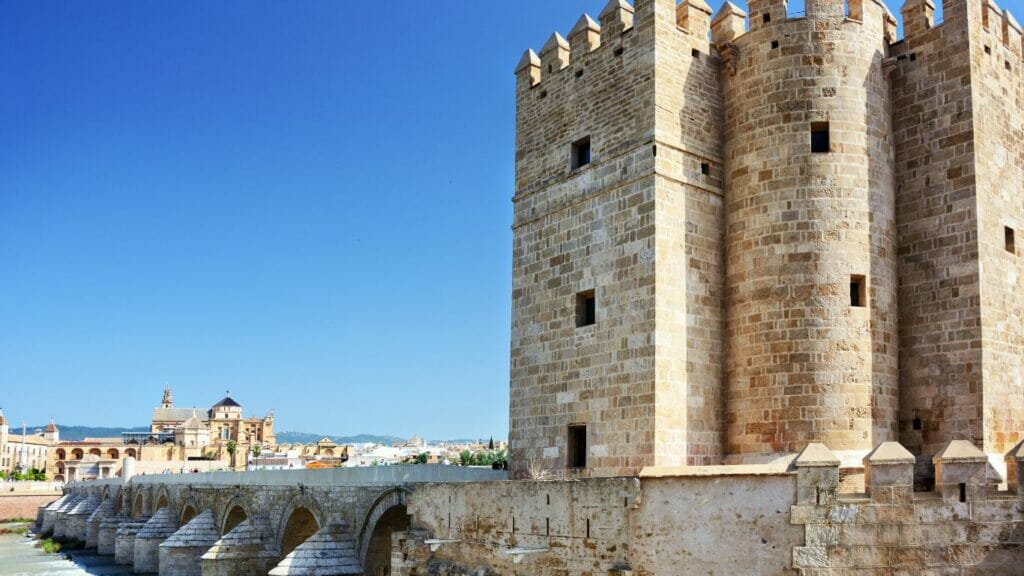
At the southern end of the bridge stands the Calahorra Tower, a fortification of Islamic origin, renovated in the 14th century by Henry II to protect the access route. Inside, it houses the Al-Andalus Living Museum, dedicated to the coexistence of the cultures of Al-Andalus, and from its terrace there is a panoramic view of the bridge and the historic centre. On the opposite side, the Bridge Gate This completes the scene by the river.
The palatine city that the caliph Abderramán III had built in the 10th century some eight kilometres in Córdoba, as the seat of power of the Caliphate. Designed as a series of terraces on the slopes of the Sierra Morena, it separated the official quarter, the residential quarter and the mosque. It was sacked and destroyed just a few decades after its foundation, and remained buried until its excavation in the 20th century.
The archaeological site features a museum which visitors can explore before their tour and includes restored buildings such as the Rico Hall built by Abd-ar-Rahman III, with its ornate horseshoe arches. It has been designated a World Heritage Site. As it is on the outskirts, it is worth setting aside half a day for a visit and consulting the shuttle service, as the site cannot be reached by private car.
The Cordoba Synagogue It was built in the early 14th century and is one of the three medieval synagogues still standing in Spain. Although small in size, it still features the plasterwork with geometric and plant motifs, as well as the Hebrew inscriptions that once adorned the prayer hall and the women’s gallery on the upper floor. Admission is free.
It is in the heart of the Jewish Quarter, the old Jewish quarter with its narrow alleyways, flower-filled courtyards and squares such as Plaza de Maimónides and Plaza del Cardenal Salazar. Strolling through here, alongside the Calleja de las Flores, is one of the most characteristic experiences in the city centre and leads directly to the Mosque.
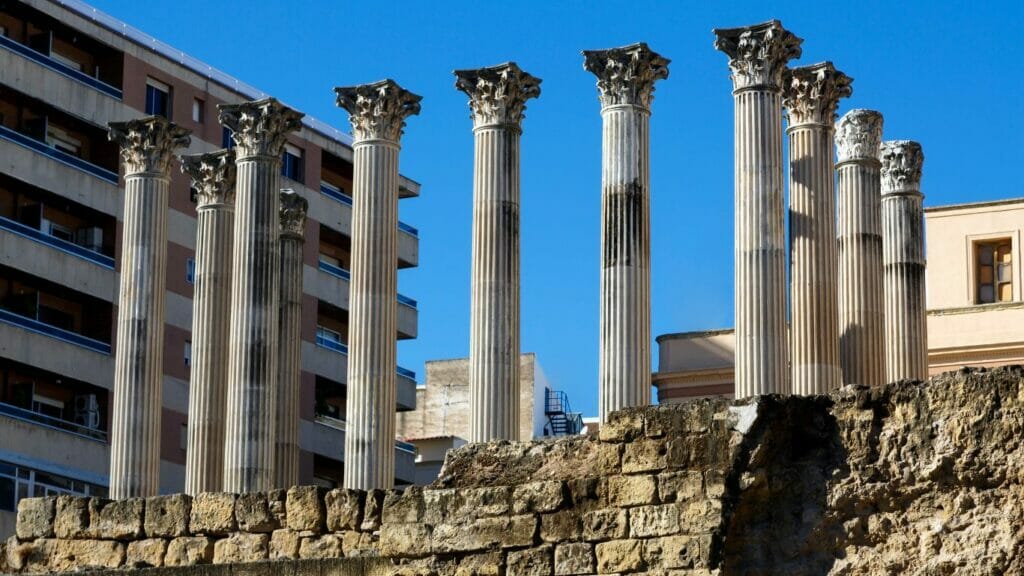
It was discovered in the the 1950s during the extension of the Town Hall, on Claudio Marcelo Street. Built in the 1st century AD. Dedicated to the imperial cult, it was one of the main buildings in Roman Córdoba, linked to the nearby circus. Part of the staircase, the podium and several Corinthian columns, which have been returned to their original positions, still survive.
Although the interior is not open to visitors, its illuminated white columns are visible from the street and serve as a reminder of Córdoba’s importance as the capital of the Bética. It’s a quick stop that helps to put the city’s Roman origins into context before moving on to the later monuments.
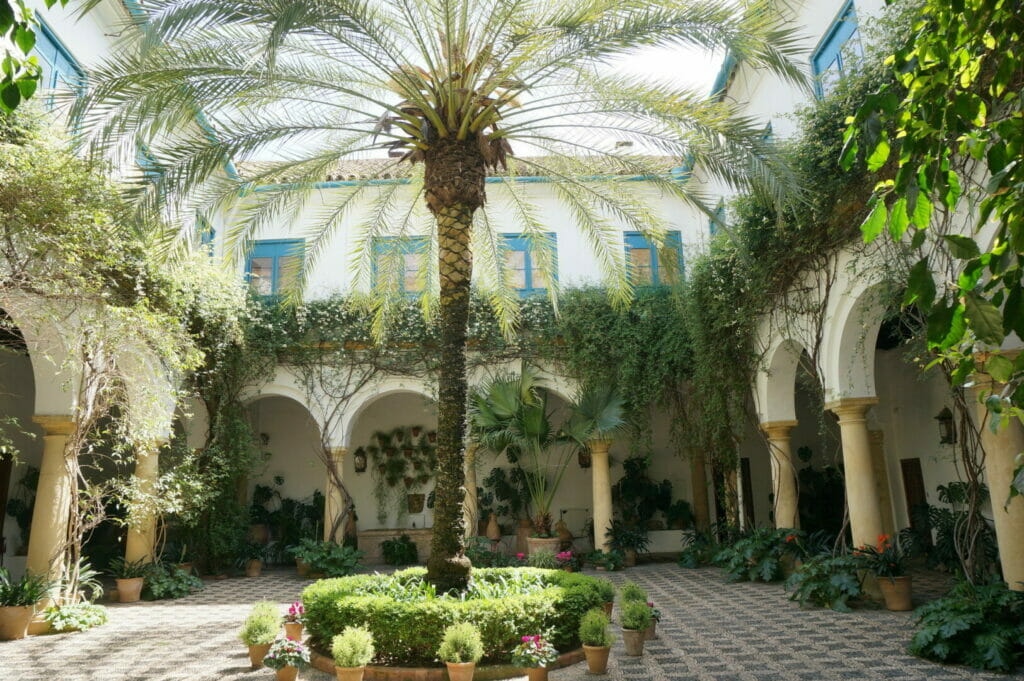
A stately mansion in the neighbourhood of Saint Marina, best known for its twelve courtyards and their courtyards. Each one has its own character, ranging from the ‘Gatos’ courtyard, with its working-class feel, to the more stately ones with columns and fountains, making the tour a journey through the evolution of the Cordoban courtyard over the centuries. That is why it is known as the ‘Museum of Courtyards’.
The interior houses collections of furniture, tapestries, tiles and a library that reflect the life of the local nobility. Visitors can choose to explore just the courtyards or the entire complex, including the rooms, and it is open throughout the year, making it the best option if you’re visiting Córdoba outside May.
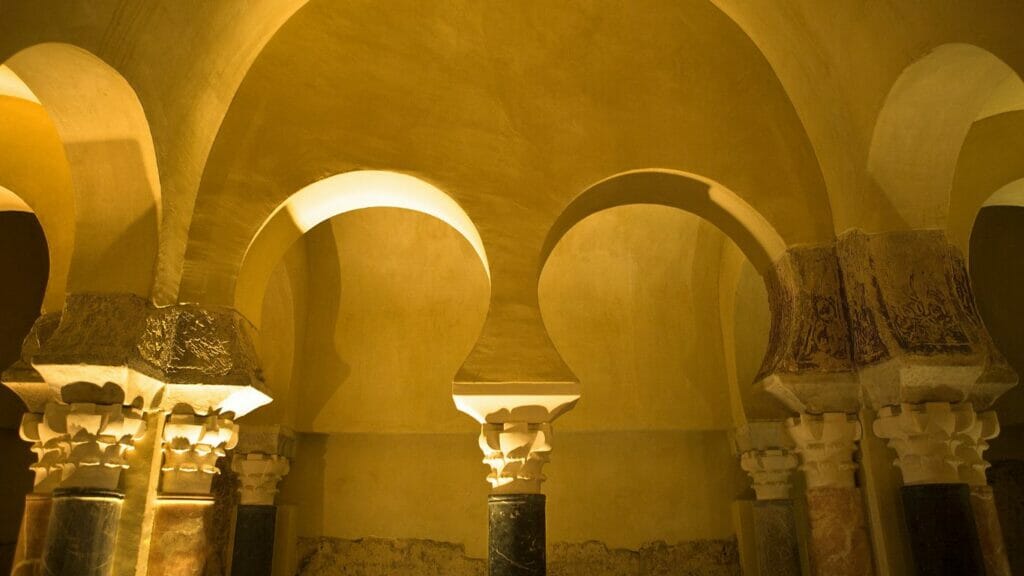
Some Arab baths from the 10th century located next to the Martyrs’ Cemetery, opposite the Alcázar de los Reyes Cristianos. They formed part of the ancient Umayyad fortress and were modelled on Roman baths, with cold, warm and hot rooms covered by vaults perforated with star-shaped lanterns which filter the light.
Today, they form a museum site that illustrates the role of bathing in the life of the Caliphate court, in terms of its hygienic, social and ritual functions. Thanks to their location, they can be visited easily alongside the Alcázar and round off a tour of Islamic Córdoba.
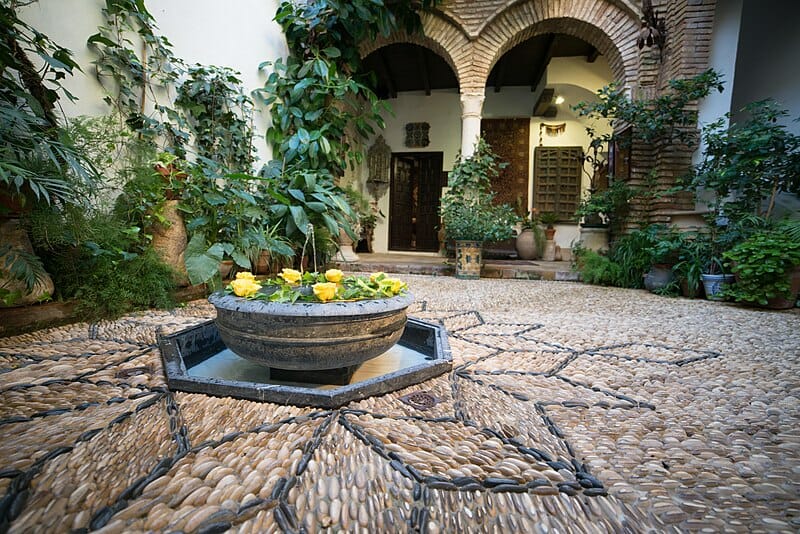
In the 12 Judíos Street, right in the heart of the Jewish Quarter, this house-museum brings to life what life was like in Córdoba during the Muslim period: the courtyard, the garden and the various rooms, complete with kitchen utensils, musical instruments and jewellery from that era.
One of its buildings also houses the Paper Museum, dedicated to an industry that the Andalusians introduced to Europe via al-Andalus. It is a short and very affordable visit that complements a tour of the major monuments well.
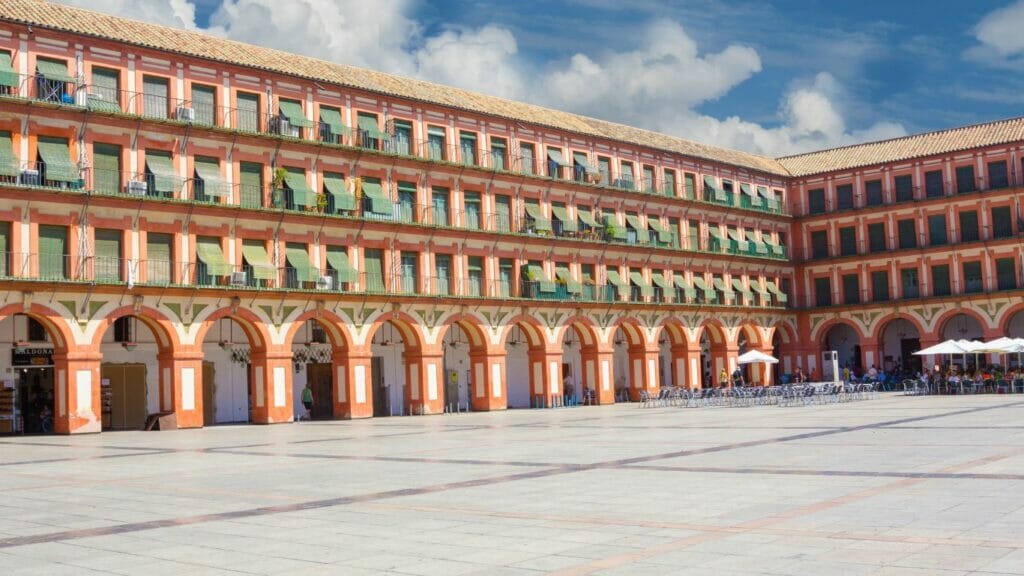
It is the the only Castilian main square in Andalusia, built in the late 17th century with a closed rectangular layout and arcades on all four sides. Throughout its history, it has hosted bullfights, markets and public events, and even today it continues to serve as a market square on the ground floor and as a meeting place beneath the arches.
Its uniform red-brick façades, with their continuous balconies, give it a very different look to the rest of the historic centre, which has Andalusian roots. It is surrounded by bars and terraces, so it’s a good place to take a break between visits.
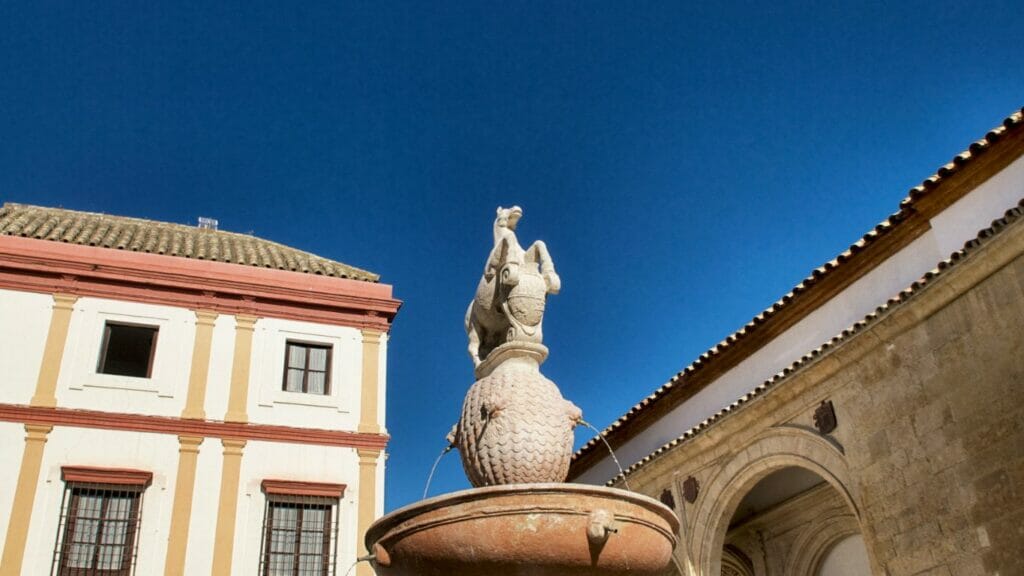
In the Ribera district, near the Guadalquivir, this square takes its name from the fountain crowned by a colt that stands at its centre since the XVIth century. Cervantes mentioned her in *Don Quixote*, and on one of its sides the old Posada del Potro, now a centre dedicated to flamenco. It retains the atmosphere of the inns and cattle markets that once surrounded it.
In the same area are the Julio Romero de Torres Museum, dedicated to the painter from Córdoba who portrayed the image of Andalusian women like no other, and the Museum of Fine Arts, both set around a shared courtyard. A craft and antiques market is held here on Saturdays.
Founded by Philip II in 1570 with the aim of raising the purebred Spanish horse, an initiative that gave rise to this breed of horse using local stock. The building, which is attached to the Alcázar, still retains the large hall with columns and vaults that once served as the main stable.
Today they maintain their connection with the Córdoba horse and welcome equestrian shows which combine dressage and flamenco. Their location, right next to the Alcázar de los Reyes Cristianos, means they can easily be included in a tour of the historic quarter along the river.
It is the best-preserved of the ancient gates in the walls of Córdoba. From Islamic origin and, having been renovated in the Christian era, provides access to the historic centre from the west, next to the Jewish quarter, and preserves the sections of wall and the stretch of moat that flank it.
Opposite it stands the statue of the philosopher Seneca, born in Córdoba, and from the gate the narrow streets leading to the Synagogue and the Mosque branch off. It is one of the most photographed entrances to the old quarter and a good starting point for exploring the area on foot.
Don't miss the one-hour guided tour of the Jewish Quarter during our excursion to Cordoba from Malaga
Almost all of the monuments can be seen on a single walk. A logical route would be to start at the Almodóvar Gate, walk down through the Jewish Quarter to the Synagogue and the Casa Andalusí, carry on to the Mosque-Cathedral, cross over to the Alcázar and the Caliphate Baths, and head out to the Roman Bridge and the Calahorra. That covers the first day.
For a second visit, you could see the Roman Temple, the Plaza de la Corredera and the Plaza del Potro in the city centre, as well as La Ribera and the Palacio de Viana to the north; and, if you have half a day to spare, Medina Azahara on the outskirts. You can extend the itinerary with the guide from What to see in Córdoba and, if you’re travelling on a tight budget, with What to see for free in Córdoba.
If you’d like to explore Córdoba from Málaga, here are the options available, whether you’d prefer to go at your own pace or include tickets to the Mosque-Cathedral:
The most important monuments in Córdoba are the Mosque-Cathedral, the Alcázar of the Christian Monarchs, the Roman Bridge and the archaeological site of Medina Azahara. In addition to these are the Synagogue and the Jewish Quarter, the Roman Temple, the Palace of Viana, the Caliphate Alcázar Baths and the squares of La Corredera and El Potro. Almost all of them are concentrated in the historic centre and can be explored on foot.
The Mosque-Cathedral, which welcomes over a million visitors every year and is the city’s most recognisable landmark. Its combination of a Muslim mosque and a Christian cathedral within a single building makes it a unique attraction and the usual starting point for any tour of Córdoba.
Córdoba is home to several sites designated as UNESCO World Heritage Sites: the Mosque-Cathedral, the historic centre surrounding it, the archaeological complex of Medina Azahara and the Fiesta de los Patios, the latter recognised as intangible cultural heritage. It is one of the cities with the most UNESCO recognitions in the world.
Admission to the Synagogue is free, as is access to the Patio de los Naranjos in the Mosque-Cathedral, the Roman Bridge, the Almodóvar Gate, the Roman Temple as seen from the street, and the Plaza de la Corredera and Plaza del Potro. Several paid attractions also have time slots with free entry, which are worth checking before your visit.
A full day is enough to see the Mosque-Cathedral, the Alcázar, the Jewish Quarter with the synagogue and the Roman Bridge – these are the must-sees. If you have two days, you can also visit the Viana Palace, the Roman Temple, the Plaza de la Corredera and the Plaza del Potro, and spend half a day at Medina Azahara, which is eight kilometres from the city centre.