Cordoba is the city with the most UNESCO designations in the world: four. The Mosque-Cathedral, the historical centrethe Patios Festival y Medina Azahara. And almost everything is located in a compact town centre that you can explore on foot.
Here you have 15 places what you need to know about each one, and ultimately how to allocate them depending on what you have a day or a weekend.
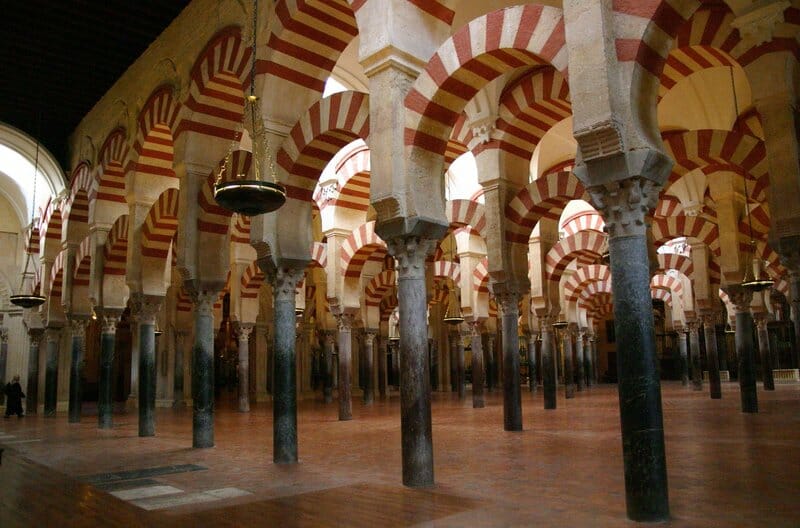
Construction began on the 785, built on the orders of Abd-ar-Rahman I, on the site of the Visigothic basilica of Saint Vincent. Following the Christian conquest, a Renaissance cathedral was built within it, and the result is a unique building: a thousand years of history under one roof.
It is the the third most visited monument in Spain, with more than 2.1 million visitors in 2025, so planning is important.
Timetables:
Price: General admission costs 15 € from April 2026; the reduced fare is €12 for those aged 65 and over and students aged 15 to 26; 8 € for children aged 10 to 14 and free of charge for children under 10.
And here’s a fact that hardly anyone mentions: you can get in for free. From Monday to Saturday, from 8.30 am to 9.30 am. But there are strict conditions that you should be aware of before setting off early in the morning:
There is also the «The Soul of Córdoba» night-time tour», a 70-minute sound-and-light tour, limited to 100 places per session, for which booking is required. We’ll tell you all about it in The guide to the Mosque of Córdoba, and if you want to understand what you’re looking at, you’ve got the parts of the Mosque explained one by one.
From Málaga and the Costa del Sol: Evening tour of the Mosque with a local guide
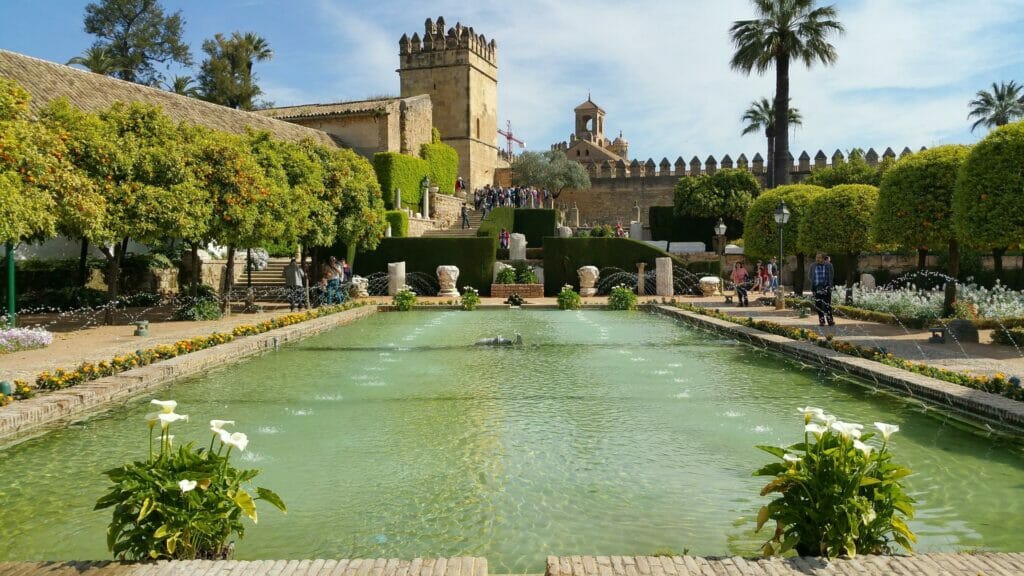
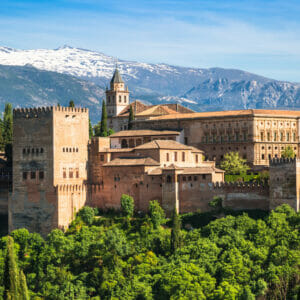
Fortress-palace of the 14th century, built on top of earlier structures. It was the residence of the Catholic Monarchs during the Granada campaign, and here Christopher Columbus outlined his plans for the voyage to them in 1486.
Inside, it features towers and rooms with Roman mosaics and a early Christian sarcophagus. But what most people come to see are its terraced gardens: around 30,000 square metres of ponds, fountains, trimmed hedges and fruit trees. Head up to the Tower of Homage for the panoramic view.
You have the set of milestones in Córdoba’s must-see sights.
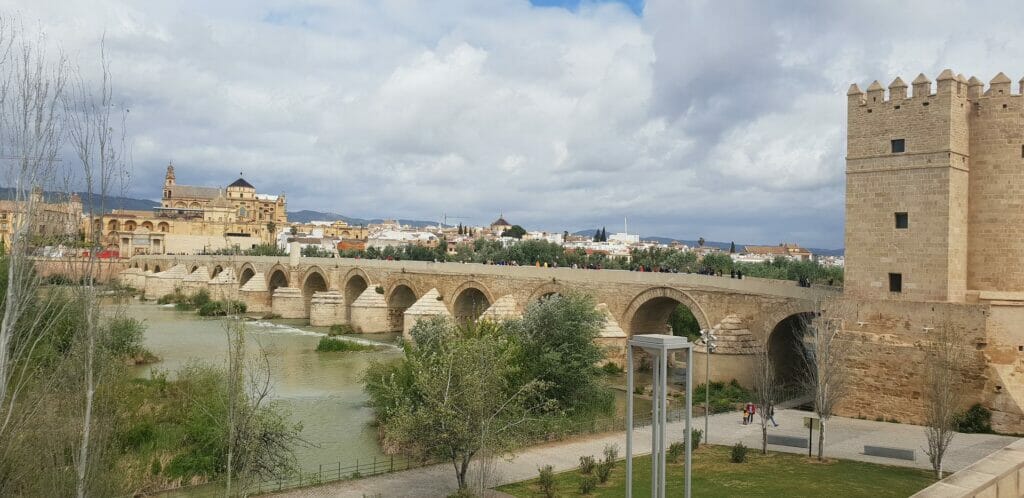
331 metres over the Guadalquivir, dating back to the time of Augustus, although its present appearance is the result of later renovations. Crossing it on foot offers a classic view of Córdoba, particularly at dusk, with the Mosque silhouetted in the background.
At the northern end is the Bridge Gate, and in the south the Calahorra Tower, a fortification of Islamic origin which today houses a museum dedicated to the coexistence of the three cultures and a viewpoint overlooking the historic centre.
The old Jewish quarter: narrow alleyways, whitewashed houses and squares surrounding the mosque. Inside, the Synagogueone of the the three remaining medieval sites in Spain, featuring Mudejar-inspired plasterwork.
Nearby are the House of Sefarad and the statue of Maimonides, the philosopher and doctor who was born in this neighbourhood. You can find his story in the Guide to the Jewish Quarter of Córdoba.
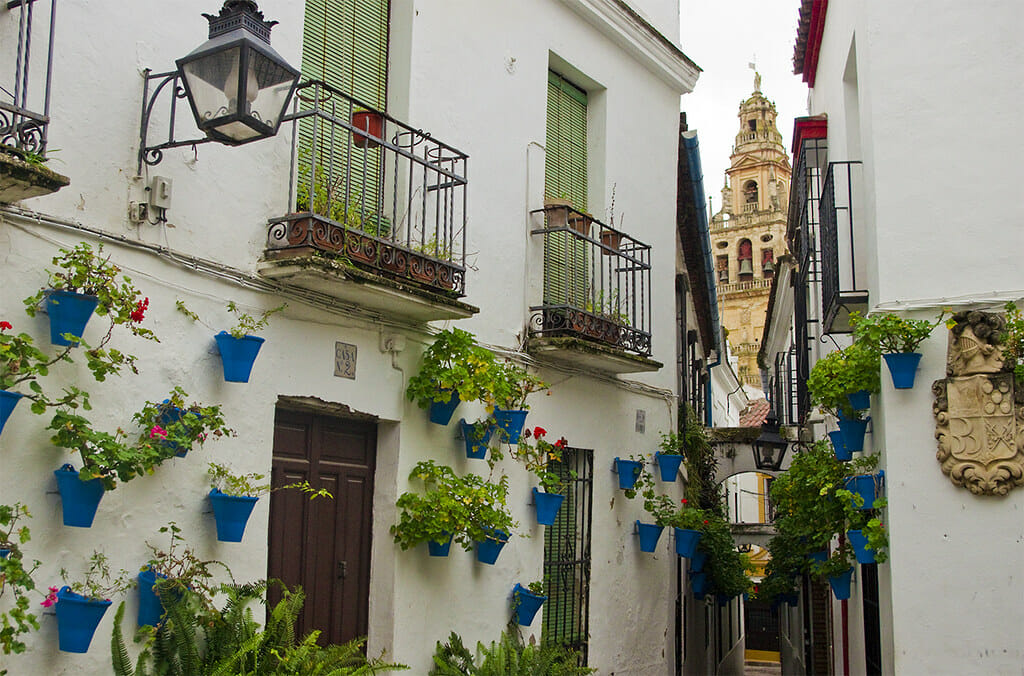
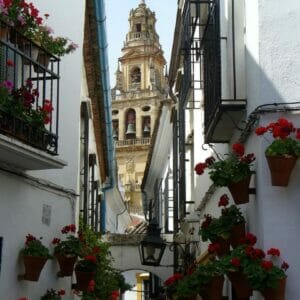
A short alleyway with blue flowerpots hanging from the whitewashed walls, leading onto a small square from which the minaret of the mosque is perfectly framed. It is the most frequently photographed picture of Córdoba.
Go first thing in the morning or late in the afternoon: During the day it gets so busy that you can hardly take a photo without there being a queue.
The the narrowest street in Córdoba, and one of the narrowest in Spain: it takes its name from the fact that its width is approximately that of a handkerchief held out.
It ends at a tiny little square with a fountain and an orange tree, which many describe as one of the smallest squares in the world. It’s right in the heart of the Jewish Quarter, and you’ll walk right past it if you don’t look out for it.
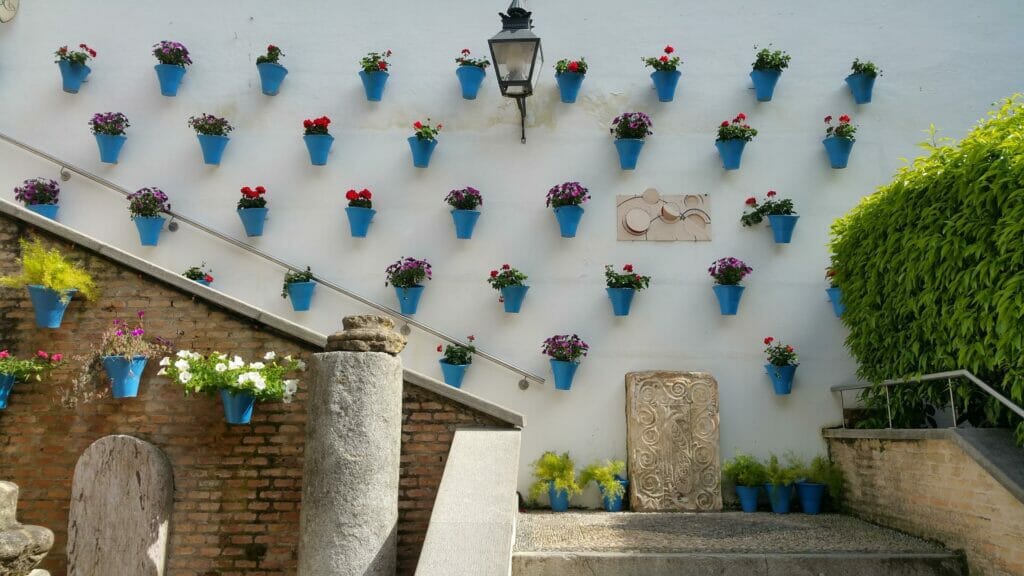
Landscaped indoor spaces, with planters covering the walls, fountains and plants. Tradition is the order of the day Intangible Cultural Heritage of Humanity and it goes back a long way: the Romans built their houses around courtyards, and the Muslims filled them with plants and water to combat the heat.
The Patios Festival takes place in May, when the locals open their homes to visitors. Outside these dates, they can also be seen, particularly in St Basil —which is a neighbourhood in its own right, next to the Alcázar, and not part of the Jewish Quarter— and in Saint Marina.
Many are free to access or operate on a voluntary contribution basis, so they fall under What to see for free in Córdoba.
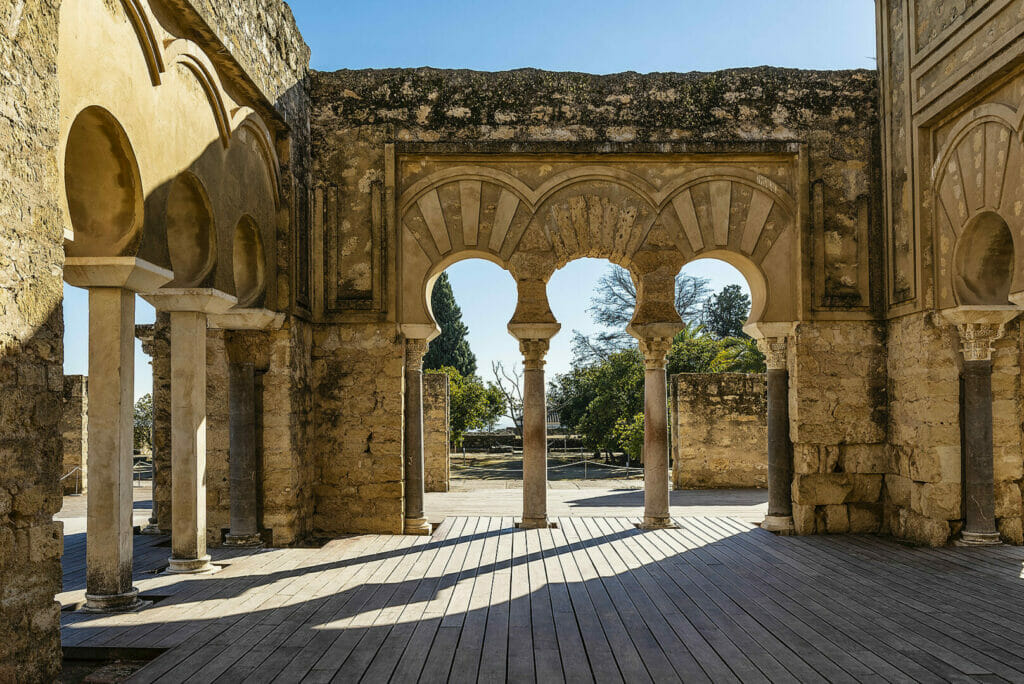
A 8 kilometres from the city centre. The palatine city commissioned by the Caliph Abderramán III from the year 936 onwards, right in the middle of 10th century, as the seat of power of the Caliphate. It was razed to the ground barely seventy years later.
Today, people visit his terraced terraces, the Rico Hall and the remains of the Caliphate-era urban settlement, preceded by a museum that provides context for the site. It has been declared A World Heritage Site since 2018.
You can get there by shuttle bus or by car, and you need to book it part-time, so it’s better suited to a weekend trip than a day trip.
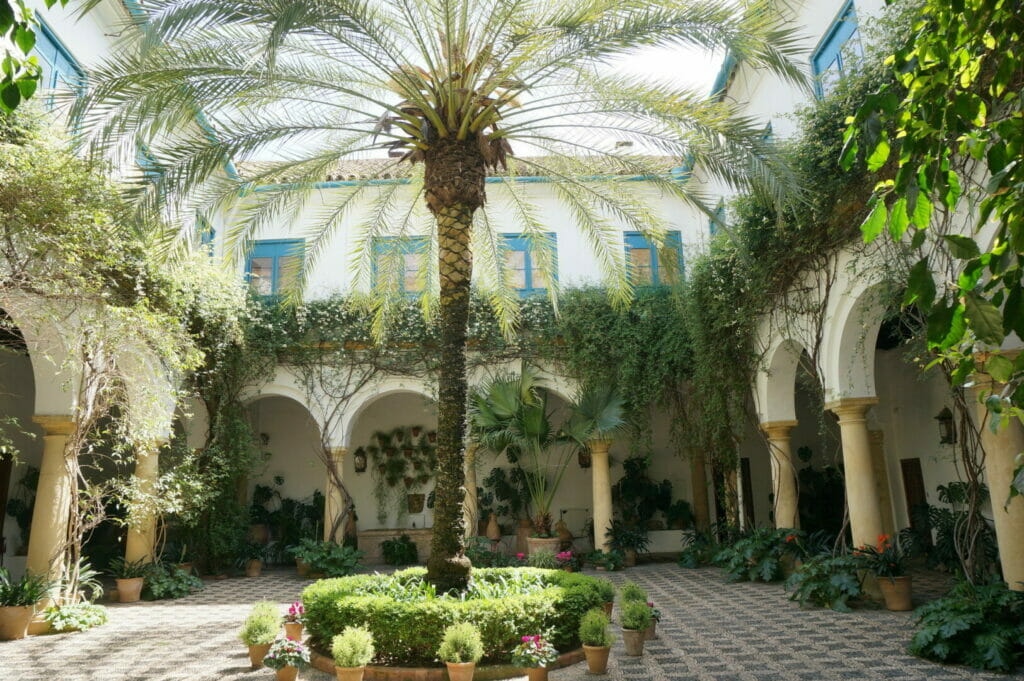
A Renaissance palace to the north of the city centre, famous for its twelve courtyards and their gardens, each with its own distinct character. Exploring them is the best way to understand The evolution of the Cordoban courtyard over the centuries.
The interior houses collections of furniture, tapestries and tiles, which can be viewed on a guided tour. You can buy a ticket for the courtyards only, or a combined ticket for the courtyards and the palace.
Next to the Town Hall, between the Plazas de las Tendillas and la Corredera, the following are still preserved: reconstructed Corinthian columns of the Roman temple, of the 1st century AD. It was part of the Colonia Patricia site and was discovered in the mid-20th century during municipal building works.
No admission fee: You can see it from the street, so it’s a quick stop.
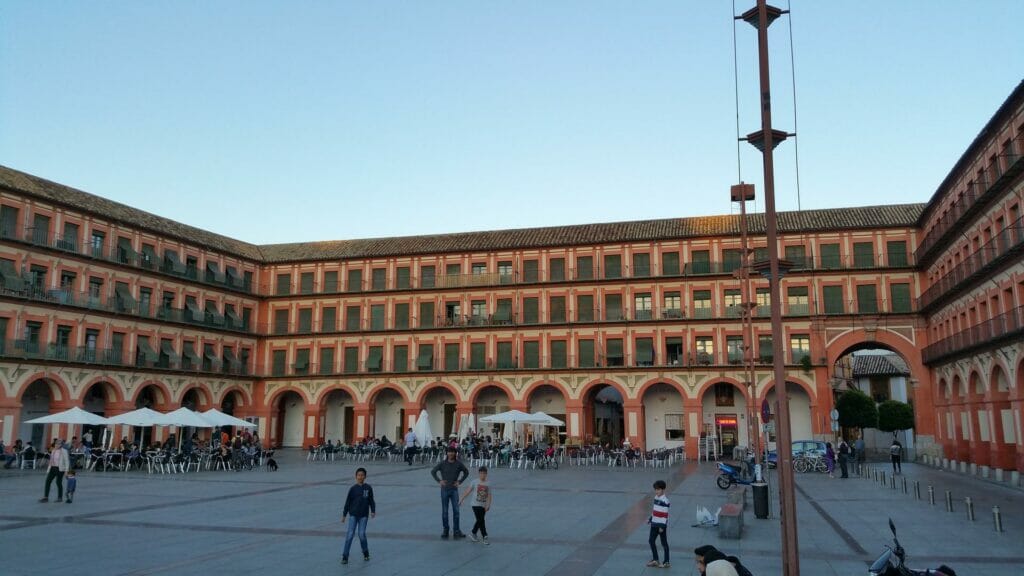
The the only main square in Andalusia with a rectangular layout and Castilian-style arcades that has been preserved, dating from the 17th century. It has served as a market, a bullring and a venue for public events.
Today, the market remains on the ground floor and is surrounded by bars with terraces: it’s the best place to stop for a salmorejo and the flamenquín halfway through the tour. Its regular layout contrasts with the irregular layout of the Jewish Quarter.
It takes its name from the fountain featuring a colt at its centre, and is mentioned in Don Quixote. It retains the old Posada del Potro, a medieval inn that has now been converted into a centre dedicated to flamenco.
In the same square are the Museum of Fine Arts and the Julio Romero de Torres Museum, dedicated to the painter from Córdoba. It is one of the liveliest squares and is situated near the river.
She founded them Philip II in the 16th century with a specific task: to breed the Purebred Spanish Horse. They occupy a building next to the Alcázar, with columned halls and vaulted ceilings that are still in use today.
Host equestrian shows which combine horse dressage and flamenco, as well as visits to the stables. As they are right next to the Alcázar, the activities follow on from one another without the need to travel between venues.
The best preserved at the gates of walled Córdoba, of Islamic origin and flanked by turrets. It marks one of the entrances to the Jewish quarter.
Running alongside it is a section of city wall featuring a pond and statues of Seneca y Averroes, two thinkers born in the city. It is one of the most pleasant walks in the old town.
A stone crucifix in the centre of the Capuchinos Square, surrounded by eight wrought-iron lanterns on pedestals, with hardly any other objects around them.
It is precisely that simplicity that makes it unique, and At night, with the streetlamps lit, it changes completely. It’s north of the city centre, near the Palacio de Viana, so they’re well connected.
How to get there: The AVE high-speed train puts Córdoba less than an hour from Málaga and around 45 minutes from Seville. By car, take the A-45 from Málaga and the A-4 from Seville or Madrid. The train and coach stations are next to each other, about a 15-minute walk from the historic centre.
If you have a day, focus on the area around the Mosque: start there first thing in the morning — or at 8.30 am if you want to take advantage of the free entry slot —, then head to the Alcázar and its gardens, cross the Roman Bridge and spend the rest of the time exploring the Jewish Quarter, the two narrow streets and the Plaza del Potro.
If you’ve got a weekend, including Medina Azahara, the Palacio de Viana, the Royal Stables and the Cristo de los Faroles. We’ll give you all the details in Córdoba in 3 days, and if you're travelling with your family, in Things to do in Córdoba with children.
When to go: spring and autumn. May is the month of the Patios and the Feria, so the city gets very busy and accommodation prices rise. Summer in Córdoba is tough: it’s one of the hottest cities in Spain. You’ve got the whole destination in the Córdoba hub.
We are a local operator based in Málaga with over 50 years’ experience organising day trips around Andalusia. If you’re staying in Málaga or on the Costa del Sol and would rather not drive or hassle with tickets, you have the a day trip to Córdoba with a guided tour of the Jewish Quarter and the evening visit to the Mosque.
The Mosque-Cathedral, the Alcázar of the Christian Monarchs with its gardens, the Roman Bridge and the Jewish Quarter with the Synagogue. These are the four must-see sights that no visitor should miss, and they are all within a short walking distance of one another. If you have more time, it’s worth adding Medina Azahara and the patios to your itinerary.
Yes, from Monday to Saturday, 8.30 am to 9.30 am, with individual entry and no groups or guides. However, there are three important restrictions: visitors must leave by 9.20, so the actual time allowed is less than an hour; access to the central area of the cathedral is not permitted, meaning you can only see around 60% of the site; and the scheme is suspended on days when special celebrations are held.
General admission costs €15 from April 2026, with a reduced rate of €12 for over-65s and students aged 15 to 26. Children aged 10 to 14 pay €8 and those under 10 go in free of charge. The «El Alma de Córdoba» night-time tour is charged separately and has limited places, so it is advisable to book in advance.
Yes, focusing on the Mosque-Cathedral area: the Mosque first thing in the morning, the Alcázar and its gardens, the Roman Bridge, and the rest of the day spent exploring the Jewish Quarter, Calleja de las Flores, Calleja del Pañuelo and Plaza del Potro. What you won’t have time for in a single day is Medina Azahara, which is 8 kilometres away and requires a half-day of its own.
From 936 onwards, in the middle of the 10th century, Caliph Abd al-Rahman III established it as the seat of power for the Caliphate of Córdoba. The palatine city was razed to the ground barely seventy years later and has been a World Heritage Site since 2018. It is situated about 8 kilometres from the city centre and can be reached by shuttle bus or by car.
In May, when local residents open their homes to the public and this tradition – designated as Intangible Cultural Heritage of Humanity – reaches its peak. Outside these dates, the patios can also be visited throughout the year, particularly in the neighbourhoods of San Basilio, next to the Alcázar, and Santa Marina, many of which offer free entry or a voluntary donation.