Nerja is one of the most popular destinations in eastern Málaga. Situated on the border between the Costa del Sol and the Axarquía, it brings together within a few kilometres the Balcony of Europe Overlooking the Mediterranean, it boasts one of Spain’s major tourist caves, Blue Flag beaches and an old town with whitewashed streets.
In this guide, you’ll find the twelve places to visit in Nerja and a step-by-step itinerary to make the most of your one-day visit. You can explore the town on your own, as it’s well connected to Málaga city, or let a Day trip to Nerja and Frigiliana from Málaga one day.
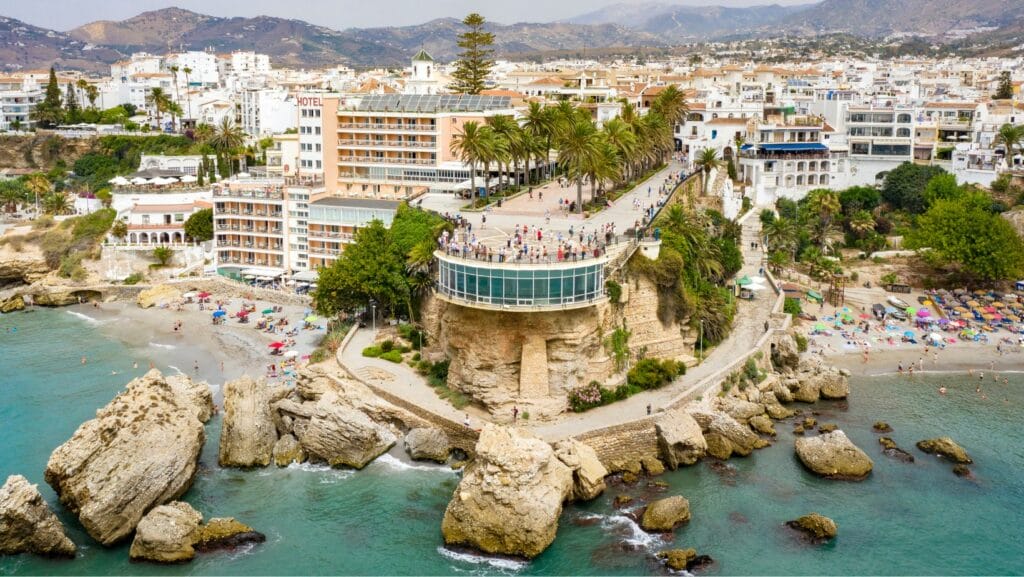
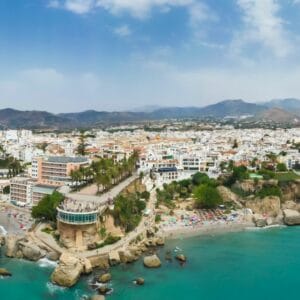
It is the village’s landmark: a viewpoint on a rocky promontory jutting out into the sea, built on what was once a defensive fortress. From its balustrade, you have unobstructed views of the Mediterranean and the beaches surrounding Nerja, and it is the starting point for almost all walks through the old town.
The name has a history: it is said to have originated from Alfonso XII, who visited Nerja in the 19th century and was impressed by the views. Today, the area is full of terraces, cafés and restaurants, and is one of the best spots in the village to watch the sunset, when the light falls upon the sea.
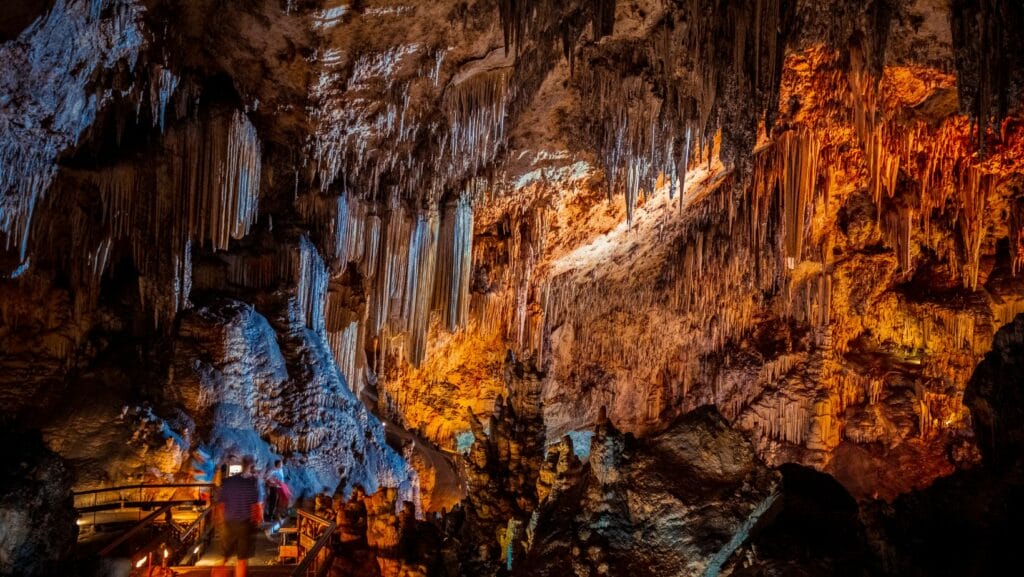
About four kilometres from the centre, in the hamlet of Maro, is home to one of the best-known karst formations in Andalusia. It was discovered in 1959 by a group of young people from Maro, and since then it has become the town’s main attraction.
Inside, there are huge chambers with illuminated stalactites and stalagmites, including the Ballet Hall, whose formations are reminiscent of a group of dancers and which is used as a concert venue. As well as being a geological wonder, the cave preserves cave paintings and remains of prehistoric human settlement of great archaeological value.
The visit follows a designated route, and it’s a good idea to check the opening hours before you go. You can find full details in our guide to the Nerja Caves: opening times, prices and how to visit them.
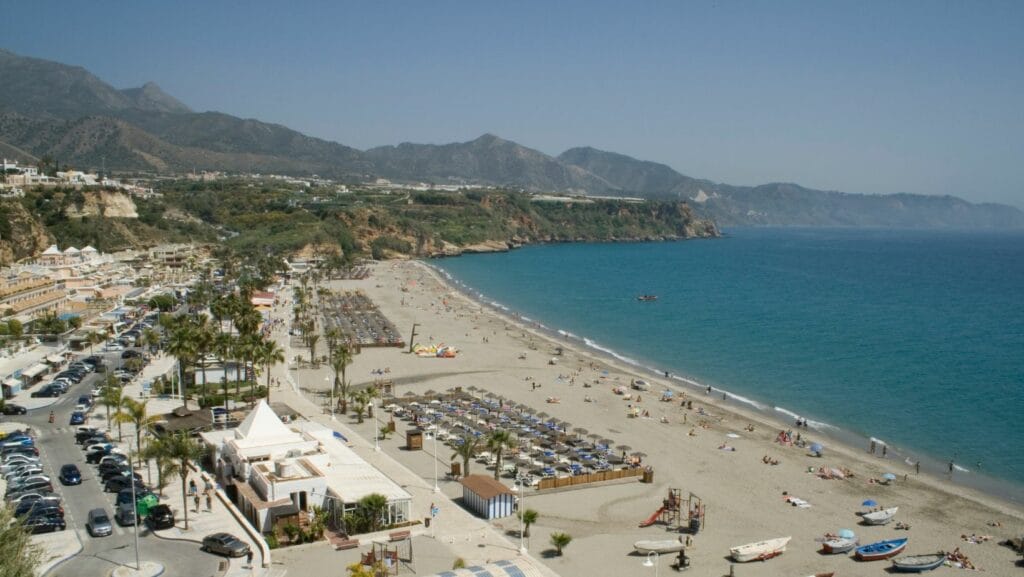
It is the widest and busiest beach in Nerja, with fine sand, calm waters and blue flag, the award that recognises its cleanliness and facilities. It has showers, parasols and sun loungers, and is the best option if you’re travelling with children.
Another attraction is the range of water activities: kayak hire, stand-up paddleboarding and water sports. And its seafront promenade is lined with beach bars and restaurants where you can enjoy fresh fish, seafood and rice dishes overlooking the sea, with a lively atmosphere that carries on into the evening.
If you want to compare your options before deciding where to go for a swim, have a look at the best beaches in Nerja.
Calahonda is a small cove just below the Balcón de Europa, surrounded by white houses and fishing boats, which retains the seafaring spirit of old Nerja. It is accessed via a flight of steps from the old town, and its small size means it is peaceful outside the busiest months.
Don’t miss the Boquete de Calahonda, the distinctive arch carved out of the rock that leads down to the beach and is one of the most photographed sights in the village. As it is so close to the centre, it is the beach that is easiest to fit in with the rest of your visit.
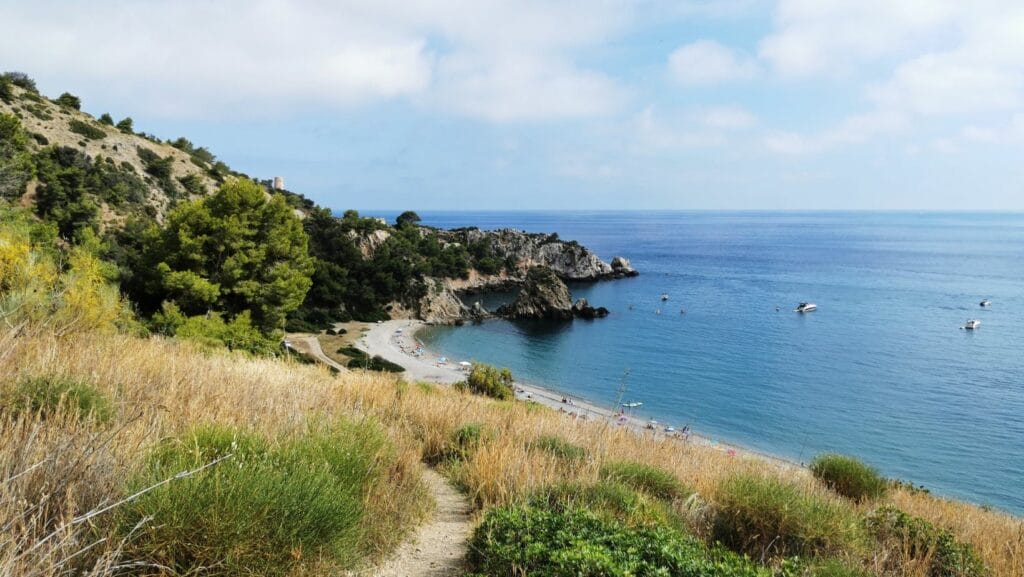
Four kilometres from Nerja lies the Maro-Cerro Gordo Cliffs Nature Reserve, a protected stretch of coastline where limestone cliffs drop sheer into crystal-clear waters. It is one of the best-preserved stretches of coastline on the Andalusian Mediterranean.
His interest lies in the hard-to-reach coves, the sea caves and the rock formations sculpted by the water. Some coves can be reached on foot via footpaths, whilst others are only accessible by boat or kayak, so it is advisable to check access options depending on the time of year. It is also a diving area and a haven for seabirds.

This temple of [...], stands next to the Balcón de Europa 17th century, with a mix of Baroque and Mudejar very typical of the area. Its whitewashed façade and tower form part of the classic postcard view of the town centre.
The interior features altarpieces, devotional images and murals, and its location just a stone’s throw from the sea makes it a quick and convenient cultural stop along the main promenade. Admission is free.
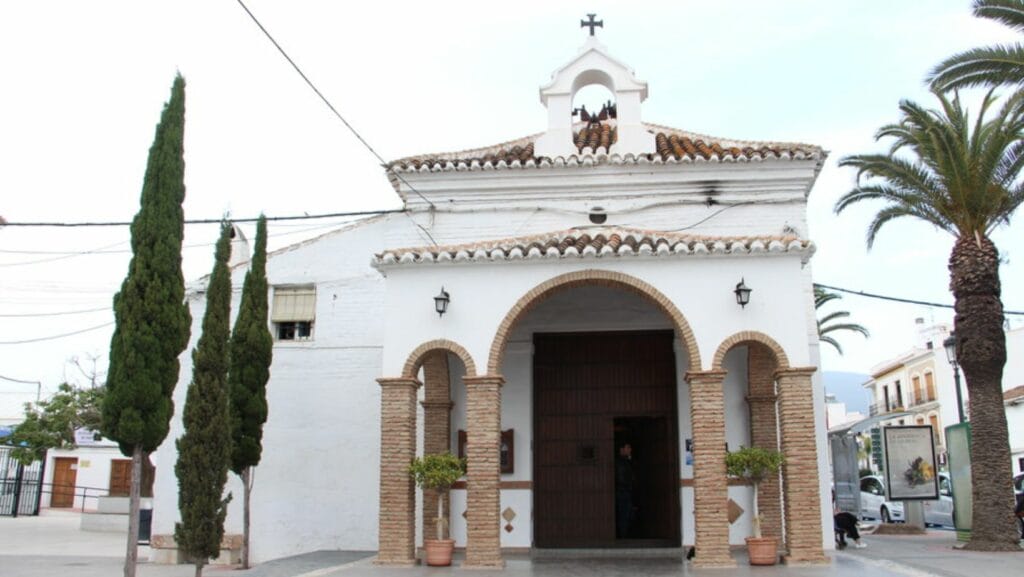
It is home to the chapel of Our Lady of Sorrows, the patron saint of Nerja, a small chapel which houses a number of paintings. But what makes this square special is its atmosphere: it is surrounded by bars and open-air terraces and serves as one of the hubs of the town’s social life, both by day and by night.
It’s a cosy spot to take a break mid-morning or to enjoy some tapas, and it often hosts events, live music and local festival celebrations.
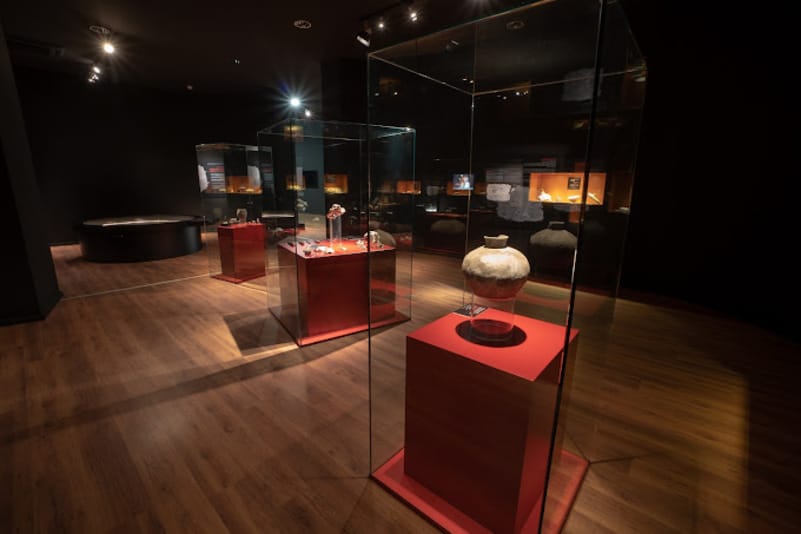
In the Plaza de España, this museum traces the history of the town and the surrounding area. Its most valuable exhibits for visitors are the reproductions of the paintings from the Nerja Cave, which offer a close-up view of prehistoric art that cannot be seen during the cave tour.
It also displays pottery, tools and everyday objects that illustrate the development of the municipality, featuring artefacts from the cultures Iberian and Phoenician. It’s a short but very useful visit to help you understand the context of everything else, especially if you’re planning to visit the cave.
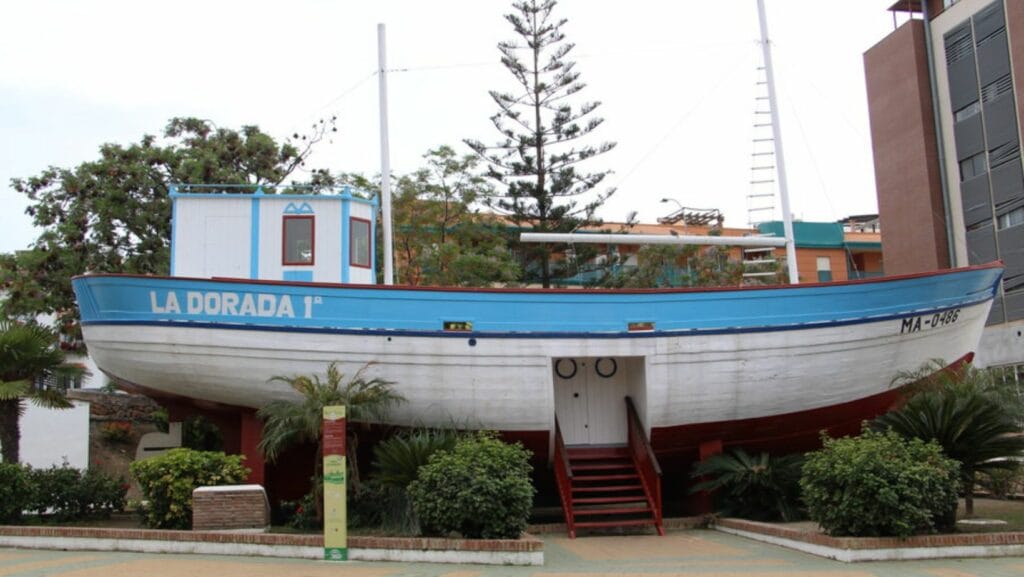
This urban park takes its name from Blue Summer, the television series filmed in Nerja in the early the 1980s and which left its mark on an entire generation. Its claim to fame is the ship «La Dorada», popularly known as Chanquete’s boat, in honour of the character of the old sailor.
It is a playground and promenade much loved by families, and a nod to the mark that series left on the town’s identity. If you’re travelling with children, in Things to do in Nerja with children You’ll find more plans.

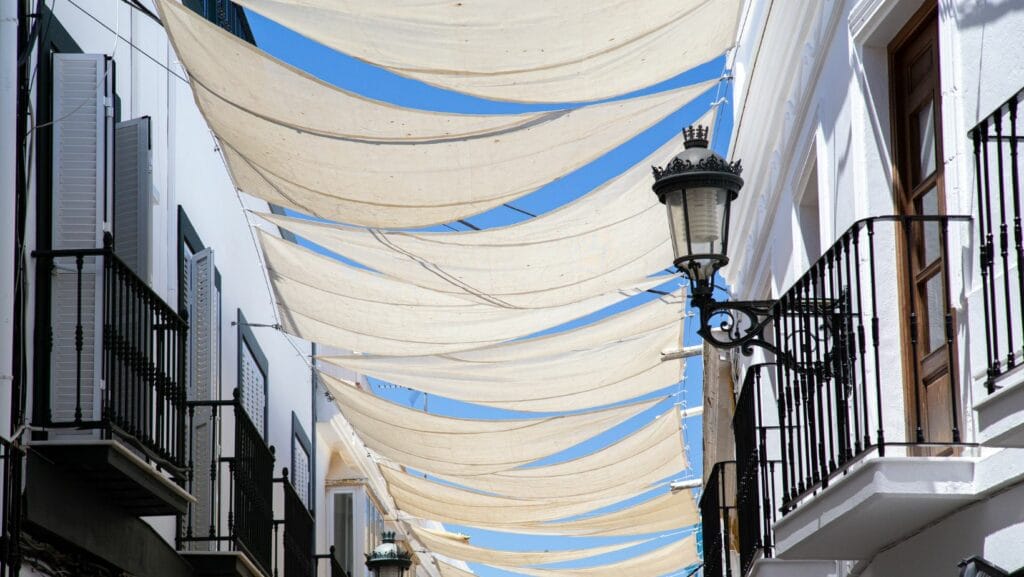
The old town is characterised by narrow streets, white-washed façades and balconies adorned with flowers. The two main streets worth exploring are the Pintada Street, the most commercial, and the Hernando de Carabeo Street, which links the town centre with the viewpoints and beaches. Along the way there are shops, traditional wine cellars and outdoor cafés, and the Cavana Square It’s a good place for breakfast.
As well as the Balcón de Europa, Nerja has several viewpoints scattered throughout the town. The one we’d most recommend is the Mirador del Bendito, on Carabeo Street itself: much less crowded and with a magnificent view of the coastline. Walking from one place to another is the best way to explore the village.
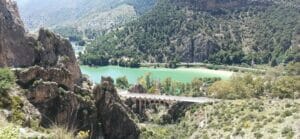
On the outskirts, on the road to Maro, stands the Eagle Bridge, also known as the Águila Aqueduct: a brick structure dating from the 19th century with four storeys of arches which was built to supply water to a former sugar mill in the area.
It’s still standing and can be seen from the road, so it’s very easy to combine a visit to it with a trip to Nerja Cave, which is just a couple of minutes away.
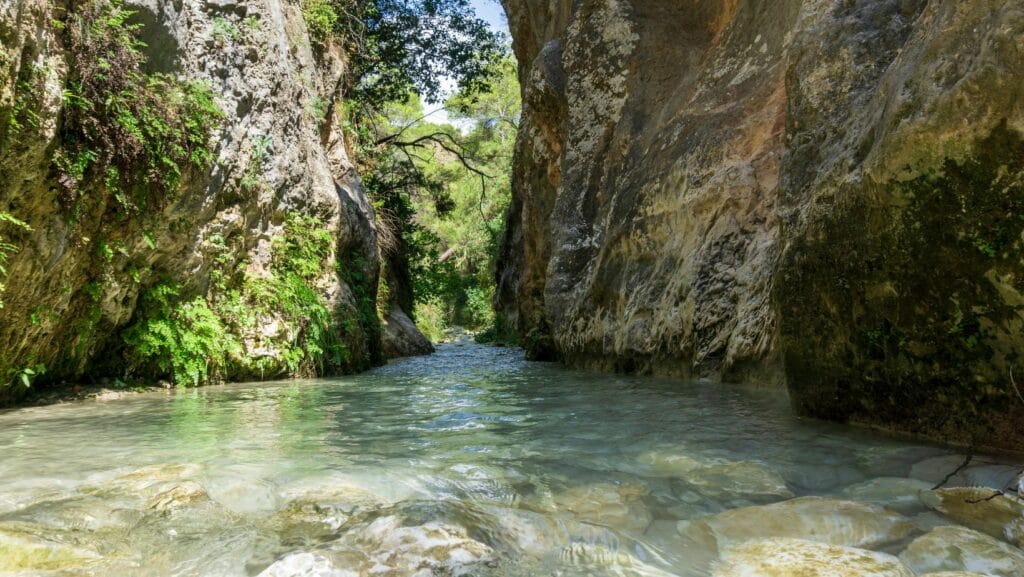
The Old Bridge crosses the Chillar River at the entrance to the village for those arriving via the old N-340, and serves as a gateway to Nerja. It was first built in 1860, was destroyed twice by floods and was rebuilt for the last time in 1979, whilst retaining its original design.
And the river it crosses is a destination in its own right: the Chillar River route, which involves walking along the riverbed itself with the water lapping at your feet, is one of the most popular nature walks in the province, particularly in summer.
If you only have one day, this itinerary allows you to see the main sights of the village on foot and save the cave and the cliffs for last, travelling there by car.
The first eight points are in the centre and can be reached on foot. The cave, the aqueduct and the cliffs are on the outskirts, towards Maro, and require a car or an organised tour.
You might be interested in the Chillar River route, one of the most famous water routes in Málaga
Nerja is about 55 kilometres in the city of Málaga, at the eastern end of the province. By car, you can get there via the A-7 motorway in just under an hour, and there’s also direct buses from Málaga bus station throughout the day.
Nerja it doesn't have a railway station, so the nearest stop is in Málaga. If you’d rather not drive or organise your own timetable, the day trip combines Nerja with Frigiliana, the neighbouring white village, and includes transport and transfers between the two villages.
For further practical information about the destination, please see the Nerja guide.
If you’d like to explore the cave, the Balcón de Europa and the village in a single day, without having to worry about transport:
And if you’re planning to explore more of the province, here are some other day trips available from Málaga and the Costa del Sol, ranging from Marbella and Ronda to the Caminito del Rey:
The main attraction is the Balcón de Europa, a viewpoint overlooking the Mediterranean from which walks through the old town begin. Also worth visiting are the Nerja Caves, in the hamlet of Maro, and the beaches of Burriana and Calahonda. These are the three must-see attractions that no visitor should miss.
In a single day, you can start at the Balcón de Europa, visit the Church of El Salvador and explore the old town, including Calle Pintada, Calle Carabeo and the Mirador del Bendito, as well as the Nerja Museum and the Plaza de la Ermita. In the afternoon, head to the beaches of Calahonda or Burriana and Verano Azul Park, and take a drive to the Nerja Caves and the Puente del Águila.
The Nerja Caves were discovered in 1959 by a group of young people from Maro. They contain large chambers with stalactites and stalagmites, such as the ‘Ballet Chamber’, as well as cave paintings and remains of prehistoric human occupation. They are situated about four kilometres from the centre of Nerja.
Nerja is about 55 kilometres from Málaga city centre. By car, it takes just under an hour via the A-7 motorway, and there are also direct buses from Málaga station throughout the day. Nerja does not have a railway station, so the nearest station is in Málaga.
Nearby you’ll find Frigiliana, one of the most popular white villages in the area, and the Maro-Cerro Gordo Cliffs Nature Reserve, with its coves and footpaths. Also well worth a visit are the Nerja Cave and the Puente del Águila, both on the way to Maro, and the Chillar River trail, which takes you walking right along the riverbed itself.
The largest is Burriana, which has a Blue Flag, facilities, beach bars and water sports. Calahonda is a small cove beneath the Balcón de Europa, accessed via the Boquete, an arch carved out of the rock. There are also more rugged coves in the surrounding area, on the Maro Cliffs.