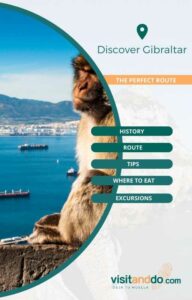
Gibraltar’s macaques are the only primates living in the wild in Europe. Around 300 Barbary macaques (Macaca sylvanus) live across the upper part of the Rock.
And their story almost came to an end in 1942, as you’ll see in a moment.
This is the fact that hardly anyone mentions. To the macaques They are officially fed twice a day, at 8.00 am and 4.00 pm, in the area of Apes’ Den.
If you can arrange your visit to fit in with those times, you see them clearly and in large numbers. For the rest of the day, they roam freely around the Reserve, and it’s down to luck.
Otherwise, the morning is better: They are more active and move around the passageways.
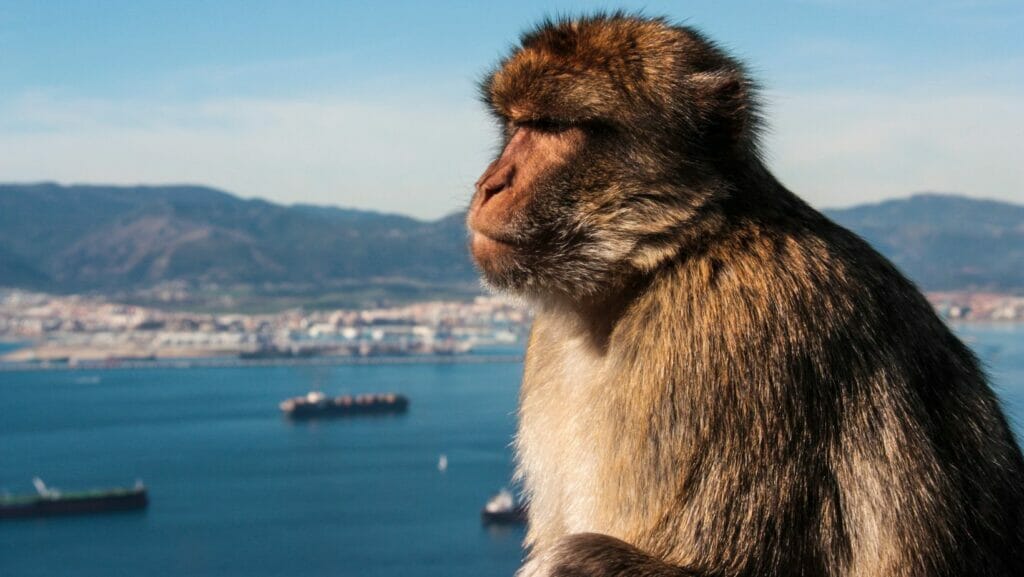
They’re not monkeys, they’re macaques, and this is evident in one detail: they have no tail. That’s why in English they’re called apes even though technically they aren’t.
It is the only species of macaque that lives outside Asia and the only free-ranging primate population in Europe. Its natural habitat is the Atlas Mountains, in Morocco and Algeria.
How they are organised: a few 300 individuals in five groups comprising between 10 and 30 individuals, each with its own territory. The structure is matriarchal: the females are in charge.
They are diurnal and live up to twenty years and they spend the day eating, playing and grooming one another.
The species is endangered. Worldwide, there are between 1,200 and 2,000 copies, and the population is declining as the Atlas forests are felled.
In other words: The 300 from the Rock are a far from insignificant part of what remains. They are not just another tourist attraction.
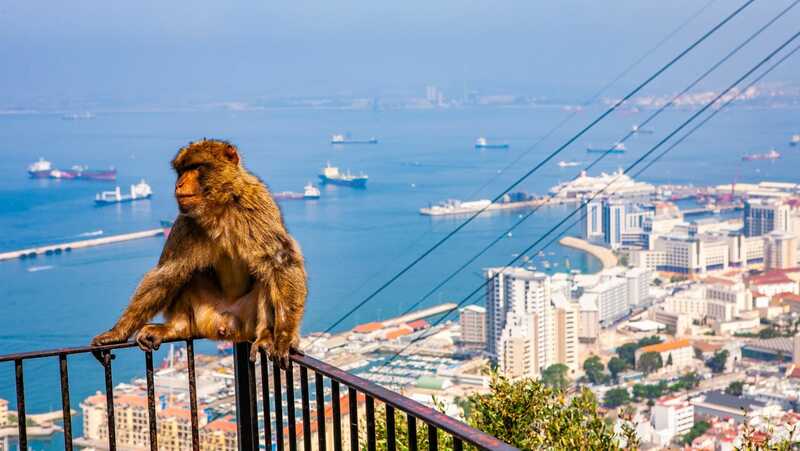
Legend has it that as long as there are macaques on the Rock, Gibraltar will remain British. It sounds like folklore, and it is, but it had real consequences.
In 1942, in the midst of the Second World War, the colony had dwindled to seven individuals. Seven.
Winston Churchill personally ordered that it be repopulated immediately, importing macaques from Morocco and Algeria. There were fears of an invasion, and he took the legend seriously.
And here’s the best bit: the Genetic analysis confirms this. The macaques you see today are descended from that resettlement, not of the original population. Nothing remains of the original settlement.
It is the same superstition as that surrounding the ravens at the Tower of London, whose wings are clipped so that they do not fly away.
The Royal Navy looked after them until 1991, when responsibility passed to the Government of Gibraltar. They kept a register of births and The injured macaques were treated at the Royal Naval Hospital, just as with military personnel.
Today, they are provided with fruit, vegetables and nuts, and their numbers and health are monitored.
Apes’ Den, is the classic spot: it’s in Old Queens Road, near the The Wall of Charles V. This is home to the Queen’s Gate troop, the group most accustomed to people.
But they can also be seen at the viewpoints, next to the old batteries and throughout the upper part of the area. There’s no need to go looking for them: they usually come to you.
Important, because it has changed: The cable car has been closed since November 2025 due to renovation work, and it is not expected to reopen until 2027.
And private vehicles are not allowed to enter the Nature Reserve. So that leaves three options: tourist taxi, on foot —about two and a half hours’ climb— or organised tour.
Full details at how to climb the Rock and in the condition of the cable car.
The entrance to the Nature Reserve costs £30 for adults and £22 for children aged 5 to 11, free for children under that age. Rates for August 2026.
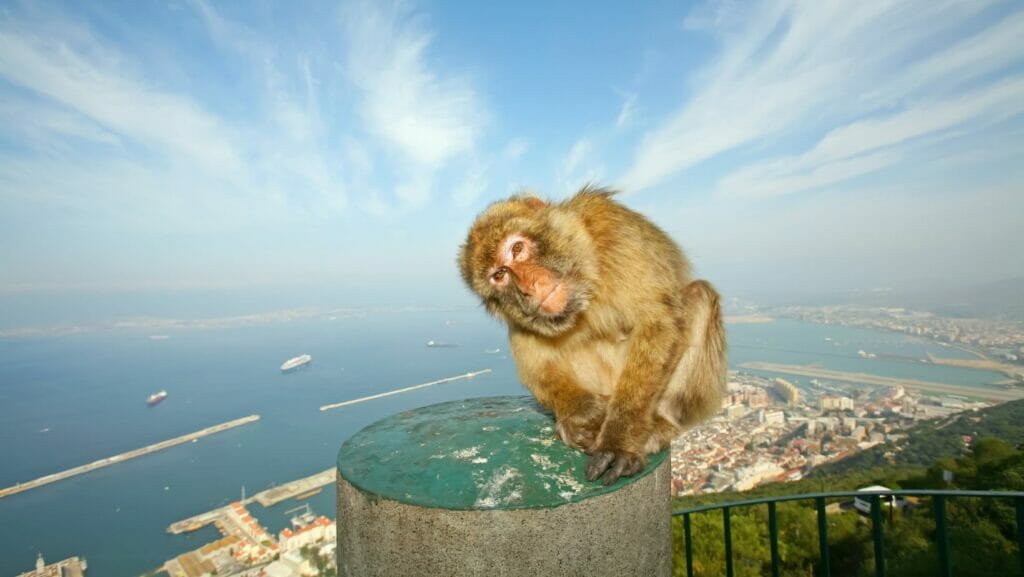
Feeding them is a criminal offence in Gibraltar, with fines of up to 4,000 pounds. This is not a recommendation: it is a criminal offence.
And there is an underlying reason: When they rely on visitors, their social structures break down, they come down to the village and end up causing damage. The ban is in place to protect them.
The rules, in order of importance:
They’ll climb all over you if you let them. They’re used to people, but they’re wild.
Admission to the Reserve includes the San Miguel cave, the Skywalk, the Windsor suspension bridge, The Tunnels of the Great Siege, the Moorish Castle and the 100-tonne cannon.
Everything at the Rock of Gibraltar. And below, Main Street for tax-free shopping and Europa Point with its headlight.
More at Ten interesting facts about Gibraltar and where to eat.
We are a local tour operator based in Málaga with over 50 years’ experience organising trips around Andalusia. With the cable car out of service, the excursion takes care of the climb, with a guide and a stop to see the macaques, Punta Europa and the San Miguel cave:
The second adds dolphin-watching trip by boat around the bay: in whales and dolphins in Gibraltar.
There are around 300 Barbary macaques, divided into five troops of between ten and thirty individuals, each with its own territory in the upper part of the Rock. The groups have a matriarchal structure and their members can live for up to twenty years.
At 8.00 am and 4.00 pm, which are the times when they are officially fed in the Apes’ Den area. Timing your visit to coincide with these times ensures you’ll see them, and in large numbers. Generally speaking, the morning is preferable as they are more active then.
The most widely accepted theory is that they were introduced by humans from North Africa, given the short distance between the Rock and Morocco. What is documented, however, is that the colony was reinforced on several occasions: by 1942, the population had fallen to seven individuals, and Winston Churchill ordered it to be restocked with macaques from Morocco and Algeria. Genetic analysis confirms that the current population is descended from that reintroduction.
Yes, it is an offence and fines can be as high as 4,000 pounds. The ban is in place because feeding by visitors disrupts their social groups, makes them dependent and causes them to come down into the town centre, where they cause damage. Their feeding is the responsibility of the local authorities.
They are used to human presence and will even climb onto visitors, but they are still wild animals and will bite if they feel threatened. They do not pose a serious danger as long as you keep your distance, do not touch them or offer them food, and keep your bags zipped up, as they are very quick to snatch items.
Not at the moment. The Gibraltar cable car closed in November 2025 for a complete refurbishment and is not expected to reopen until around 2027. As private vehicles are also not permitted in the Nature Reserve, your options are to take a tourist taxi, walk up or book an organised tour.