The December bank holiday weekend is one of the best times of the year to visit Morocco, and for a surprising reason: It’s not a public holiday there.
You have days off, yet the country carries on as normal. Shops are open, the medinas go about their business as usual, and there’s neither the summer heat nor the queues.
Three things come together:
And the finishing touch: 6 and 8 December are not public holidays in Morocco. There are no closures or special opening hours: the souks, workshops and shops are open as usual.
It’s the opposite of what happens when you travel around Europe over a long weekend, when you find half the country is closed.
In Tétouan and the north, in December: on 16 and 20 degrees during the day and around 8 o’clock in the evening.
But the most important fact is actually this: December is the rainiest month in northern Morocco. It’s not a minor detail; it’s the difference between a good day and an uncomfortable one.
What to bring:
What isn’t necessary: Proper winter clothes. With mid-season gear, you’ll be more than sorted.
This is what’s most confusing, because the route isn’t direct:
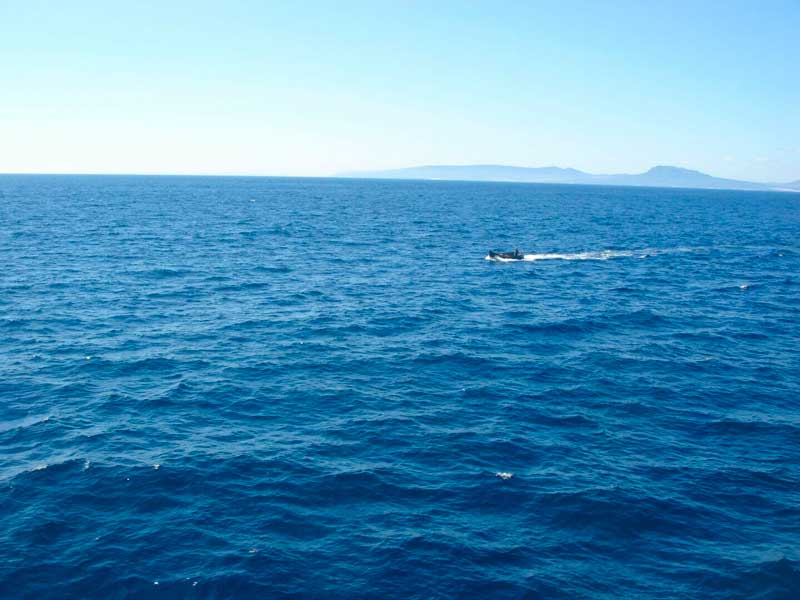
In other words: you enter Morocco by land, not by boat. The ferry arrives in Ceuta, which is in Spain.
No one controls the time spent at the border crossing, and it can range from a short wait to quite a long one. It’s all part of the day, so it’s best to go along with that idea.
What does speed up the process: Make sure you have your passport details to hand beforehand and keep the document within easy reach, not at the bottom of your rucksack.
And the ferry timetable doesn’t depend on the operator either: this may vary.
You need a valid passport. A national identity card is not acceptable. That’s what causes the most problems, because given how close it is, many people assume that’s enough.
And there’s something you should know before booking: are requested the details of each participant in advance, to speed up the border process:
So it’s a good idea to have everyone’s passports to hand when you book, not afterwards. And check the use-by dates: that’s where the surprise lies.
Non-EU nationals must check whether they require a visa. Each traveller is responsible for ensuring they are permitted to enter the country.
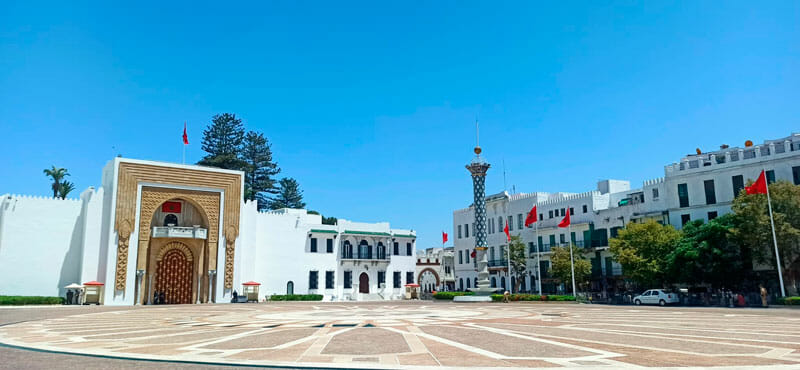
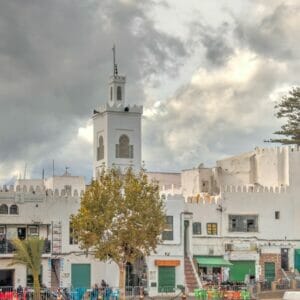
Tetouan is known as «the white dove» because of the colour of its houses, and it’s a great choice for a day trip: it’s manageable. Everything is within walking distance.
And it’s two cities in one:
Designated by UNESCO in 1997, and it is one of the best-preserved in Morocco because it has undergone very few modern changes.
The reason lies in its origins: they repopulated it Moorish people and Jews expelled from the Iberian Peninsula in the 16th century, who brought their own building techniques with them. That is why it is known as «the daughter of Granada».
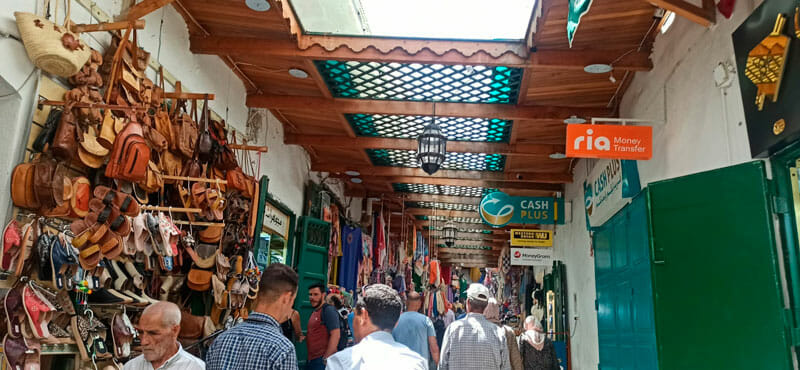
What you can see inside: on souk, the old Jewish quarter —the Mellah—, leather, silver and textile workshops in full swing, and the gates in the city walls.
And compared to Marrakech or Fez, it’s far less overrun by tourists. This is particularly noticeable in the off-season.
Full details at the eight gates of the medina of Tetouan y what to see in Tetouan.
Right next to the medina is the new town, the part that was built during the Spanish protectorate, with wide avenues and architecture from the 1920s and 1930s.
Its centre is Plaza Primo de Rivera, with whitewashed buildings, balconies and cafés where you can enjoy a cup of mint tea.
And what’s interesting is the contrast: Within a hundred metres, you go from a medieval network of narrow streets to a European-style grid layout. You hardly ever see that anywhere else.
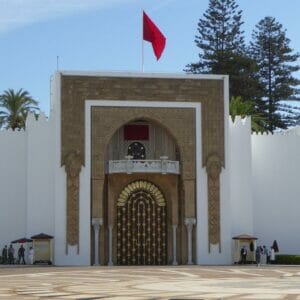
The Hassan II Square, along with the Royal Palace, is the other must-see attraction. As it is a working residence, you can only view it from the outside.
A typical lunch usually takes harira —vegetable soup—, skewers, couscous, mint tea and Arabic pastries. With live folk music.
In the bazaar area, people haggle, and that’s part of the deal: keep calm and be polite.
Practical information: in the retail sector You can pay by card or in euros, so there’s no need to exchange money for dirhams for a day trip.
Please note: if you pay in euros, the exchange rate they apply is rarely in your favour. For small amounts, it doesn’t really matter; for a large purchase, it’s worth bearing this in mind.
It’s a regular stop, featuring natural products and traditional cosmetics, in particular argan oil.
And here’s some honest advice: You can haggle here too, and the starting prices are set with visitors in mind. Compare prices before you buy, and don’t settle for the first price you’re quoted.
We are a local tour operator based in Málaga with over 50 years’ experience organising trips around Andalusia. There is a weekly service to Morocco, and on a long weekend it fills up sooner:
There are two routes, depending on where you start from: one from Malaga and the Costa del Sol and another from Algeciras, which is cheaper as it does not include road transport.
What is included: coach, return journey on the fast ferry, tour guide speaking Spanish and English, guided tour of Tetouan and lunch with a folklore show.
The updated prices are listed on each product page. And at long weekends, it’s a good idea to book in advance.
Before you go: Entry requirements for travelling to Morocco, What is Christmas like there? y handcrafted Arabic sweets.
Yes, and for a little-known reason: 6 and 8 December are not public holidays in Morocco, so shops, souks and workshops operate as normal whilst travellers have the days off. Added to this is mild weather ideal for walking, with temperatures between 16 and 20 degrees during the day, and far fewer crowds than in summer.
Between 16 and 20 degrees during the day and around 8 at night in Tétouan and the surrounding area. It’s worth noting that December is the wettest month in the north of the country, so as well as dressing in layers, it’s highly recommended that you bring a waterproof jacket or a folding umbrella and wear closed-toe shoes with a good grip, as the cobbled streets can be slippery.
The ferry arrives in Ceuta, which is Spanish territory, and from there you enter Morocco by land via the border crossing. The full itinerary involves a bus journey to Algeciras, a fast ferry crossing of around an hour to Ceuta, a sightseeing tour of the city, and then crossing the border by bus to Tetouan.
It is unpredictable and does not depend on the operator: it may be sorted out quickly or take quite a while. It is part and parcel of the day and it is best to accept that. What does speed up the process, however, is providing your passport details when booking and having the document to hand rather than tucked away.
A valid passport is required, as a national identity card is not valid for crossing the border. When booking, details of each participant are requested to speed up the border crossing process: full name as it appears on the document, date of birth, passport number and expiry date, country, language and occupation. It is advisable to have your passports to hand when making the booking and to check their expiry dates.
It isn’t necessary. In the Tetuán shopping area, you can pay by card or in euros. It’s worth bearing in mind that the exchange rate applied by shops when you pay in euros is rarely favourable to the buyer, so for a purchase of a certain value, it’s worth considering this.
UNESCO inscribed it on the World Heritage List in 1997 because it has preserved its Al-Andalus layout virtually intact, with hardly any modern alterations. It was repopulated in the 16th century by Moriscos and Jews expelled from the Iberian Peninsula, who brought their architecture and craftsmanship with them, which is why it is known as «the daughter of Granada». It is far less overrun by tourists than the medinas of Marrakesh or Fez.