EN
EN  ES
ES  FR
FR  DE
DE 
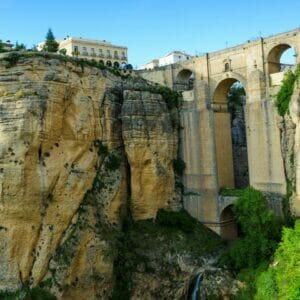
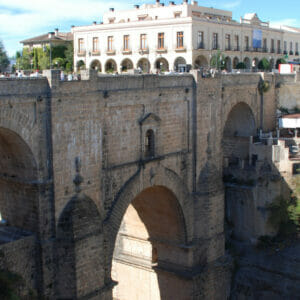
In the beautiful city of Ronda, located in the province of Malaga, Spain, a much awaited event takes place every year: the Ronda Fair.
For a week full of magic and tradition, the Ronda Fair becomes the epicentre of fun and Andalusian culture. As well as music and dance, activities are organised for all agesThe festival offers a wide range of activities, such as horse-drawn carriage rides, children's games and equestrian exhibitions. There is no room for boredom during this magical week.
From Visitanddo.com we tell you all the details for you to visit this emblematic fair dedicated to the bullfighter Pedro Romero..
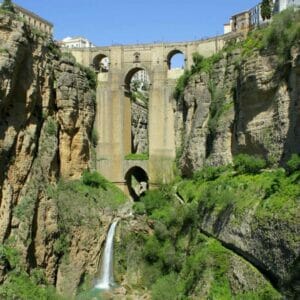
Take advantage of a day trip to Ronda to discover one of the most beautiful white villages of Andalusia.
The Ronda Fair is held between the last week of August and the first week of September, the exact dates may vary from year to year.
The Ronda 2025 Fair will be held from Tuesday 01 September until Sunday 07 September. The Ronda fair is held in the city's fairgrounds and is one of the oldest in the province of Malaga, with a wide variety of events and activities.

The fair has its roots in the year 1485, when Ronda was reconquered by the Catholic Monarchs. Since then, the Ronda Fair has become an emblematic celebration that combines religious, cultural and festive elements.
In 1954, the September fair became the most important fair of the year. Pedro Romero Fairin homage to the Ronda bullfighter from the Romero de Ronda family.
Hence the celebration of the Corrida Goyescaa very special bullfight where the bullfighters dress up in elegant Goyaesque costumes. These costumes are inspired by the 18th century fashion in Madrid, which was immortalised by the renowned painter Francisco de Goya. In fact, the name "Goyesca" comes directly from this famous artist.
In addition, the Ronda Fair is dedicated to la Virgen de la Paz, patron saint of the city. During the fair, processions and religious acts are held in honour of the virgin.

The Goyescas in Ronda are an important event in the Feria de Pedro Romero. The Goyescas are a theatrical and folkloric performance that pays tribute to the famous painter Francisco de Goya and to the 18th century period in Spain known as the the Goyaesque period.
The main element of the Goyescas is the Goyaesque costume competitionwhere both men and women wear costumes that imitate the style and fashion of the Goyaesque period. The women wear long, elegant dresses with voluminous skirts and elaborate hairstyles, while the men wear period costumes with jackets, waistcoats, tight trousers and hats. This competition rewards the originality and authenticity of the Goyaesque costumes.
In addition to the costume contest, the Goyescas in Ronda are also include parades through the streets of the cityand musical and dance performances.
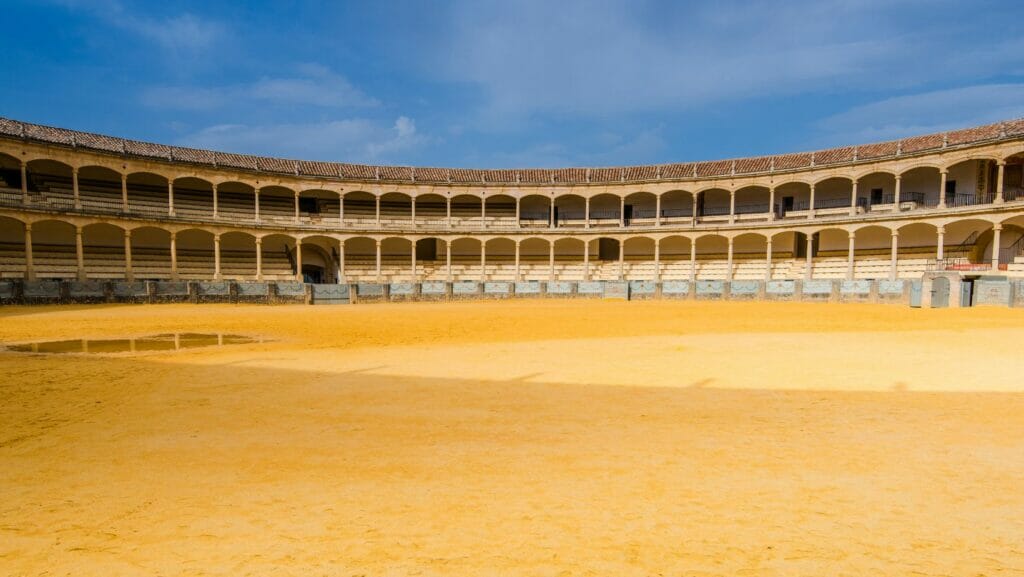
The Corrida Goyesca is a very special bullfighting event that takes place within the Feria de Pedro Romero and is celebrated in the Plaza de la Real Maestranza de Caballería of Rondaone of the oldest bullrings in Spain and declared an Asset of Cultural Interest in 1993, you can see it in one of the most important bullrings in Spain. day trip to Ronda if you are in Málaga
The Corrida Goyesca was held for the first time in 1954.The event coincides with the bicentenary of the birth of the bullfighter Pedro Romero, the bullfighter who inaugurated the bullring of Ronda in 1785.
During the event, the bullfighters perform their bullfighting feats facing the bulls as in any other bullfight. However, What distinguishes it is the atmosphere and aesthetics that evoke the splendour of the past.
It is important to note that the Corrida Goyesca is a very popular event and in great demand, tickets can be purchased at the website of Servitoro.
It is an opportunity to enjoy bullfighting, admire the period costumes and immerse yourself in the historical atmosphere of the bullfight.

The couplings of Ronda en the oldest exhibitionThe annual event, which takes place every year thanks to the efforts of the Real Maestranza de Caballería de Ronda.
In this competition, the coachmen present their fully decorated carriagesranging from classic models to modern creations. The horsesThe horses, selected for their breed, mostly Pura Raza Española, and trained for this occasion, are presented with care.
The competition is an example of the coachmen's ability to control the horses and manoeuvre the carriages with precision. The jury evaluates the presentation, the elegance of the hitch and the skill of the manoeuvres. Prizes are awarded in different categories, such as traditional hitching, lemon tree hitching, trunk hitching, among others.
You can find more information on the website of Royal Andalusian Harness Club of Andalusia.

Before the official start of the Ronda Fair, one of the most historic festivals in Spain takes place: the International Folklore Gala of Rondawhich it is, in fact, the oldest festival in Andalusiaorganised by the Folklore-Cultural Association 'Abul Beka'.
This festival will be held from 23 August to 27 September 2024 in the Blas Infante Auditorium.
If you are planning to visit Ronda, we encourage you to take the opportunity to experience the Ronda Fair. You won't regret immersing yourself in this festive and contagious atmosphere, where Andalusian folklore unfolds in all its splendour, or you can take part in one of the many activities on offer. a route of the white villages from Ronda.

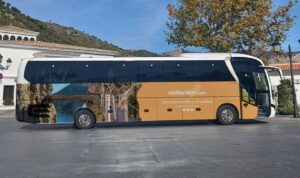
We leave you one of the best excursions to visit Ronda without you having to worry about transport.
The tour includes:
You can find out more about all the details below: