Thirteen villages in the province of Málaga, grouped by region so that you can link them together without having to cross the province from one end to the other.
What makes each one different —not «white houses and flowers»—everyone’s got that—.
It doesn’t take long to get around the province: In less than two hours, you go from a village overlooking the Mediterranean to a hamlet amongst chestnut trees. That’s why the most efficient thing is group by region and do two or three in one go.
| Region | Villages | Base |
|---|---|---|
| Axarquia | Frigiliana, Cómpeta, Comares | Nerja |
| Serranía de Ronda | Ronda, Gaucín, Genalguacil, Júzcar | Ronda |
| West coast | Mijas, Casares | Marbella or Estepona |
| North and inland | Antequera, Archidona, Ardales, Casabermeja | Antequera |
And if you’re looking for something more specific, we have two closed routes: the White Villages Route, only mountain folk, and towns with beaches. This page deliberately combines the two.
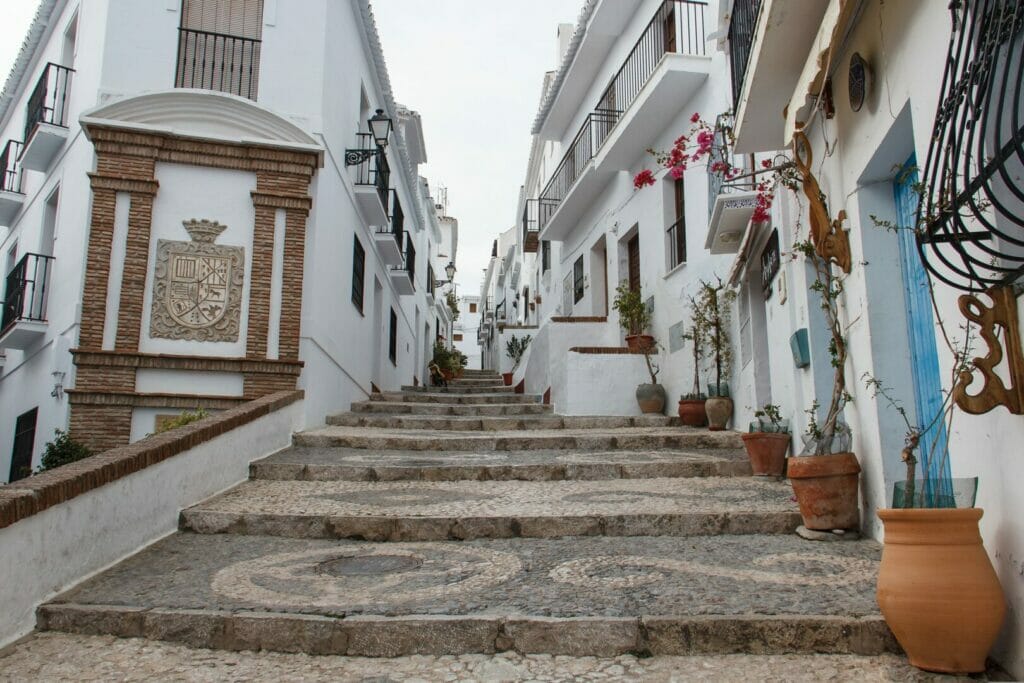
The most photographed spot in the county, and its Moorish-style building is considered one of the best-preserved in Andalusia. It is called «the town of the three cultures».
What to look for: the ceramic panels scattered throughout the streets, which tell the story of the Moorish rebellion at El Fuerte hill. It is a narrative trail through the village.
20 minutes from Nerja, so you can combine it with a day at the beach. More at What to see in Frigiliana.
The Balcony of the Axarquía. It’s on top of a hill with 360-degree view and the Mediterranean in the distance.
What makes it different: has a signposted route with ceramic footprints embedded in the ground. Follow the trail and it will take you through the entire Al-Andalus quarter without needing a map.
The village of Muscat wine. It is surrounded by vineyards that produce the sweet wine of the Axarquía, and that is the reason to visit.
And that is the starting point of the routes to the Tejeda and Almijara Mountain Range, so it’s ideal if you want to walk.
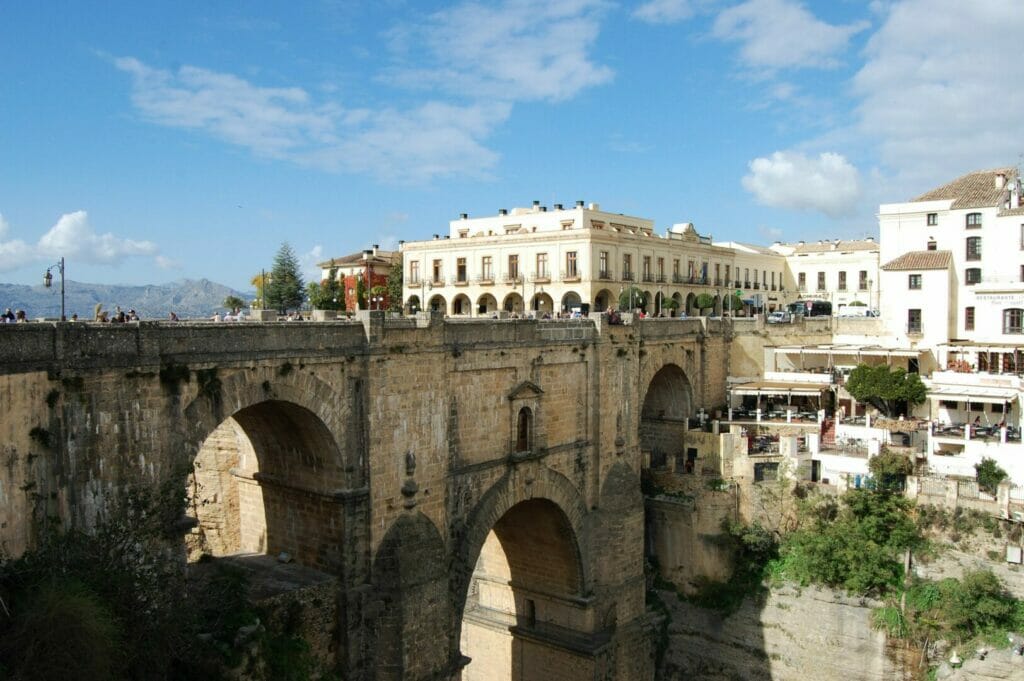
It’s not a village; it’s a historic town split in two by a gash over a hundred metres long. The “Puente Nuevo” it is his image, and The bullring is the oldest in Spain.
And there’s one place that hardly anyone visits: the Arab baths, one of the best-preserved in al-Andalus, and the Tajo Mine from the Casa del Rey Moro, with 200 steps carved down to the river.
It is the natural base for the rest of the Serranía. All in What to see in Ronda.
The Balcony of the Serranía, and the longest viewing platform on the list: from the Castle of the Eagle, on clear days, You can see the Strait, Gibraltar and the African coast.
It’s halfway there between Ronda and the west coast, so it’s a good fit if you’re travelling that route. It has attracted quite a few artists, and you can really feel it in the atmosphere.
It is, quite literally, a museum village. Every two years, a series of gatherings of artists and the building works are left on the streets: sculptures and murals blending in with the white farmhouses.
And the surroundings are just as lovely: is in full swing Genal Valley, amongst chestnut and cork oak woods. Autumn is when it’s most worthwhile, with the chestnut grove changing colour.
The only blue village. She had her make-up done for a promotional campaign and, when it was over, the residents voted to keep the colour.
It is the contrast that makes it so appealing: a blue village nestled in a valley of chestnut trees. And in autumn, when the chestnut grove is bathed in ochre, that’s the time of year.
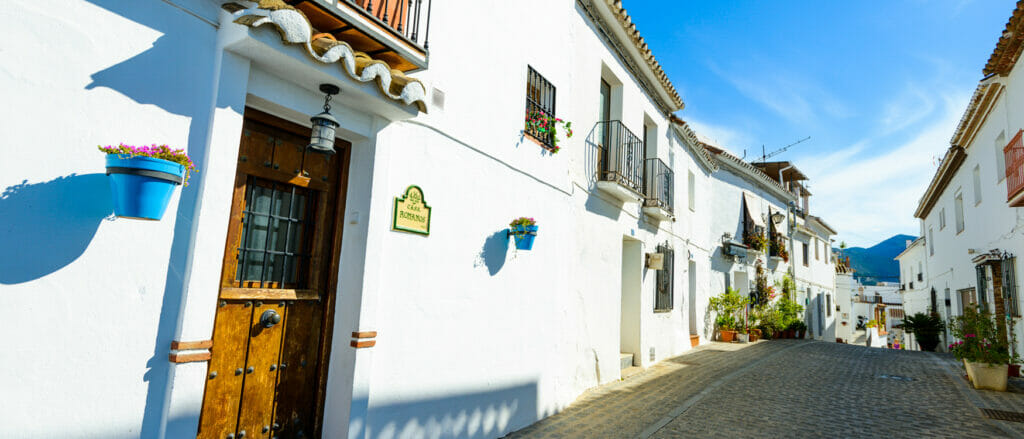
Be careful with the name, as there are three different places: Mijas Village It is the one from the mountains, and it is this one; Mijas Costa and La Cala de Mijas They’re down below, on the coast. If you’re looking for the white village in the photos, it’s the one up there.
What makes it unusual: has the only oval-shaped bullring in Spain. And the donkey-taxis, which are a hallmark of the brand.
It takes a couple of hours to walk around and has viewing points overlooking the sea. Find out more at what to see in Mijas and where to have breakfast.
The most vertical view in the province: the houses are staggered along the hillside beneath the ruins of a Moorish castle, forming a compact silhouette that is recognisable from a distance.
It is near Estepona, so you do it from the west coast without straying too far off course.
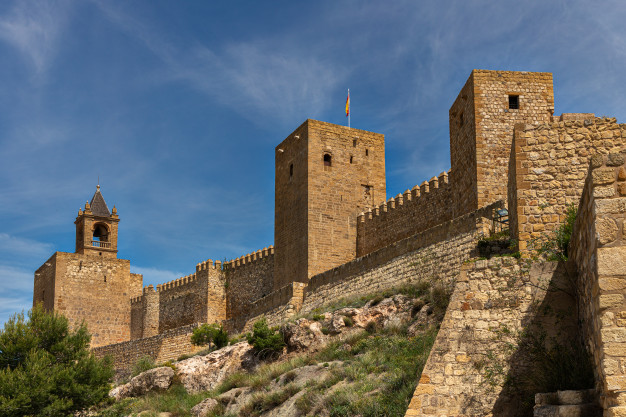
It is «the heart of Andalusia», and this isn’t just marketing: it lies at the geographical centre between Málaga, Granada, Córdoba and Seville, 45 km from the capital.
It has 33 churches for some 41,800 inhabitants, one for every 1,250 people: one of the highest densities in Spain.
And there is an explanation, which is the interesting bit: following the conquest, Antequera remained as a crossroads leading to all the Andalusian capital cities, and that position attracted religious orders, who gradually established communities. Churches are the result of trade, not just of devotion.
Gerardo Diego called it «the city of white, Gongorian churches».
Search El Angelote, the golden weather vane on top of the tower of the Church of St Sebastian: it is the city’s iconic landmark and can be seen from much of the city centre.
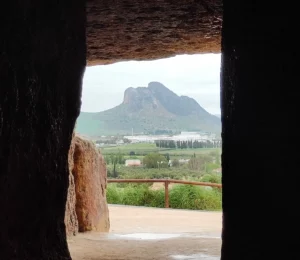
And it’s enough to last a whole day, not just for a quick stop: the dolmens and El Torcal are free to visit and are open almost all year round, though each has its own opening hours. You can find all the details at What to see in Antequera.
It has a square unlike any other: the Ochavada Square, a set 18th-century octagonal of great harmony.
And up on the hill, a sanctuary overlooking the whole region. It’s right next to Antequera, so you can visit them both at the same time.
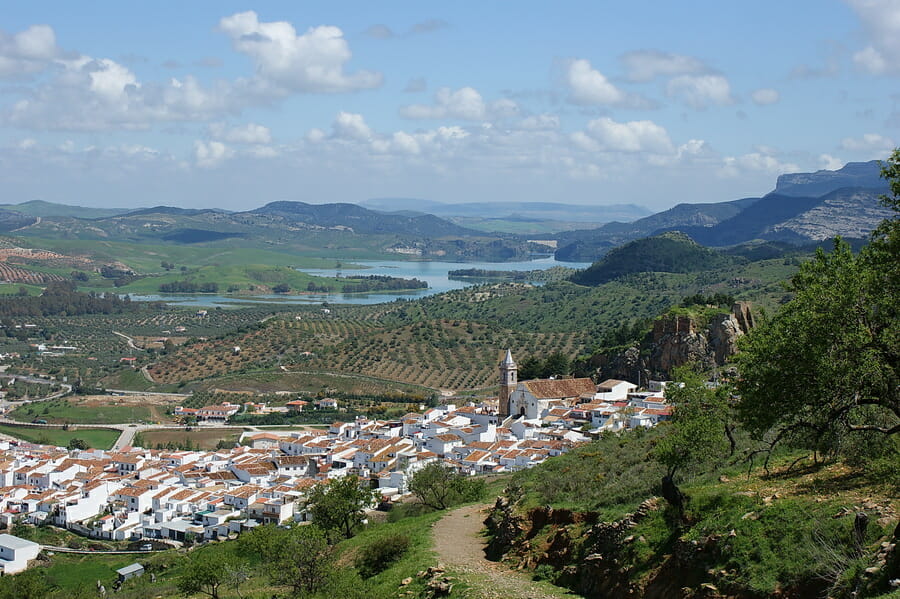
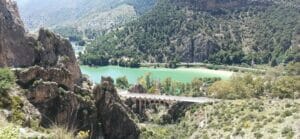
This is the entrance to the Caminito del Rey and the Guadalhorce marshes, with their landscape of turquoise water and rock.
But it has two distinctive features that almost nobody notices:
If you’re heading to El Caminito, it’s well worth setting aside some time to explore the village rather than just parking up and leaving.
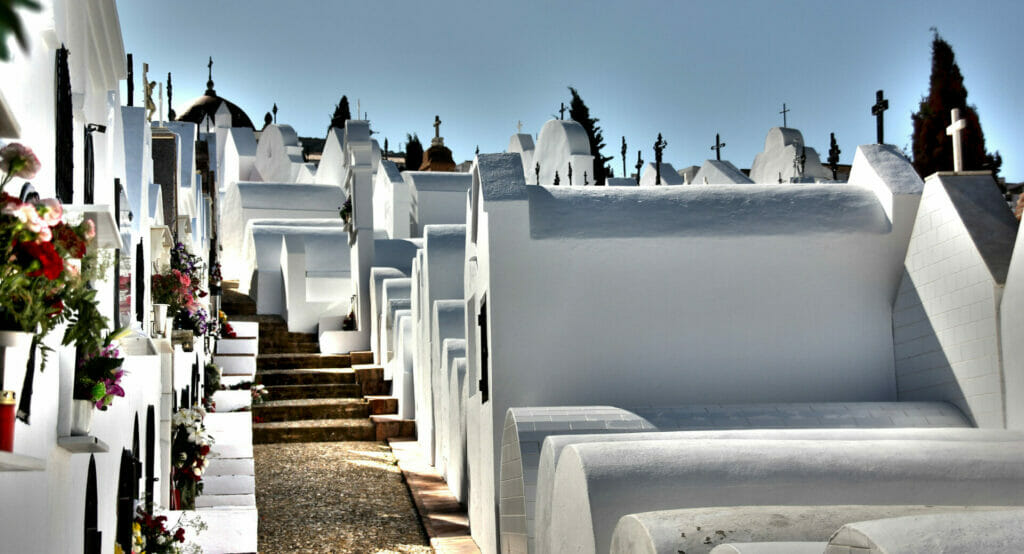
The strangest one on the list, and the one closest to the capital. What you need to look at here is a cemetery: the one from San Sebastián, Bien de Interés Cultural and regarded as one of the most unique in Spain.
The reason: their niches and mausoleums are constructed in such a way that they give the impression that those buried there are standing. It is a monumental complex, not a macabre curiosity.
In addition: the prehistoric site at Peñas de Cabrera, featuring rock art, and is situated next to the Montes de Málaga Natural Park.
We are a local tour operator based in Málaga with over 50 years’ experience organising trips around Andalusia. One per district:
Ronda and Setenil for the Serranía, Nerja and Frigiliana for the Axarquía and Marbella and Mijas to the west coast. All include a tour guide and depart from Málaga and the Costa del Sol.
For the Caminito and Ardales, the full list of excursions.
It depends on what you’re looking for. Frigiliana is the most photographed and boasts one of the best-preserved Moorish old towns in Andalusia. For views, Comares offers a 360-degree panorama of the Axarquía, whilst from Gaucín you can even see as far as Africa. And if you prefer a historic town to a small village, Ronda is unrivalled in the province.
Thirty-three, for a population of around 41,800, which works out at one for every 1,250 people and makes it one of the Spanish cities with the most churches per inhabitant. The reason lies in its location: following the conquest, it became a crossroads leading to all the Andalusian capitals, and this attracted religious orders, which went on to establish communities there.
It was painted blue as part of a promotional campaign and, once the campaign had ended, the locals voted to keep the colour. Today it is the only blue village in the province, and the contrast with the Genal valley’s chestnut groves is precisely what makes it so appealing, especially in autumn.
From the eastern Costa del Sol, Frigiliana, Cómpeta and Comares, in the Axarquía, are easily accessible. From the western coast, Mijas and Casares are within easy reach, and Ronda can be visited in a day. Antequera, Archidona and the villages to the north take a little longer to reach, although they can also be visited as day trips.
These are different parts of the same municipality. Mijas Pueblo is the white-washed village situated on the hillside, with its oval-shaped bullring and viewpoints; Mijas Costa and La Cala de Mijas are on the coast. Anyone looking for the white village featured in the photographs should head up to Mijas Pueblo.
The San Sebastián cemetery has been designated a Site of Cultural Interest and is visited for its architecture: the burial niches and mausoleums are arranged in such a way as to give the impression that those buried there are standing. It is a unique monumental complex in Spain and the main reason to stop off in the village.