Andalusia has eight provinces and a handful of cities where its heritage is concentrated; this guide highlights the ten that are well worth a visit and what to see in each one. You’ll find provincial capitals and two smaller towns that complete the cultural map of the south.
The capital of Andalusia is Seville, the seat of the Regional Government and its Parliament. Beyond that, each province has its own key city: Granada with the Alhambra, Córdoba with its Mosque-Cathedral, Málaga, Cádiz, Almería, Jaén and Huelva, as well as Ronda and the Renaissance towns of Úbeda and Baeza. In each section, we highlight the main monument, what makes it special and where you can book an organised day trip to visit it.
The itinerary is organised in such a way that it moves from the best-known capital cities to the inland sites, so that you can choose according to how many days you have available. All eight provinces are represented, and Ronda and the sites of Úbeda and Baeza are also included due to their significance in terms of heritage. In each city, you’ll find the monument that defines it and the feature that sets it apart from the rest.
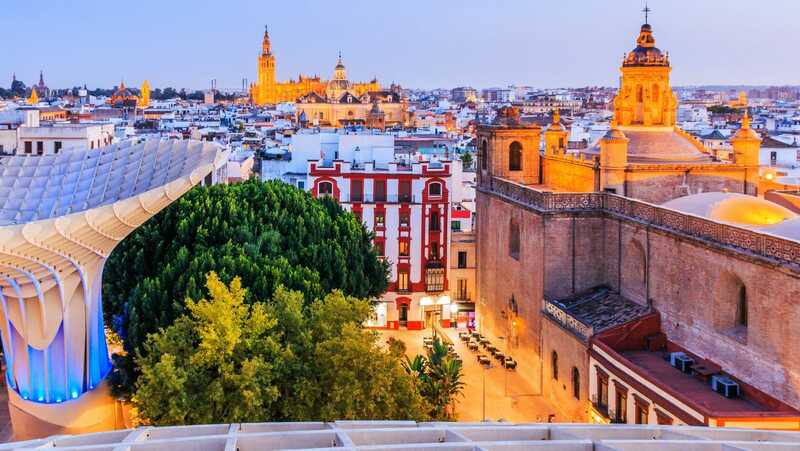
Seville is the capital of Andalusia and the region’s most populous city. Its architectural heritage centres on three buildings designated as World Heritage Sites: the Cathedral, the world’s largest Gothic cathedral, with the Giralda – a former minaret converted into a bell tower –; the Royal Alcazar, a palace of Almohad origin which is still in use and served as the filming location for Game of Thrones; and the Archivo de Indias, which holds the records of the Spanish administration in the Americas.
Apart from these landmarks, the city is best explored on foot along the Santa Cruz neighbourhood, the old Jewish quarter with its narrow streets, and along the banks of Triana, on the other side of the Guadalquivir, famous for its pottery and its flamenco tradition. The Plaza de España, built for the 1929 Ibero-American Exposition, and the Torre del Oro round off a visit that can be completed in one or two days, depending on your pace.
Added to this is a city that’s full of life in its everyday atmosphere: the terraces in the Santa Cruz neighbourhood, the Triana market and the riverside walks provide a natural continuation to your visit once you’ve seen the sights. Seville is also the departure point for the AVE high-speed train to Córdoba and Madrid, making it easy to combine with other cities on your itinerary. You can find all the details in our guide to must-see places in Seville.
If you’re in the province of Málaga, why not make the most of it and go on a day trip to Seville, including a guided tour and tickets to the Real Alcázar?
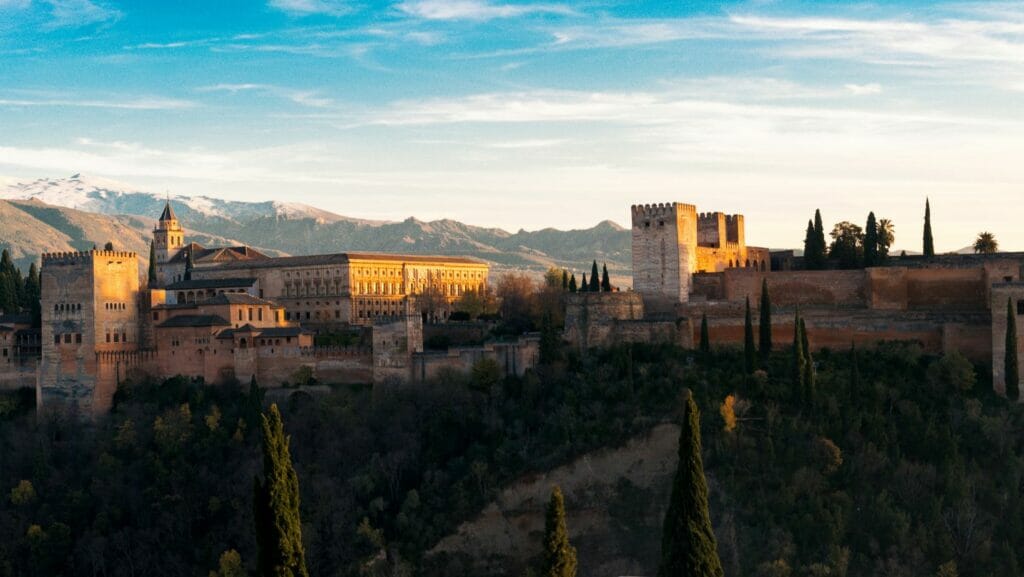
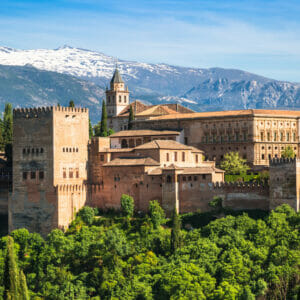
Granada is synonymous with the Alhambra, the Nasrid palace complex comprising the palaces, the Alcazaba and the Generalife gardens. It is the most visited monument in Spain and it is advisable to book your ticket well in advance, as entry to the Nasrid Palaces is by time slot and tickets sell out. It was the last capital of the Nasrid kingdom, and its surrender in 1492 marked the end of the Muslim presence on the Iberian Peninsula.
Opposite the Alhambra hill lies the Albaicín, the medieval quarter with its winding streets and white houses, whose slopes lead up to the San Nicolás viewpoint, from where you can enjoy the classic view of the complex with the Sierra Nevada in the background. The tea houses and craft shops on Calle Elvira add the Moorish touch that characterises the area.
The city centre is home to the Renaissance cathedral and the Royal Chapel, where the Catholic Monarchs are buried, as well as the atmosphere of the ‘cármenes’ and the caves of Sacromonte. Plaza Nueva is the hub of local life, and very close by you’ll find the best places to discover where to eat in Granada. To help you plan your day, here’s our guide to What to see in Granada, and if you’d rather get there without driving, there’s a day trip to Granada from Málaga which includes admission to the Alhambra.
If you are in the province of Malaga, take advantage of this opportunity to visit the Alhambra in Granada, including entrance tickets.
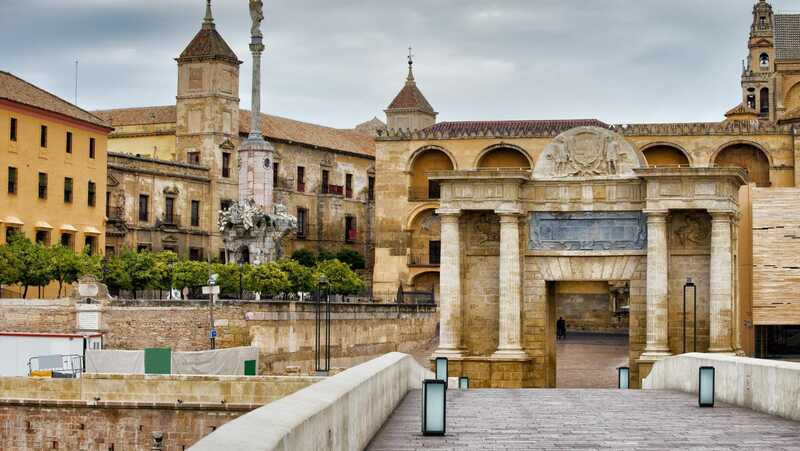
The monument that defines Córdoba is the Mosque-Cathedral, with its forest of columns and the two-coloured horseshoe arches that recur throughout its prayer hall. A Christian cathedral was later built on top of the former Caliphate mosque, so that the building brings together two faiths and several centuries of architecture within a single space. During the Caliphate, around the 10th century, Córdoba became one of the most populous cities in Europe, and the Medina Azahara archaeological site on the outskirts also dates from that period.
Next to the Mosque lies the Jewish Quarter, one of the best-preserved in Spain, featuring the Synagogue and Calleja de las Flores, as well as the craft market. The Roman Bridge over the Guadalquivir and the Alcázar of the Christian Monarchs, with its gardens, mark the boundary of the historic centre, which is also a World Heritage Site. And if you’re looking for a moment of tranquillity, the Palacio de Viana and its twelve courtyards are the perfect place to stop.
If you’re travelling in May, you’ll be there at the same time as the festival of the Patios of Cordoba, when local residents open their homes to the public. You can find the details in the guide to What to see in Córdoba, and for day trips there is a excursion to Cordoba from Malaga.
If you’re in the province of Málaga, why not make the most of it and go on a guided tour of the Jewish quarter, including admission to the Mosque-Cathedral of Córdoba?
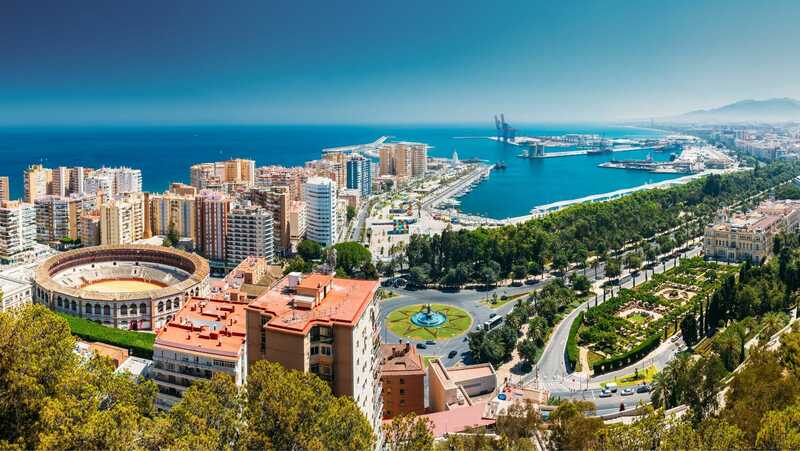
Málaga has evolved from being the gateway to the Costa del Sol to becoming a cultural destination in its own right. In the city centre, the Alcazaba and the Roman Theatre At its feet lies Gibralfaro Castle, towering above, and the Cathedral, known as «la Manquita» because of its unfinished tower. The city also boasts a wealth of museums, including the Picasso Museum — Picasso was born here — and the Centre Pompidou branch in the harbour.
The Muelle Uno promenade and Malagueta beach allow you to combine a city visit with a trip to the seaside in a single day, and the Soho neighbourhood and the Marqués de Larios Street These areas are the hub of the city centre’s commercial and artistic life. To get away from the hustle and bustle, the Paseo del Parque and the Botanical Gardens offer green spaces just a few minutes away.
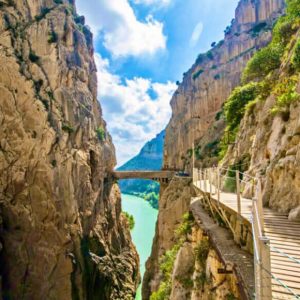
The cultural transformation of the last decade has seen the addition of art galleries such as the Carmen Thyssen Museum and the Russian Museum, meaning the city offers enough to keep visitors occupied for several days without leaving the city centre. Thanks to its airport, its AVE high-speed rail station and its road network, Málaga also serves as a base from which to explore the rest of Andalusia on day trips, including the white villages and the Caminito del Rey.
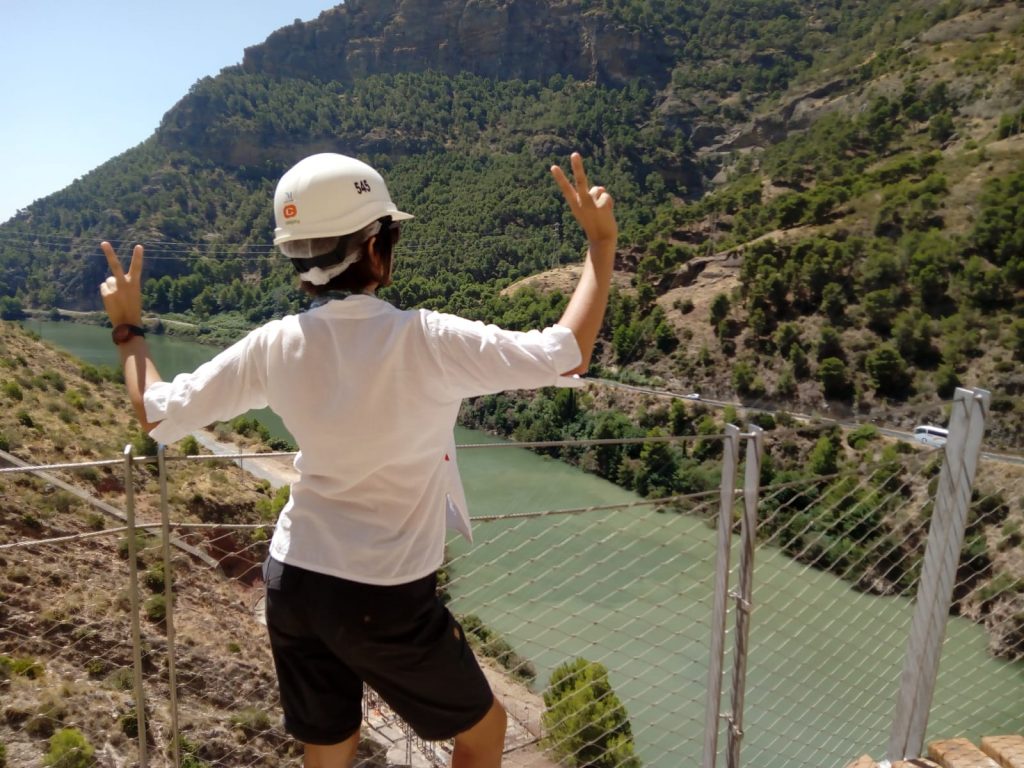
If you are in the province of Malaga, take advantage of the opportunity to go on an excursion with a guided tour and tickets to the Caminito del Rey.
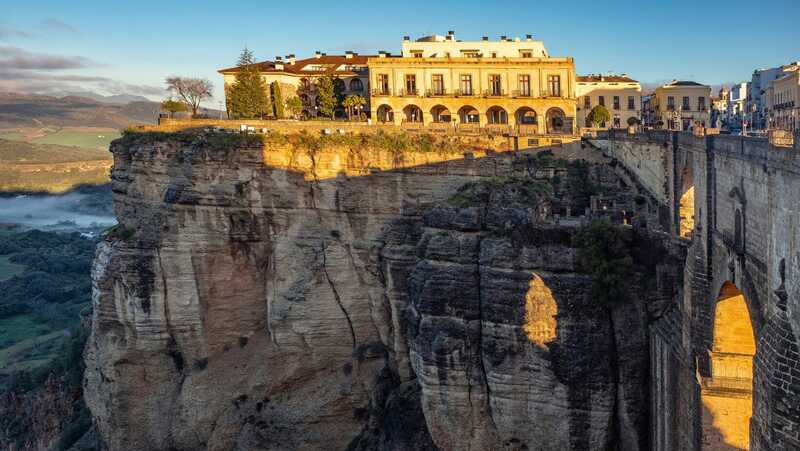
Ronda is situated on a cliff that divides the town in two, and the "Puente Nuevo", built in the 18th century, spans the Tajo Gorge at a height of almost one hundred metres above the River Guadalevín. This view is the town’s postcard image and the point where the old town and the Mercadillo neighbourhood meet. The views can be enjoyed from the viewing points at the Alameda del Tajo and from the gardens of Cuenca.
Alongside the architecture perched above the abyss is the bullring, one of the oldest in Spain and the birthplace of bullfighting on foot, alongside the Arab Baths and the palaces of the historic centre. The old town also preserves the Casa del Rey Moro and its ‘Mina’, a system of steps carved into the rock leading down to the river, and the Palacio de Mondragón, one of the Museums in Ronda that can be visited in a day.
Ronda was also a haven for Romantic-era writers and travellers, who immortalised the town’s fame in their writings, and it serves as the gateway to the Sierra de Grazalema Natural Park. It’s just over an hour’s drive from Málaga, making it a convenient day trip; we tell you all about it in the guide to what to visit and what to do in Ronda.
If you are in the province of Malaga, take advantage of this opportunity to go on a guided tour of the centre of Ronda with tickets to the Don Bosco House Museum.
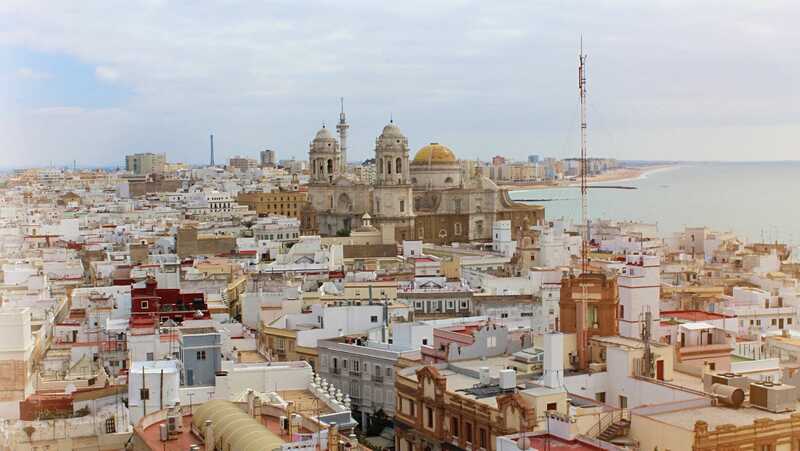
Cádiz prides itself on being one of the oldest inhabited cities in Western Europe: founded by the Phoenicians as Gadir, its history as a port and trading centre runs through its entire past, from trade with the Americas in the 18th century to its role in the 1812 Constitution. The old town, almost entirely surrounded by the sea, can be explored by strolling through its seaside neighbourhoods, squares and defensive bastions.
The Cathedral with its yellow dome, the Tavira Tower and its camera obscura, the Roman Theatre and the urban beach of La Caleta, nestled between the castles of Santa Catalina and San Sebastián, encapsulate the blend of historic and Atlantic character. The Pópulo neighbourhood, the oldest in the city, and La Viña, with its fishing heritage, round off the lively, down-to-earth atmosphere for which the city is renowned, particularly during its Carnival. You’ll find a detailed breakdown in the guide to 10 must-see attractions in Cádiz.
His province also has so much more to offer: Jerez de la Frontera, with its wine cellars and the Royal Andalusian School of Equestrian Art, and the Costa de la Luz. And from the Campo de Gibraltar, you can reach the following places in a day: Gibraltar or cross over to Morocco.
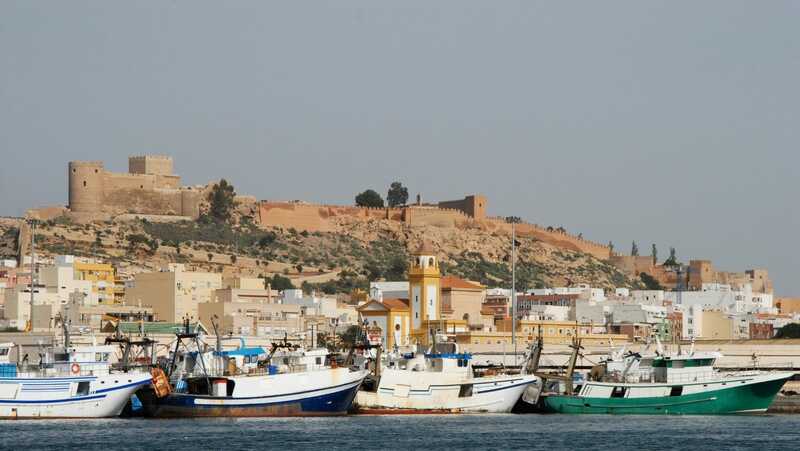
Almería is dominated by its Alcazaba, the largest Muslim fortress built in Spain after the Alhambra, overlooking the city and the harbour. The city centre is home to the fortified cathedral, which was also designed as a defence against attacks from the sea, and neighbourhoods such as La Chanca. It is a less crowded capital than others, making it easy to explore at a leisurely pace.
Its province is described in the subtitle: on one side, Cabo de Gata, a natural park with a volcanic coastline and largely undeveloped coves such as Playa de los Genoveses and Mónsul; on the other, the Tabernas Desert, the only one in Europe, the setting for numerous Western film shoots — including The Good, the Ugly and the Bad— whose film sets can still be visited and which have earned it the nickname «the Spanish Hollywood».
Between them lie villages such as Mojácar and Níjar, renowned for their whitewashed architecture and traditional crafts. The sea and the arid landscape, just a few kilometres apart, make Almería a capital city unlike any other on this itinerary.
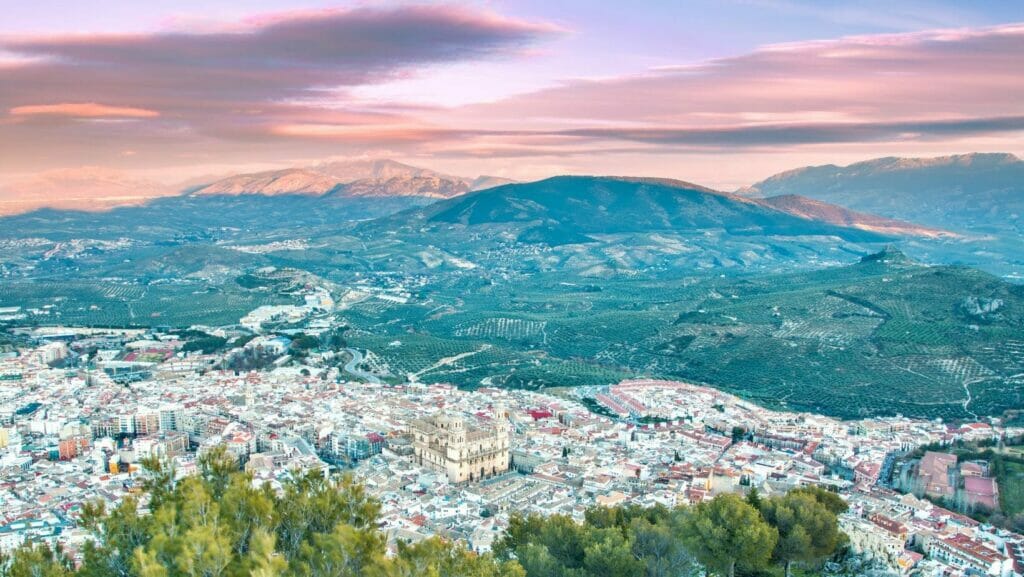
Jaén overlooks an agricultural landscape that has become its hallmark: the so-called ‘sea of olive trees’, the plantations that cover the hills as far as the eye can see and which make the province one of the world’s leading olive oil producers. Watching over the city stands the Castle of Santa Catalina, which today features a viewing point from which one can take in this vast expanse of olive groves.
Highlights in the city centre include the Renaissance cathedral – a masterpiece by Andrés de Vandelvira that served as a model for other cathedrals – and the Arab Baths, amongst the largest still standing in Spain, situated beneath the Villardompardo Palace, which also houses the Museum of Popular Arts and Customs. The Magdalena district, the oldest in the city, retains its medieval layout centred around its church.
Jaén is often left out of quick itineraries, but it is the natural gateway to the Renaissance towns of the interior and to the Cazorla, Segura and Las Villas mountain ranges – Spain’s largest protected area, with footpaths, rivers and a remarkable wealth of wildlife.
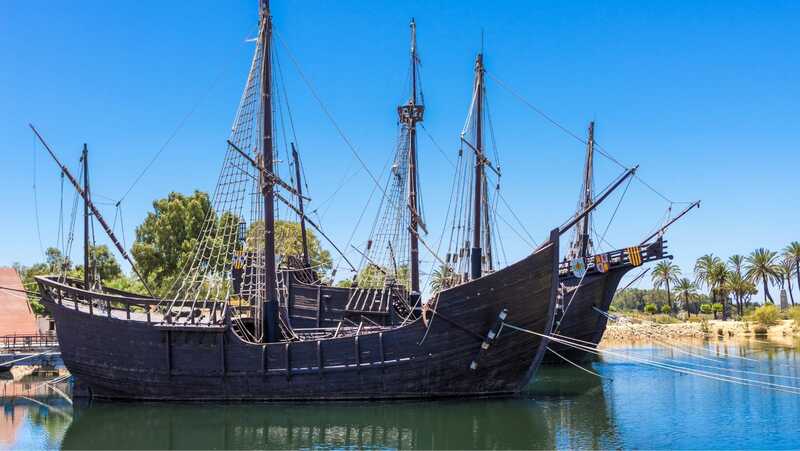
Huelva combines Atlantic history and natural beauty. Christopher Columbus’s ships set sail from its quays in 1492, and the so-called ‘Columbian Sites’ — the Monastery of La Rábida, the Quay of the Caravels with its replicas of the three ships, and the towns of Palos de la Frontera and Moguer — allow visitors to retrace the route of that voyage. The Casa Colón and the Neo-Romanesque Cathedral round off a visit to the capital, which also preserves the Reina Victoria neighbourhood, built by the British mining company Riotinto.
The province offers two very different landscapes: the Costa de la Luz in Huelva, with its wide beaches and dunes such as La Antilla and Punta Umbría, and the Doñana National Park, one of Europe’s most important wetlands due to its wildlife and birdlife. To the north, the Riotinto mining basin adds landscapes tinged by its reddish waters, with a tourist railway running through the former mining site.
It is the province least frequented by cultural tourists, which means a more peaceful experience for visitors both in the capital and at the Colombine sites, and its location makes it a natural link with Portugal.
Úbeda and Baeza form an inseparable pair in the province of Jaén: two neighbouring towns jointly designated as a World Heritage Site for their 16th-century Renaissance architecture. In Úbeda, the Plaza Vázquez de Molina is home to the Sacred Chapel of El Salvador and several palaces also designed by Vandelvira, forming one of the best-preserved Renaissance sites in Spain.
Baeza, just a few kilometres away, boasts its cathedral, the Plaza del Pópulo and the old university where the poet Antonio Machado once taught. Its streets, with their golden cobblestones and Renaissance palaces, retain a layout that has remained virtually unchanged since the 16th century, and have served as the setting for several film shoots.
Both can easily be visited in a single day and round off the list of the ten cities, demonstrating that Andalusia’s heritage is not confined solely to the major cities, but is also to be found in smaller towns in the interior.
You don’t need to live in each province to get to know these cities. Málaga, thanks to its airport, its high-speed rail station and its central location on the Costa del Sol, serves as a base from which to visit several of these destinations and return on the same day. Granada, Córdoba and Ronda are all within a radius of between one and two hours, making them convenient day trips without the need to change accommodation.
An organised tour takes care of transport and, where applicable, entry to sites with limited access such as the Alhambra, which would otherwise require booking weeks in advance. For more distant cities, such as Seville, Cádiz or Almería, it’s usually worth booking at least one night’s accommodation and combining the journey with the AVE high-speed train or a hire car, whilst Granada, Córdoba and Ronda are well suited to same-day return trips.
If you’d like to see how to combine these cities with other things to do in the south, we’ve put together a selection in our guide to What to see in Andalusia (12 experiences), designed to help you plan your stay based on the days you have available. Below is a selection of the day trips that depart from Málaga and Gibraltar:
The capital of Andalusia is Seville, where the Regional Government of Andalusia and the Regional Parliament are based. It is also the most populous city in the region and is home to three monuments designated as World Heritage Sites: the Cathedral and the Giralda, the Real Alcázar and the Archivo de Indias.
Andalusia has eight provinces: Seville, Granada, Córdoba, Málaga, Cádiz, Almería, Jaén and Huelva. Each has a main city, and alongside these provincial capitals are sites such as Úbeda and Baeza, in the province of Jaén, which round off the region’s heritage landscape.
If this is your first time, Seville, Granada and Córdoba are the three cities that are home to Andalusia’s best-known monuments and make for a good starting point. If you’re travelling from the Costa del Sol, Málaga is the most convenient base due to its transport links, and from there you can visit the other cities on a day trip.
From Málaga, you can visit several of these cities on organised day trips along the Costa del Sol, which include return transport. Granada, Córdoba and Ronda are between one and two hours away, and in the case of the Alhambra, the trip usually also includes admission to the monument, subject to limited capacity.