Marbella has five Michelin-starred restaurants, and six stars in total. It is the highest concentration on the Costa del Sol.
And there’s one detail that hardly anyone mentions: half of those stars belong to the same man.
Marbella’s five-star hotels
| Restaurant | Stars | Kitchen | Where |
|---|---|---|---|
| Skina | Two | Signature Andalusian cuisine | Old town |
| Nintai | A | Japanese, omakase | Marbella |
| Messina | A | Italian-Argentine Mediterranean cuisine | Severo Ochoa Avenue |
| The Lake | A | From the territory | Elviria |
| Back | A | Contemporary Andalusian | Next to La Fontanilla |
And the fact that links them: Marcos Granda is the owner of Skina and Nintai. In other words, Three of the municipality’s six stars belong to him. And he’s not a chef: he’s sommelier.
The ratings vary from one edition of the guide to the next. It is advisable to check them before booking.
Skina, two stars on a narrow street

12 Calle Aduar, in the old town. It is the city’s most prestigious restaurant and the only one with two stars.
What strikes you on arrival is the size: It’s a tiny little place, tucked away in an alley, with very few tables. There’s nothing to give away what’s inside.
The winery is the brand. As Marcos Granda is, first and foremost, a sommelier, the wine list exceeds the 950 items, which is somewhat out of proportion for a room of that size. It is its hallmark.
Andalusian specialities tasting menu, featuring reinterpretations of southern classics.
Nintai, twelve places and the toughest booking
Ramón Gómez de la Serna Street. Marcos Granda’s other project, which opened following a trip to Japan, and has a Michelin star in less than a year.
And here’s the key piece of information you need to know before trying to book: it only has twelve places. All in a single sushi roll, where the itamae prepares each dish in front of the diner.
The format is strictly omakase: You don’t choose; you leave it to the chef. Two tasting menus created using the best fish of the day.
It is the most exclusive residential development in Marbella. With twelve venues and just one bar, you need to plan it weeks in advance.
And here’s a tip for anyone who’s interested: it has one of the best sake menus in Spain.
Messina, the veteran

12 Severo Ochoa Avenue. Opened in 2003, so he’s been doing it for over twenty years, which is a long time in the world of haute cuisine.
It is run by chef Mauricio Giovanini and Pía Ninci in the dining room, and the cuisine is Mediterranean with Italian-Argentine heritage and many international influences.
Tasting menus that change with the seasons. And they have added a space, InsIDe Messina, from which you can see the kitchen in action.
El Lago, next to a real lake
In Elviria, to the east of Marbella, set within a golf course and with a lake in front of it. The location is part of the experience.
His speciality is regional cuisine: A product from the province of Málaga, with a recognised commitment to local produce.
It’s the one furthest from the centre, so you’ll need to take the car.
Back, the latest
Near La Fontanilla beach, a short distance from the old town. It was awarded a star in 2024, the most recent one awarded in Marbella.
And there’s a story behind it: the chef David Olivas, from Úbeda, He worked with Dani García for fourteen years, at Tragabuches and Calima, before launching his own venture.
He did so with the sommelier Fabián Villar, which is why the wine list is one of the most interesting in the city.
The atmosphere is the most relaxed of the five: bistro-style, with a menu divided into house classics and rotating dishes. Almadraba tuna and squab are his details.
If you’re looking for haute cuisine without all the fuss, this is the one for you.
Haute cuisine without a Michelin star
There are some good restaurants not listed in the guide, and several with a Michelin recommendation but no stars.
Boho Club

The Lomas de Río Verde housing development, right in the heart of the Golden Mile. It is the city’s leading non-Michelin-starred fine-dining restaurant.
It is set within a garden, with cuisine based on fresh produce and beautifully presented dishes. And a practical advantage: non-stop cooking, from breakfast to dinner – something of a rarity at this level.
Dani García’s three concepts

We need to clarify something here that has been misrepresented.
Dani García once held three Michelin stars, but gave them up in 2019, when he closed his highly acclaimed fine-dining restaurant to focus on more accessible dining concepts. It was a decision that caused quite a stir in the industry.
So to say that it «has three stars» is incorrect: He had them, and he left them.
His three projects in Marbella have a Michelin recommendation but no star:
- Firewood — contemporary barbecue, centred on fire and meat.
- Lobito de Mar — seafood and rice dishes. The «seafood bikini» is their signature dish.
- BiBo — the most casual: tapas and dishes to share.

They are a sensible way to sample high-quality cuisine without a three-hour tasting menu, and it’s much easier to book.
And the local polling stations that don’t appear on the lists
Marbella also has local establishments that are featured in the guide but do not have a staras Eladio House, in the old town, founded in 1965 and now run by the third generation.
They taste great and cost next to nothing how much a Michelin-starred set menu costs. If you’re on a tight budget, this is the place to look.
How far in advance is needed?
This is what determines whether or not the meal takes place:
- Michelin-starred, and in summer: four to eight weeks. Nintai, with twelve places, is the extreme case.
- International fine dining: two to four weeks.
- Dani García’s concepts and beach spots: A week is usually enough.
And the trick that works: weekdays. There is a huge difference in availability between a Tuesday and a Saturday.
They are all operating at very reduced capacity —between eight and twelve guests in several cases—, so A group of more than six people will have to be seated at different tables. It’s best to mention this when booking.
Why does Marbella have such a high concentration of these?
Three things come together: Top-quality Andalusian produce, an international clientele willing to pay for it, and chefs who have chosen to stay in the area rather than move to Madrid.
And there’s one factor that isn’t often mentioned: the season is long. There’s no four-month closure here, which means staff can be retained and menus can be updated frequently.
Puente Romano is also home to more than twenty restaurants, including several international brands. It is a concentration that, in Spain, is only found here.
How to get there

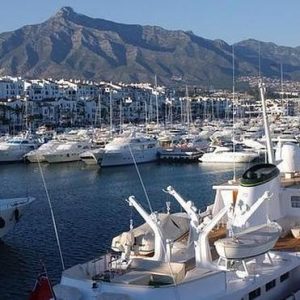
Marbella is about 60 kilometres from Málaga, via the AP-7 toll motorway or the A-7, which is free of charge. Puerto Banús is about seven kilometres from the town centre.
The plan that works: Plan to spend the morning in the old town, and leave the afternoon for the harbour and the shopping area.
And a word of warning: If you’re going for the tasting menu with wine pairing, allow for a taxi fare. It’s not the sort of place where you can drive afterwards.
More: where to eat in Marbella for other budgets, What to see in Marbella y Things to do in Puerto Banús.
Exploring the area during the day
We are a local tour operator based in Málaga with over 50 years’ experience organising trips around Andalusia. If you want to see Marbella and Puerto Banús without driving, a day out sorts it out:
-
Excursion to Gibraltar from Malaga and Costa del Sol€35,00Rated 4.69 out of 5 based on 605 customer ratings -
Excursion to Gibraltar and Dolphin Sightseeing by Boat from Malaga€65,00Rated 4.85 out of 5 based on 133 customer ratings -
Excursion to Marbella and Mijas from Malaga and Costa del Sol€42,00Rated 4.82 out of 5 based on 93 customer ratings
Marbella and Mijas on the same day, with a tour guide and collection from the Costa del Sol. Trips to Gibraltar and dolphin-spotting tours also depart from here.
Frequently asked questions
How many Michelin-starred restaurants are there in Marbella?
Five, making a total of six stars: Skina has two, and Nintai, Messina, El Lago and Back have one each. This is the highest concentration on the Costa del Sol. It is advisable to check the current ratings before booking, as they change from one edition of the guide to the next.
Who is Marcos Granda?
He is a sommelier, not a chef, and is the owner of Skina and Nintai, meaning that three of Marbella’s six Michelin stars belong to him. His role as a sommelier explains the importance of the wine cellar in his restaurants: Skina’s wine list features over 950 wines.
How many Michelin stars does Dani García have?
None at present. He once had three, but gave them up in 2019 when he closed his highly acclaimed fine-dining restaurant to focus on more accessible dining concepts. His current ventures in Marbella — Leña, Lobito de Mar and BiBo — are recommended by the Michelin Guide, but do not hold a star.
Which is the hardest restaurant to book in Marbella?
Nintai, because it only has twelve seats, all at a single sushi bar, and operates on a strict omakase basis. During peak season, it’s best to book four to eight weeks in advance, just as you would at any other Michelin-starred restaurant. There’s considerably more availability on weekdays than at weekends.
Is it possible to visit Marbella’s Michelin-starred restaurants as a group?
It can be tricky. Several restaurants have dining rooms that seat between eight and twelve guests, so a group of more than six people would have to be split across several tables. It’s best to mention this when booking and, for large groups, to consider alternatives such as more informal venues or a private chef.
Is there any haute cuisine in Puerto Banús?
Yes, although the five Michelin stars are spread across the municipality of Marbella rather than the harbour itself. The area around Puerto Banús and the Golden Mile is home to a concentration of signature and fine-dining restaurants, including those run by Dani García’s group, whilst Puente Romano boasts more than twenty restaurants featuring international brands.
What is the most affordable fine dining option in Marbella?
Restaurants recommended by the Michelin Guide but without a star, such as Casa Eladio in the old town, founded in 1965 and now run by the third generation of the family. Dani García’s more casual concepts also allow diners to sample high-quality cuisine without the price or the length of a tasting menu.