Yes, you can do the Caminito del Rey with children, but only if they are aged 8 or over. This is the most important rule and there are no exceptions: Children under the age of 8 are not permitted entry.
If your children already have them, the route is perfectly manageable. Here’s what you need to know, starting with the mistake that causes many people to miss out on admission.
The rule states that you must be at the gate 30 minutes before your scheduled entry time. And that’s the catch.
That door is a 25-minute walk away from the El Kiosko restaurant, next to the Conde de Guadalhorce reservoir, which is where you park. And that’s the shortest route.
Translated: You have to be in the car park one hour earlier an hour. With children, allow an hour and a quarter.
If you’re late, you’ll be left out, and the ticket is non-refundable.
Children under the age of 8 are not permitted for safety reasons. No exceptions and no alternative routes.
And there are two further requirements that come as a surprise:
Be wary of the text that’s doing the rounds: One often reads «children over the age of 8», which might raise doubts about those who are exactly 8 years old. The official rule prohibits entry children under the age of 8, so If you’re 8 or over, you can come in.
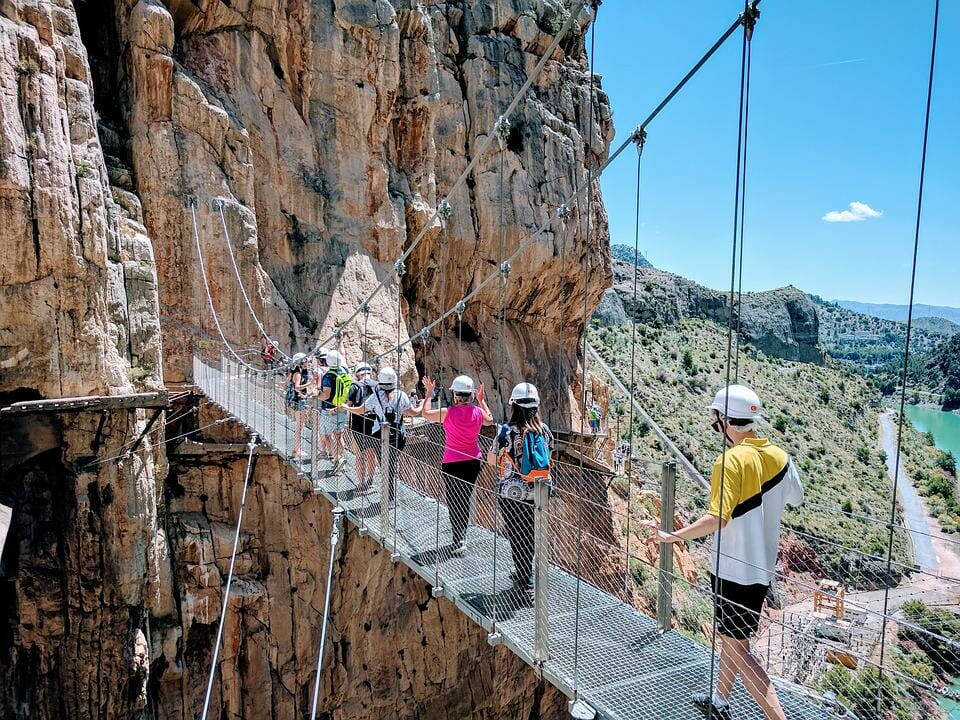
Physically, no. They are 7.7 kilometres in total —footbridges and access paths— totalling three or four hours, almost entirely flat. A child who is used to walking manages it well.
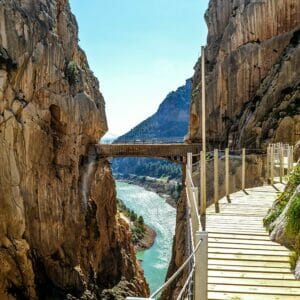
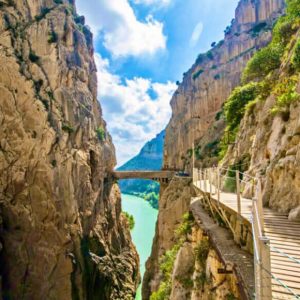
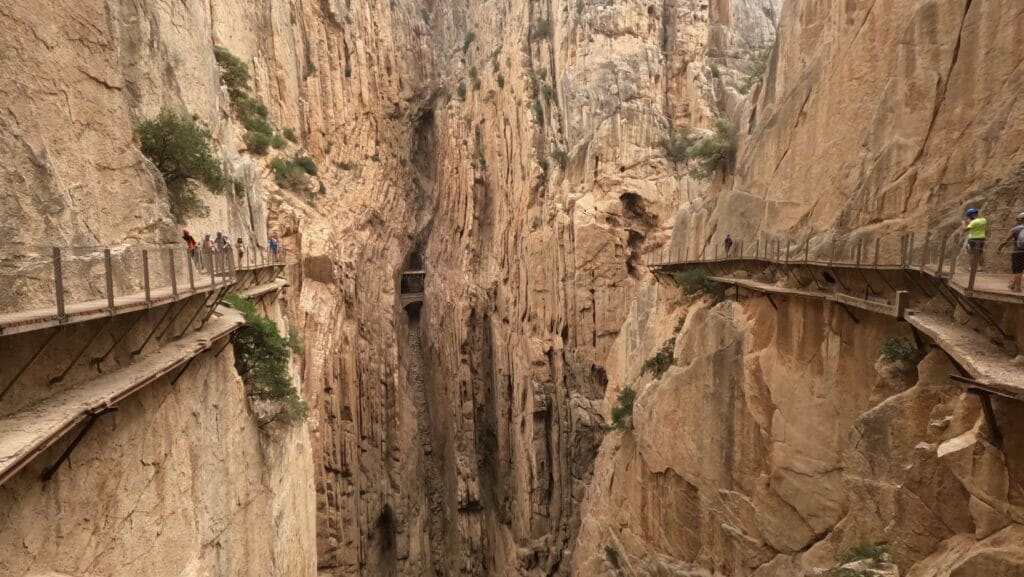
The difficulty lies elsewhere: the altitude. There are sections to more than 100 metres at the bottom of the gorge, with a gridded floor through which you can see the void, and a suspension bridge on the southern section.
And it’s a one-way route: you can’t turn back. Once you’re inside, it’s over.
Show them what it’s like first. Play him a video of the route at home and explain these three things to him: that they’re wooden walkways, that they’re high up, and that there’s no turning back.
A prepared child reacts very differently to a child who is taken by surprise. And if, when you see him, he says no, it’s better to find out on the sofa than halfway down the gorge.
What you’ll need:
What is prohibited – and this is where it affects families:
And here’s one that takes a lot of people by surprise: A helmet is compulsory and you must wear the one they give you there. You can’t bring your own, or the one from your bike.
There aren’t any toilets inside either of the route, so go there earlier.
Third-party liability insurance is included with your ticket, provided that the rules are followed. If you’re concerned about the risks, we cover this in detail in Is the Caminito del Rey dangerous?.
They won’t be able to get in, so the plan is take turns: some go on the walk whilst others stay behind with the little ones. And there’s more than enough to do in the area for those few hours:
Practical information: access is granted through the northern area, via Ardales, unless otherwise authorised. It is about 57 kilometres from Málaga y closed on Mondays.
Book well in advance, because it runs out. And with children, choose morning slot: less heat and plenty of headroom.
Further details at Tips for visiting El Caminito and in What to see at the Caminito del Rey.
We are a local tour operator based in Málaga with over 50 years’ experience organising trips around Andalusia. We’ll take care of the stopwatch for the excursion: The bus drops you off on time, the tickets are booked in advance and the guide stays with the group for the whole tour.
Two formats: with transport from Málaga and the Costa del Sol including, or only tickets including a guided tour if you’re already on your own.
Your destination is in the Caminito del Rey and the city in What to see in Málaga in three days.
From the age of 8 onwards. The official regulations prohibit entry to children under the age of 8, with no exceptions or alternative routes, so children aged 8 and over are permitted to enter. Furthermore, all visitors aged between 8 and 17 must be accompanied by an adult and carry their national identity card, passport or family register with them throughout the visit.
It’s more complicated than it seems. The rules state that you must be at the gate 30 minutes before the admission time, but that gate is a 25-minute walk from the El Kiosko restaurant, next to the Conde de Guadalhorce reservoir, which is where you park. In practice, you need to arrive at the car park an hour beforehand, and a bit earlier if you’re with children. Anyone who arrives late misses out on entry.
No. Pushchairs and wheelchairs are not permitted, nor are bulky rucksacks, pets or umbrellas during the rainy season. You are also not allowed to carry children in your arms at any point along the route, nor to wear your own helmet: you must use the one provided by the organisers.
The current walkways are certified, have handrails and helmets are compulsory, so the actual risk is low. The challenge is not physical but relates to the height: there are sections more than 100 metres above the bottom of the gorge, grating walkways and a suspension bridge. If the child suffers from vertigo, they will find it difficult, and it’s best to know this beforehand as the route is one-way.
There are neither. There are no drinking water points or toilets along the entire route, so you must take enough water to last three or four hours and use the facilities before setting off. There is also no space to stop for a meal on the footbridges, so it is best to eat before or after.
The best approach is for the adults to take turns. Whilst some are on the walk, the others can enjoy the viewpoints overlooking the Conde de Guadalhorce reservoir, the swimming and picnic areas by the reservoirs in summer, or a visit to the village of Ardales, which is just a few minutes away and offers a peaceful outing for the whole family.