EN
EN  ES
ES  FR
FR  DE
DE 
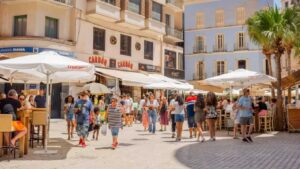
The Barrio de Santa Cruz (Seville) is one of the oldest and most picturesque quarters of the city, located in the heart of the city. A labyrinth of narrow streets and squares full of bars, restaurants and souvenir shops.
It is home to several of the city's most important monuments, such as the Cathedral, the Real Alcázar and the Archive of the Indies. However, there are many more interesting things to see in this beautiful neighbourhood:

Your stroll through this charming neighbourhood can start from the Place du Triomphe. This square owes its name to the fact that the cathedral building was not affected by the Lisbon earthquake of 1755, hence the installation of the Triumphal monument.
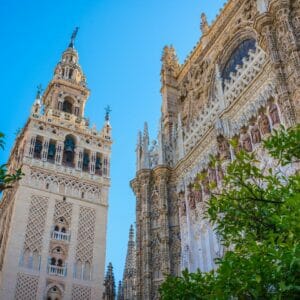
It can be said that this is the most monumental corner of the city, as it is here that the historic buildings of the Seville Cathedral with the famous Giralda, the General Archive of the Indies and the Reales Alcázares.

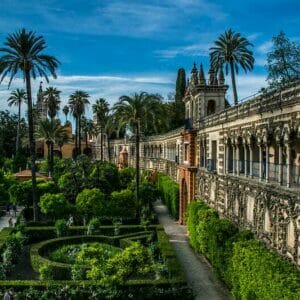
The Reales Alcázares are royal palaces in Mudejar and Gothic style that were built in the Middle Ages. Later renovations added Renaissance, Mannerist and Baroque elements.
It is also the residence of the members of the Spanish royal family when they visit Seville, being the oldest royal palace in use in Europe. A place with a lot of history and unparalleled beauty, with beautiful gardens and Moorish-style courtyards, it is a must-see!

The Church of Santa María la Blanca was built in the 17th century and is located in the Santa Cruz quarter, the old Jewish quarter of Seville. Due to various reforms that were carried out, it lost all its Arab and Jewish remains, as throughout its history it has been a mosque, synagogue and church. Today it is also the headquarters of the Brotherhood of the Rosary of Nuestra Señora de las Nieves.

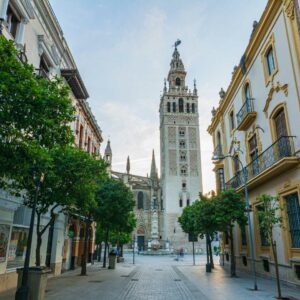
From Mateos Gago street, full of restaurant terraces in the shade of the orange trees, you can enjoy some of the best views of the city. incredible views of Seville Cathedraland the very cheerful atmosphere it exudes.
In case you have any doubts about where to eat well in Seville, we recommend these 3 bars: Santa Cruz Winery o The Columns, the Giralda Bar with the Arab baths in the interior and the Belmonte Tavern.
One of the best and most representative squares in the neighbourhood is the Plaza de Doña ElviraOne of the most representative squares in the neighbourhood. Beautiful on the outside and full of history on the inside, in the centre it has a space of gardens with benches to sit on and a beautiful fountain. It is one of the places most appreciated by Sevillians.
However, we also recommend that you visit many others, such as the street of the crosses o Santa Martaone of our favourites.

The Hospital los Venerables of Cultural Interest, Historical Heritage of Spain and an important Baroque building from the 17th century. Located in the heart of the Santa Cruz district (Seville), in the Plaza de los Venerables.
It is a key building for understanding the cultural and artistic history of Seville, and it also brings us closer to the figure of the famous painter Diego VelázquezIt contains the so-called Velázquez Centre (with works by artists such as Murillo and Velázquez). Highlights include Saint Rufinaone of the most important paintings.

It also has with one of the most beautiful churches in SevilleThe Church of the Venerables. Particularly noteworthy are the fresco paintings of the vaults and the domehighlighting the trompe l'oeil.
At present, the Hospital los Venerables is an ideal venue for theatre events and musical performances. The general entrance to the Hospital de los Venerables is priced at 12 €, we recommend you visit the official website to check opening times and available discounts.

The Plaza de Santa Cruz is the symbol of the neighbourhood and one of the most charming places in Seville. Where in its centre we can see several orange trees and a monument from 1692, known as the Locksmith's Cross. Previously, there was also a church here, from which it takes its name, and in which was buried the painter Murillo. However, the parish was moved to the former convent of the Clérigos del Espíritu Santo, and his remains were buried, as a plaque on one of the façades of the square states.

The Murillo gardens are a green area located next to the Santa Cruz neighbourhood (Seville), next to the Paseo de Catalina de Ribera, whose landscaped area was catalogued as Bien de Interés Cultural de forma conjunta en 2002.
They are called Jardines de Murillo (Murillo Gardens) in homage to the painter. small roundabouts with fountainsin addition to the famous Christopher Columbus monument. As a curiosity, did you know that these gardens were formerly part of the Reales Alcázares?
Next to the Jardines de Murillo gardens and very close to the Santa Cruz squareis the Refiners' Square. It occupies a place that until the 19th century was occupied by the old city wall in the section that led to the disappeared Meat Gate.
Here you can see a monument dedicated to the literary figure of Don Juan Tenorioa myth that is still alive and that had a special connection with the neighbourhood.

The Casa de Pilatos is an Italian Renaissance - Mudejar palace, located in the Santa Cruz quarter of Seville. It is well known for its patios, gardens and magnificent works of art, and it is a very popular place in Seville.one of the most emblematic buildings of Andalusian civil architecture of the 16th century.
It was residence of the Dukes of Medinaceli and home to the Ducal House of Medinaceli Foundation. However, the Roman collection it houses, its rooms with a collection of paintings, along with its magnificent architecture, are some of the things that most attract tourists to the city.
These are just some of the places of interest in the Barrio de Santa Cruz, but the neighbourhood is full of charming alleyways, flower-filled courtyards and squares with terraces where you can enjoy the atmosphere of the city. No doubt about it, Seville is a city with a lot to see.
Strolling through the streets of Seville is a unique experience which you can enjoy in one of our Visitanddo.com excursions departing from Málaga.