Tangier It’s an hour’s ferry ride from Tarifa, so you can even fit it into a day trip. In one day, you can see the medina and the Kasbah; in two, the Atlantic coast; and in three, you can head out to Chefchaouen or Tetouan.
Here is the day-by-day itinerary and, above all, What you need to know before crossing, which has changed this summer.
This is the most important piece of information on the page at the moment, and hardly any guidebook has up-to-date information on it.
Morocco maintained the GMT+1 since 2018. On 20 September 2026, it will return to GMT permanently. For anyone crossing the Strait, this changes:
Why it matters: if you’re going there and back in a day, The return ferry leaves at [time] Spanish time. If you miscalculate the difference, you’ll end up staying in Morocco. When you disembark, check the local time and set the return journey with a buffer.
The good news is that from September onwards, the Ramadan adjustment will no longer apply, so the difference will remain the same throughout the year.
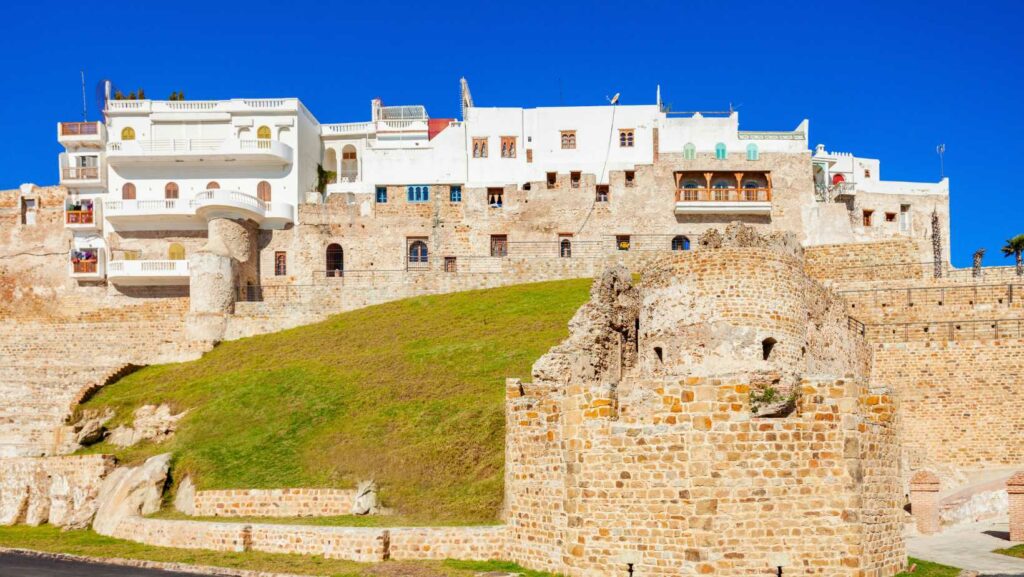
If you only have one day, visit the old town. It starts at the top and goes down towards the port, so you don’t have to go up the same hills twice.
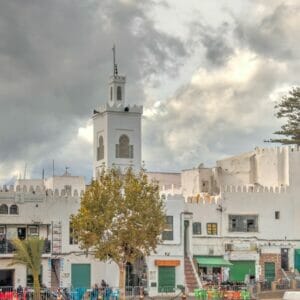
The ancient citadel, at the very top. This is where the the Sultan's palace, today Kasbah Museum, and from its viewing points you can see the Strait and, on a clear day, the Spanish coast.
The streets are narrow and steep: wear comfortable shoes.
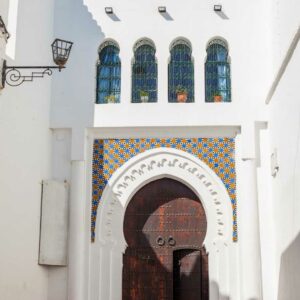
A maze of white alleyways, painted doors and small squares where residents, workshops and shops all coexist. Don’t try to follow the map: the best thing to do is just go with the flow and let yourself drift down.
If you’d like to buy something, here you’ll find leather, ceramics, brass and spices. We’ll tell you all about it in What to buy in Tangier.
The Zoco Chico, the most famous square in the medina, surrounded by cafés with terraces. In the 20th century, it was a meeting place for writers, artists and spies when Tangier was an international zone, and it still has that feel about it.
It’s the place to sit down and have a mint tea and look.
The link between the old town and the new town: a spacious square, with a market selling fresh produce and flowers. From here, you can access the Mendoubia Gardens and at the door of Bab el Fahs.
Open since 1921 on a cliff, with terraces set in tiers overlooking the Strait. They passed through here Paul Bowles, Jean Genet, William Burroughs and Juan Goytisolo, and local legend also includes the Beatles and the Rolling Stones.
People come here to have a cup of tea and watch the sunset, not for dinner. It’s the best sunset in Tangier.
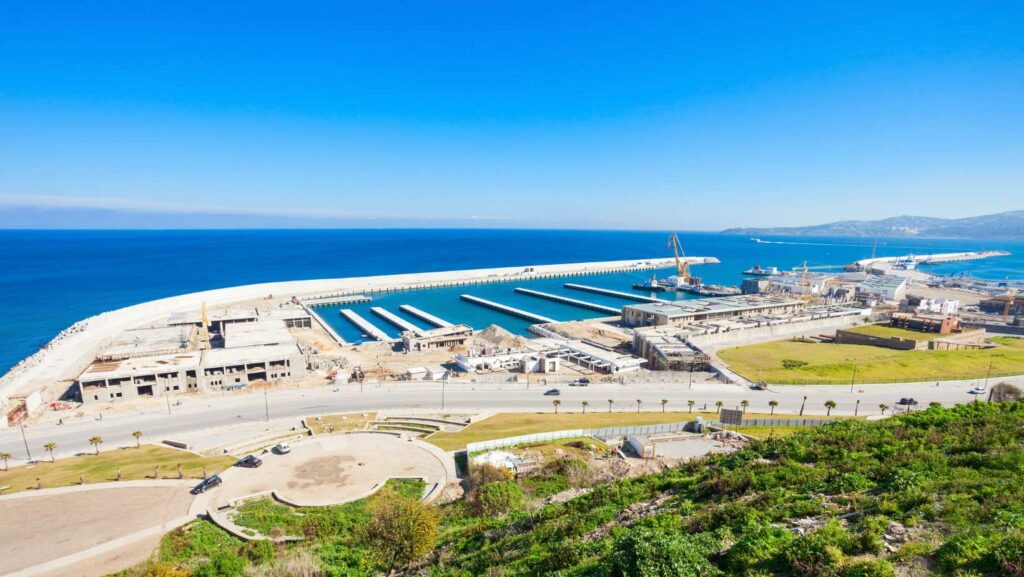
A 14 kilometres in the centre, right by the sea. Its opening onto the sea creates a silhouette that bears a striking resemblance to the map of Africa, and it’s the photo everyone’s looking for.
Go at low tide, which is when it looks its best. They have set visiting hours and affordable admission fees.
Just a few minutes away is the spot where it is believed that The Mediterranean and the Atlantic are drifting apart. It is chaired by a 19th-century lighthouse and there’s a viewpoint. A short but very scenic stop: you can do both in the same morning.
Back again, the Tangier Bay It has a long city beach and a promenade that comes to life at sunset, with the harbour and ferries passing by. A lovely spot to round off the day in peace.
If you have three days, spend the third on a short break. There are three options, each very different from the others:
The most comfortable. A coastal village with Portuguese walls overlooking the Atlantic and a medina whose walls are covered with murals painted every summer at their festival. It only takes a few hours, so it fits in as a half-day’s work.
Its medina is World Heritage and has a strong Andalusian influence, inherited from the Moriscos expelled from al-Andalus. It is considerably more authentic and less touristy than the one in Tangier.
You can find it at what to see in Tetouan and in the eight gates of its medina.
The Blue City, nestled in the Rif Mountains and painted entirely in shades of indigo. It is the longest of the three excursions and ask for the whole day, but it is probably the most spectacular place in the north of the country.
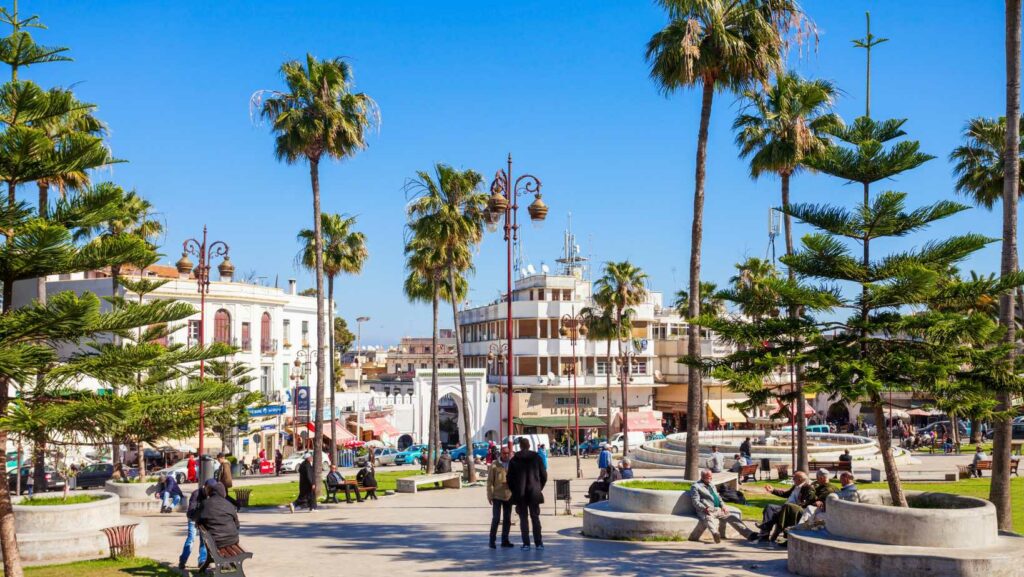
Tarifa is the only port on the mainland with a direct ferry service to Tangier Ville, the city’s port, fifteen minutes from the medina. Those leaving from Algeciras arrive at Tangier Med, which is 45 km from the city.
And the key factor in deciding on a day trip: on The last return ferry usually leaves Tangier between 9.00 pm and 10.00 pm, depending on the day and the season. Bear in mind the time difference – make sure you get it right.
More at how to travel to Morocco from Spain y Is it safe to travel to Morocco?.
Something surprising: in Tangier A lot of people speak Spanish. The city was international zone until 1956 and is still home to a sizeable Spanish community, as well as the Cervantes Theatre. It’s common for people in the medina to speak to you in Spanish without you even asking.
If you carry on southwards, the train Al Boraq, Africa’s first high-speed rail line, connects Tangier with Casablanca. Rabat It’s about 3 hours away and Fez, home to the largest medina in the Arab world, at 4 or 5.
We are a local tour operator based in Málaga with over 50 years’ experience organising trips around Andalusia and northern Morocco. If you’d rather not have to worry about the ferry, the paperwork or the guide:
Before crossing, if you’re in the area, you should What to see in Tarifa. And the whole destination at The Morocco Guide.
Until 20 September 2026, the time in Tangier is one hour behind that of mainland Spain. From that date onwards, Morocco will abandon the GMT+1 time zone it has used since 2018 and return to GMT permanently, meaning it will be one hour behind in winter and two hours behind in summer. It is important to bear this in mind as the return ferry departs at Spanish time.
The old town: the Kasbah in the upper part with its museum, the medina, the Petit Socco for a cup of tea, and the Grand Souk, which marks the boundary with the new town. Start at the top and work your way down towards the harbour to avoid having to climb the same hills twice. If there’s still daylight, head up to Café Hafa to watch the sunset over the Strait. That’s exactly what a day trip from Tarifa covers.
The Tarifa–Tangier Ville route is operated by Baleària and Africa Morocco Link. The crossing takes around an hour, covers some 32 kilometres, and tickets start from around 39 euros. It’s best to book online, as the port gives priority boarding to passengers who arrive with a pre-assigned ferry company, date and time.
Yes, it’s one of the most popular day trips from Tarifa. The key is the return timetable: the last ferry usually leaves Tangier between 9.00 pm and 10.00 pm, depending on the day and the season, and the time is given in Spanish time, so you need to take the time difference into account. You’ll need a valid passport, as a national identity card isn’t accepted.
The three classic destinations are Asilah, 45 minutes away, with its Portuguese ramparts and murals; Tétouan, an hour away, whose medina is a World Heritage Site and retains a strong Andalusian influence; and Chefchaouen, about two hours away, the blue city of the Rif, which requires a full day’s visit due to the distance.
Quite a lot more than you might expect. Tangier was an international zone until 1956 and is still home to a sizeable Spanish community, as well as the Cervantes Theatre. In the medina and in the shops, it is common for staff to address you in Spanish without you even asking, something that does not happen in other Moroccan cities.