The Malaga Carnival It is a free, highly participatory street festival. At its heart are the verses, and its closure, the burial of the anchovy.
How to find out the date each year, what events take place and which is the only one you have to pay for.
There is no fixed date for the carnival, which is why it’s worth knowing the rule rather than looking it up every year:
In practice, which places it amongst late January and early March, almost always in February. The programme runs for just over a week, with a weekend in the middle of the month which attracts the largest crowds.
The full programme, including timetables and venues, is published each year in carnavaldemalaga.es. If you’re coming for a specific event — the final of the competition or the funeral — please check the details there.
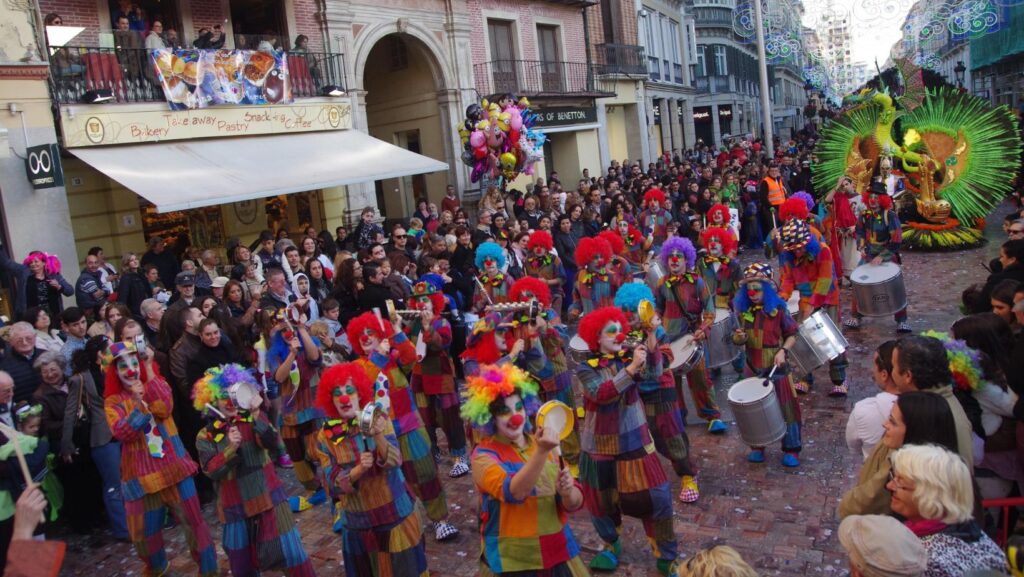
It shares its roots with the Cadiz style, but not the variations, and this is constantly confused:
The difference between the two women from Málaga: the murgas draw on humour and local current affairs; the parades they adopt a more lyrical tone and pay greater attention to the vocals.
And the verses are what hold it all together: satirical and socially critical lyrics that the groups spend months preparing. There are audiences who follow the lyrics year after year and acknowledges the authors.
If you’re interested in a comparison, we have the Cádiz carnivals incidentally.
The opening speech, in the Plaza de la Constitución. It’s the starting signal.
The COAC, at the Cervantes Theatre. The Official Choir Competition takes place in stages, with qualifying rounds and a final, which is the most eagerly awaited event.
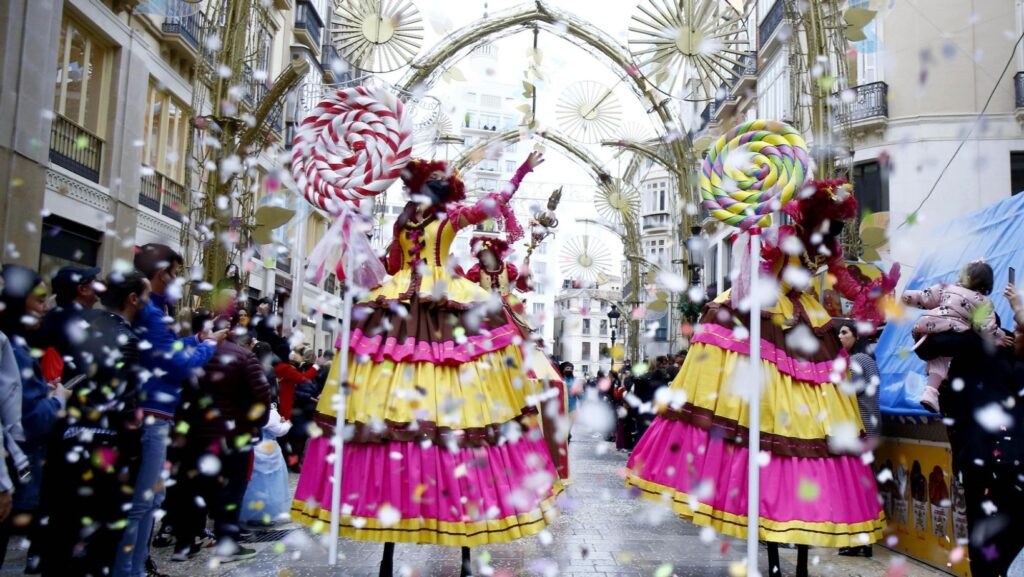
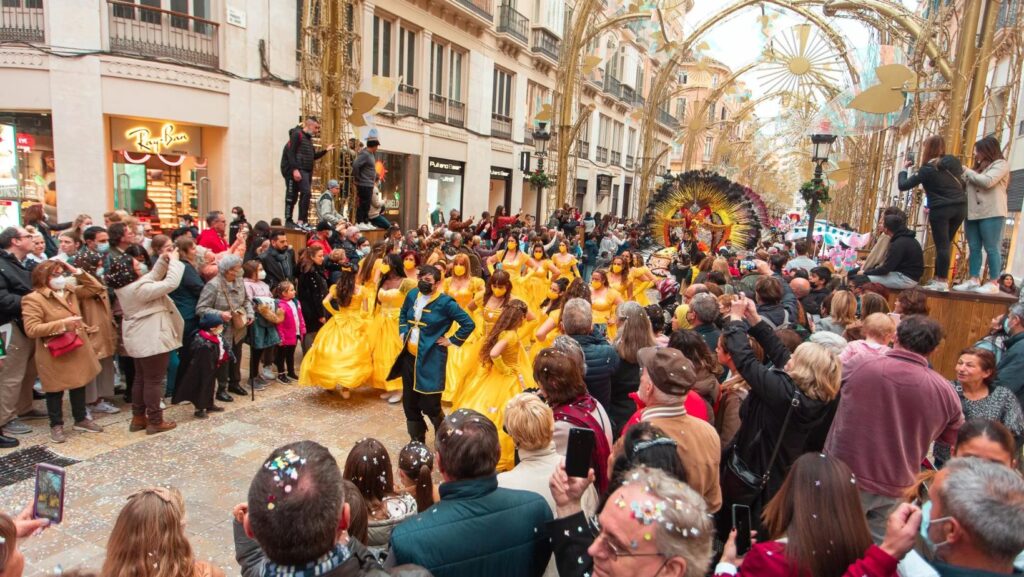
The big days on Calle Larios. That’s where the atmosphere really comes alive, day and night, and where you see the fancy dress.
The Alameda, featuring performances by various groups.
And the stars of the party: on God Momo and the Goddess of Carnival, who are elected and proclaimed and symbolically preside over the celebration.
With children: there are children’s competitions and make-up workshops, in the afternoon and on the street.
The whole carnival is free and open to all, apart from one thing: Admission is required for COAC performances at the Cervantes Theatre.
And the final is drawing to a close. If you’re interested in the competition, that’s the only thing you need to sort out in advance.
It is the event that brings the festival to a close, and the Málaga version of the ‘burial of the sardine’.
The change in fish is no coincidence: People from Málaga are called anchovies, so the city is burying its own symbol. It’s a joke at its own expense, which is very much in keeping with the tone of the whole carnival.
What it’s like: a satirical parade featuring feigned mourning which runs through the centre and head down to the beach, where a giant anchovy figure bids farewell.
If you can only watch one performance, make it this one. It’s the most visual, the most interactive and it costs nothing.
It’s one of the best months for the city: pleasant temperatures for walking and quite a few fewer people than in the high season. You can visit the city centre, the museums and the viewpoints without having to queue.
And it’s enough to get out of the capital. We are a local tour operator based in Málaga with over 50 years’ experience organising trips around Andalusia:
Guided tour in Spanish and English. All three take place during the day, so you can book the main weekend for the carnival and the day trips for the weekdays.
More on the festival calendar: traditions of Málaga. And for the rest of the visit, What to see in Málaga in three days.
There is no fixed date: it ends on Ash Wednesday, which falls 46 days before Easter Sunday. This means it takes place between late January and early March, almost always in February. The programme runs for just over a week and is published each year on carnavaldemalaga.es.
No, apart from the sessions of the Official Singing Groups Competition at the Cervantes Theatre, which require a ticket and for which the final is sold out. Everything else — the opening speech, the parades, the street performances and the ‘burial of the anchovy’ — is free to attend.
No. Chirigotas, choruses and quartets are forms of the Cádiz carnival. In Málaga, the groups are known as murgas and comparsas: murgas rely on humour and local current affairs, whilst comparsas have a more lyrical tone and place greater emphasis on vocal quality.
The event that brings the carnival to a close, the local version of the ‘burial of the sardine’. It consists of a satirical parade featuring mock mourning, which winds its way through the city centre and down to the beach, where a giant anchovy figure is bid farewell. The choice of fish is no coincidence: the people of Málaga are known as ‘boquerones’, so the city is effectively burying its own symbol.
The songs that drive the festival, with satirical and socially critical lyrics that the groups spend months preparing. They are performed both in the official competition and in the streets of the city centre, and there is a regular audience that follows the lyrics from one year to the next and recognises the songwriters.
On Calle Larios during the main days of the festival, both day and night, and on the Alameda with performances by local groups. The opening speech takes place in the Plaza de la Constitución and the official competition at the Teatro Cervantes. The middle weekend is the busiest, particularly in the evenings.