Calle Marqués de Larios, commonly known as Calle Larios, is the main shopping and pedestrian street in Málaga’s historic centre. It links Plaza de la Constitución with the Alameda Principal, next to Plaza de la Marina, in a straight stretch of just over three hundred metres flanked by 19th-century façades that give it a rare sense of architectural unity. It is the city’s best-known street and one of the places that any visitor to the old town is almost bound to pass through.
Its fame is not down solely to commerce. Calle Larios serves as the backdrop to much of Málaga’s public life, from the Christmas lights to the passing of the processions, and boasts a concentration of shops, distinctive buildings and a lively street atmosphere that make it the heart of the city centre. To explore it whilst gaining a clear understanding of its historical context and without having to worry about the logistics, you can do so with a private tour in Málaga tailored to your own pace.
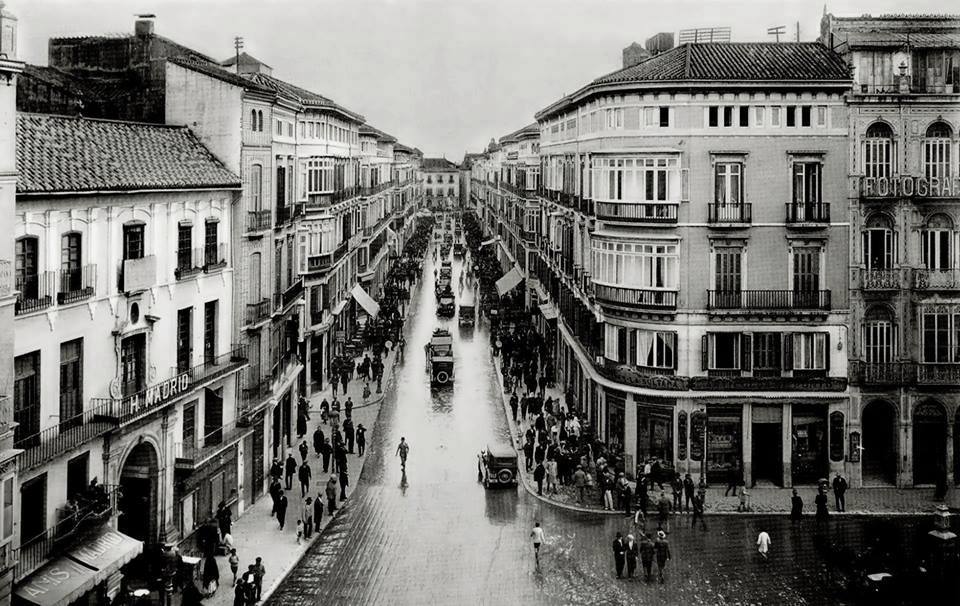
Larios Street was planned in the last third of the 19th century as an urban development project to relieve congestion in the centre of Málaga and connect the Plaza de la Constitución with the harbour area and the Alameda, thereby improving the transport of goods. At that time, the city was experiencing an economic boom linked to its port and its production of sweet wine.
Given the lack of municipal funds, the project was put out to tender, and the children of the Marquis of Larios They emerged as the winners, acquiring more than 90% of the shares. Hence, the name of that industrial and commercial dynasty became permanently linked to the new road.
The project was commissioned to the architect from Málaga Eduardo Strachan, who designed a wide, straight street lined with buildings of uniform design, drawing inspiration from iron architecture and the trends of the Chicago School. The street was opened in 1891.
Strachan resolved the junctions with rounded chamfers that soften the corners and lend visual continuity to the route. The use of grey marble on the ground floors, the repetition of openings and balconies, and the uniform finish of the cornices create a continuous visual flow along the street, as if all the buildings were part of a single project. This coherence, rare in a city with a medieval layout such as Málaga, anticipated the modern concept of a shopping street as a unified whole and accounts for much of its character.
The street is named after Manuel Domingo Larios y Larios, the second Marquis of Larios, a 19th-century businessman from Málaga who belonged to the family that financed the project. The name was chosen in recognition of the family that made the project possible, and over time it was shortened in common parlance to «Calle Larios».
Construction continued for decades, and the street established itself as the city’s commercial and social hub. In the 1920s, several Modernist buildings were erected, making it an architectural landmark of the period.
It was turned into a pedestrianised area in 2002, which spurred the revitalisation of trade and attracted major national and international firms. The most recent reforms have expanded the pedestrian area and upgraded the lighting, reinforcing its role as a meeting place and a showcase for the city centre’s commercial activity. Today, it ranks among Spain’s most sought-after shopping streets.
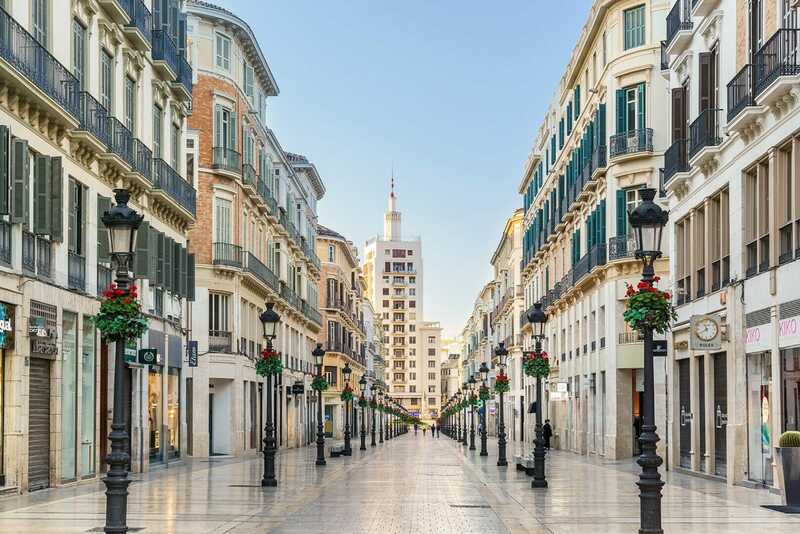
Walking the length of Calle Larios is the best way to get a feel for the centre of Málaga. The walk takes just a few minutes, but it’s worth pausing to take in the whole scene: the straight line of sight between Plaza de la Constitución and the Alameda, the uniformity of the marble and stone façades, the balconies and the curved chamfers that finish off the corners.
The street is, first and foremost, a shopping hub. It is home to international brands such as Zara, Mango and Desigual, alongside exclusive fashion boutiques, perfumeries, jewellers and shops selling local produce, where you can find olive oil, wine and other regional specialities. It is the city’s premier shopping destination.
Among the distinctive buildings, the following stands out: Palace of Equitative, now a hotel, from whose terrace there are superb views of the whole street. At one end of the Plaza de la Constitución stands the Consulate House, another example of Málaga’s architectural heritage. And don’t miss Points of view, the bronze sculpture by the British sculptor Tony Cragg installed on the street.
In Larios and the surrounding area, there are cafés and bakeries steeped in history, such as the Lepanto Bakery o Casa Mira, known for its ice cream and handmade nougat. For a bite to eat, we recommend taking a detour through the surrounding narrow streets: the Plaza de las Flores and the stretch between Strachan and Moreno Monroy streets is home to a concentration of tapas bars and restaurants, offering everything from traditional dishes to the most innovative cuisine.
It’s worth exploring it at different times of the day to appreciate its contrasts. In the morning, the area is bustling with commercial activity; at midday and in the early afternoon, the terraces and bars in the neighbouring streets take centre stage; and as evening falls, with the lights switched on, the view of the façades takes on a different atmosphere that invites a leisurely stroll. Street musicians and performances are a regular feature of the atmosphere.
Thanks to its central location, Larios is the ideal starting point for exploring the rest of the historic centre, as it leads directly to the Cathedral, the area around the Alcazaba and the main squares. From either end of the street, the main points of interest are just a few minutes’ walk away.
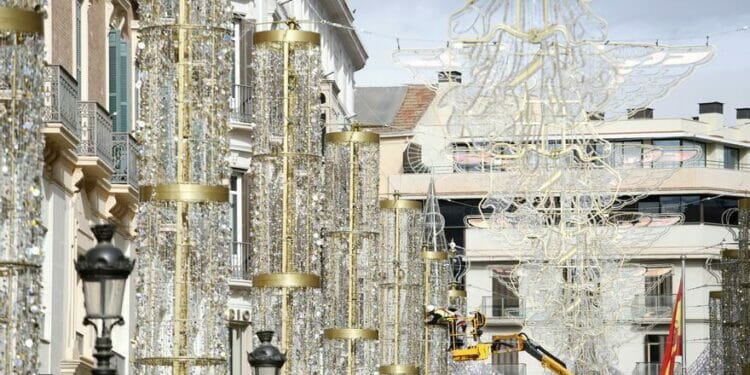
Much of the street’s current fame stems from the major events it hosts throughout the year.
This is the best-known attraction: the street is adorned with a large-scale light installation that features a different theme each season, with light and sound shows at specific times. It has become one of the main tourist attractions during the winter in Málaga and is when the street sees its highest footfall.
The crowds are so large at certain times that the City Council usually regulates access to ensure the smooth flow of visitors. Anyone wishing to enjoy the display at a more leisurely pace may wish to visit during the day or in the early days of the season, before the busiest weekends.
Larios Street forms part of the official route of the processions organised by Málaga’s religious brotherhoods. Its width and straight layout make it an ideal vantage point from which to watch the thrones pass by, making it one of the city’s most popular spots during those days.
During the August festival, Calle Larios is the epicentre of the day fair: live music from midday onwards, people dressed in flamenco attire, groups performing verdiales, and the archway set up at the start of the street.
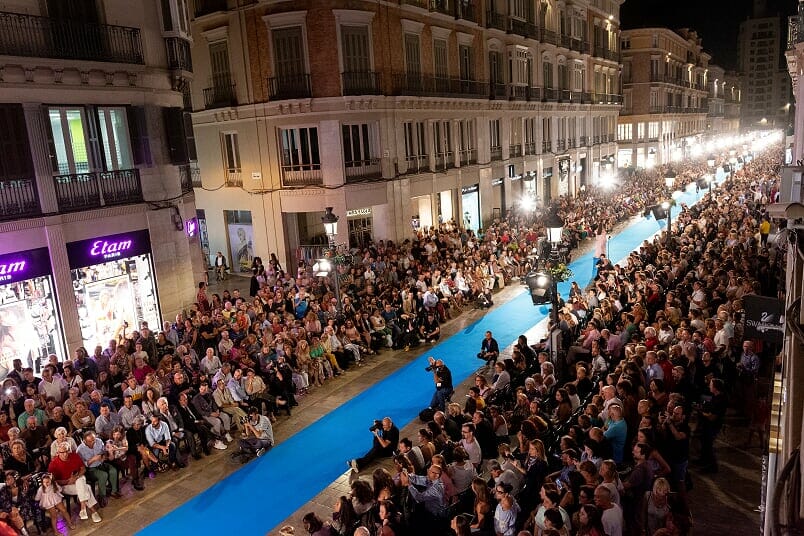
The Larios Malaga Fashion Week catwalk It is an annual event that transforms the street itself into a catwalk stretching over 300 metres and attracts more than 15,000 people every day. Organised by NuevaModa Producciones, it brings together local designers with international brands, and has featured celebrities such as Antonio Banderas and Ágatha Ruiz de la Prada on the catwalk.
The street also hosts events from the Málaga Film Festival, open-air concerts, parades and official functions. Its width and straight layout make it possible to set up grandstands, stages and walkways without compromising its pedestrian-friendly character, which explains why so many city events are concentrated here. It is advisable to check the official calendar before your visit, as dates and formats vary from year to year.
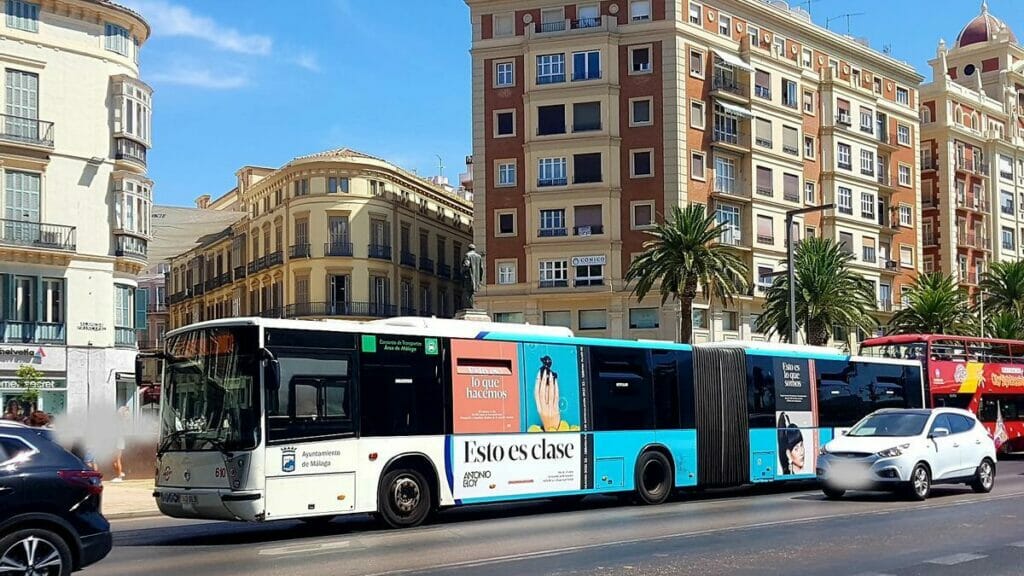
Calle Larios is right in the heart of the historic centre, between the Plaza de la Constitución and the Alameda Principal. It is a street entirely pedestrianised, so the final stretch is always on foot. These are the options:
The street also serves as the starting or finishing point for the excursions from Malaga which combine the capital with other destinations in the province.
Calle Larios is flanked by some of the main attractions in the centre of Málaga, making it easy to visit them one after the other with hardly any walking involved. At its northern end, the Plaza de la Constitución leads into the network of streets that take you to the Cathedral, the Picasso Museum and the area around the Alcazaba and the Roman Theatre.
Also very close by is the Central Market of Atarazanas, with its Nasrid door and stained-glass window, and the Soho neighbourhood, the arts district with its murals and cultural programme. To the south, the Alameda Principal leads to the harbour and the Muelle Uno promenade, a seaside area featuring museums and a range of dining options.
If you’re going shopping, there are several shopping centres within walking distance: El Corte Inglés on Avenida de Andalucía, about ten minutes away; Larios Centre on Avenida de la Aurora and "Muelle Uno" at the port, both a quarter of an hour away; and Vialia, next to María Zambrano station, about twenty minutes away. In addition to these, there are independent shops in the pedestrianised streets of the city centre, such as Calle Granada and Calle Nueva.
This concentration of places of interest makes Larios a good base from which to plan a wider tour. To organise a visit lasting several days that combines the historic centre with the coast and the museums, it is useful to follow an itinerary of What to see in Málaga in 3 days.
Less than a fifteen-minute walk from Calle Larios is one of our main meeting points for excursions, at the 10 Avenida de Andalucía, next to El Corte Inglés. If you’re in Málaga, it’s the most convenient way to explore other parts of Andalusia without having to worry about transport.
Our shop is located near El Corte Inglés main pick-up point for excursions in MalagaAvenida de Andalucía 10.
Calle Larios is the main shopping and pedestrian thoroughfare in Málaga’s historic centre; it was opened in 1891 and features a series of uniform 19th-century façades that are unusual for the city. Its fame stems both from this architectural unity, the work of the architect Eduardo Strachan, and from the major events it hosts throughout the year: the Christmas lights, the Holy Week processions and the daytime fair in August.
Calle Larios is right in the heart of Málaga’s historic centre, between the Plaza de la Constitución and the Alameda Principal, so it can be reached on foot from almost anywhere in the old town in just a few minutes. By public transport, the Atarazanas metro station and the Málaga Centro-Alameda commuter train stop are the nearest, and there are bus stops on the Alameda. Those arriving by car should use the car parks in the city centre and continue on foot, as the street is entirely pedestrianised.
The street is named after Manuel Domingo Larios y Larios, the second Marquis of Larios, a 19th-century businessman from Málaga. His family won the public tender to carry out the work and acquired more than 90% of the project’s shares, so the name became associated with the family dynasty that made it possible.
The best-known attraction is the Christmas illuminations, featuring a large display of lights and sound-and-light shows during the festive season. During Holy Week, it forms part of the official procession route; in August, it is the centrepiece of the daytime fair; and throughout the year it hosts the Pasarela Larios Málaga Fashion Week, events as part of the Film Festival and open-air concerts. It is advisable to check the official calendar before your visit, as dates vary from year to year.