The Jewish quarter of Cordoba It is one of the best-preserved Jewish quarters in Spain, and you can explore the whole of it on foot and for free in just over an hour.
What to see, where to go in, and the hidden gems you might miss on your first visit.
Start at the Almodóvar Gate and ends at the Mosque. That way, the neighbourhood unfolds naturally and you don’t end up going round in circles.
An hour and a half a stroll, or half a day if you go inside the synagogue and the Casa de Sefarad. Almost everything is open to the public free of charge: only those two venues charge an admission fee.
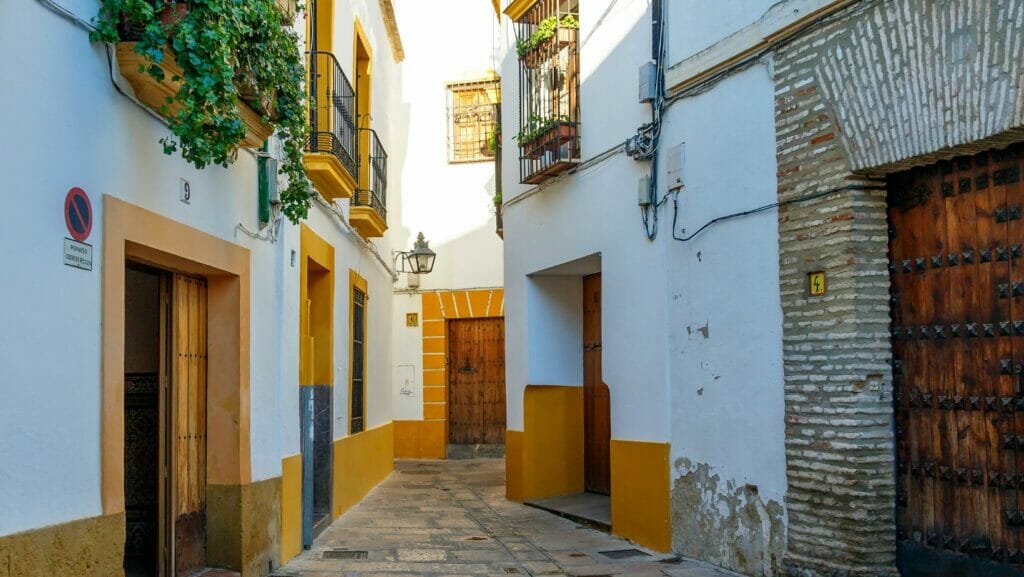
The Jewish community settled next to the city wall and right next to the Aljama Mosque, and that explains the layout: a dense network of narrow streets with hardly any squares.
His heyday was the Caliphate, between the 10th and 12th centuries, when Córdoba was one of the great cultural centres of the Mediterranean. Maimonides was born here, a doctor, philosopher and rabbi, in 1138 —although many sources still give the figure as 1,135—.
It was all over in two strokes: on the raid of 1391, which decimated the community, and the the expulsion of 1492.
And here’s the interesting bit: the population disappeared, but the route remained unchanged. The same streets, the same ramparts, the same houses with their simple façades and inner courtyards. That’s the route we’re taking today.
It’s the best ticket, and one of the few surviving gates in the city walls. Next to it is a a section of city wall with an elongated pond which is one of the nicest spots in the neighbourhood.
A few metres away, in Tiberias Square, stands the statue of Maimonides. And there is a custom: he touches one of his feet, which is shiny and worn from rubbing.
A necessary clarification, as this is often misunderstood: the Door Almodóvar’s work is here, on the wall of the Jewish Quarter. The castle Almodóvar del Río is 24 km from Córdoba. Full details at Almodóvar’s Gate.
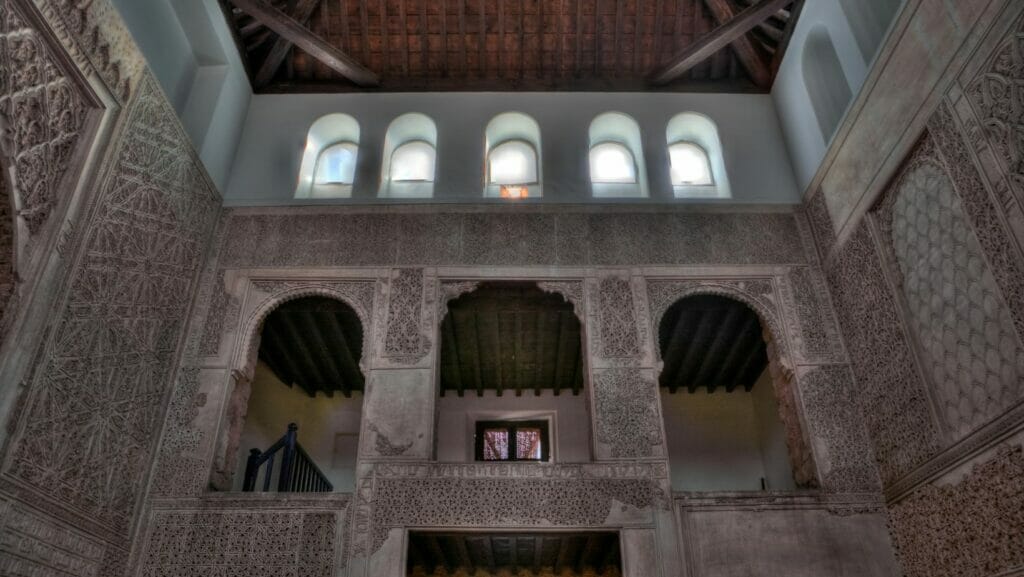
It is one of the three remaining medieval synagogues in Spain, and the only one in Andalusia. Dating from the early 14th century, on Calle Judíos, with access via a courtyard.
It’s small, and the visit is short, but it’s worth it for the interior: Mudejar plasterwork covering the walls with plant and geometric motifs, and inscriptions in Hebrew containing texts from the Psalms.
Two things to look out for:
And the fact that explains why he survived: following the expulsion It was a chapel, a hospital and a school. It was precisely because it was still in use that it was not demolished, as was the case with so many others.
It is oriented so that worshippers face Jerusalem. Check the timetable before you go, as it varies depending on the season.
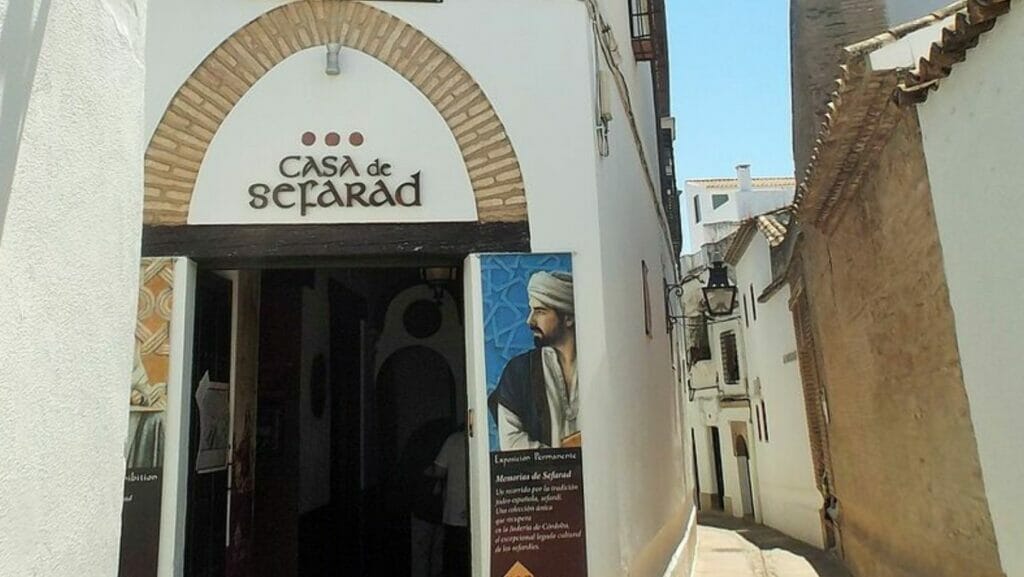
In a 14th-century house, on the corner of Calle Judíos and Calleja de las Flores. It revives the memory of the culture Sephardic, that of the Jews of the Iberian Peninsula.
Themed rooms: domestic life, the festivals of the Jewish calendar, Sephardic music, the Jewish quarters and the role of women in Maimonides’ Córdoba.
And the building itself is part of the tour: It’s the best way to get a look inside a house in the neighbourhood, with its courtyard and the rooms surrounding it.
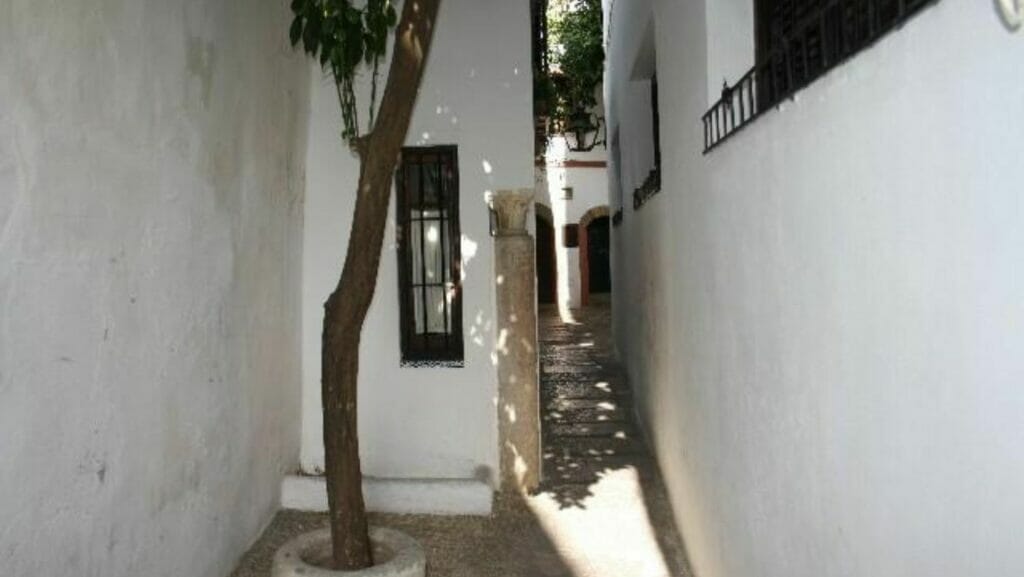
One of the narrowest streets in Córdoba, and the name comes from the measurement: the little square where it ends is about the size of a handkerchief held out flat.
There is a romantic tale doing the rounds — that lovers used to say goodbye here by exchanging a handkerchief — but is a later invention. The name is a measure, not a legend.
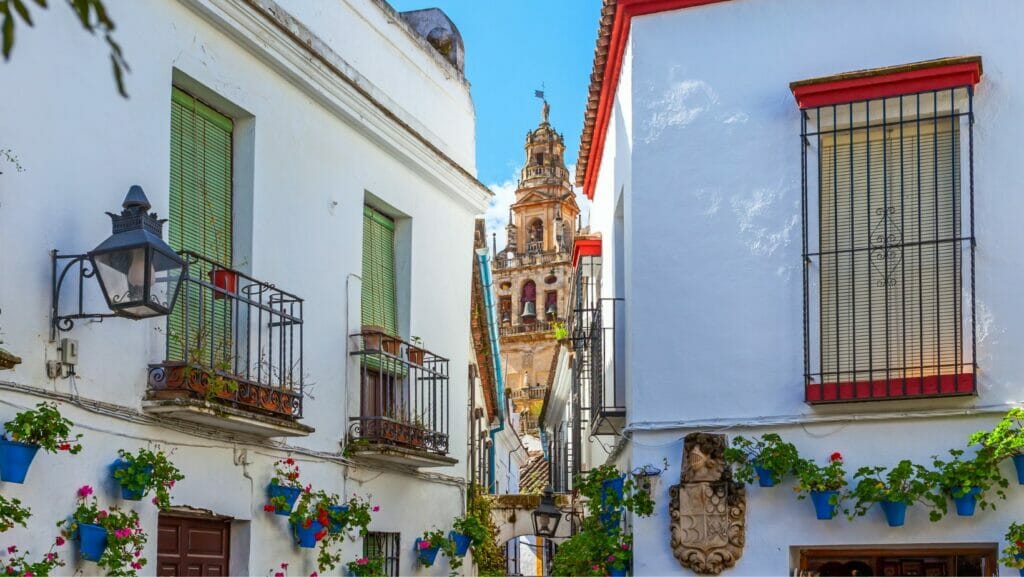
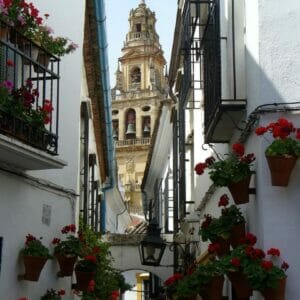
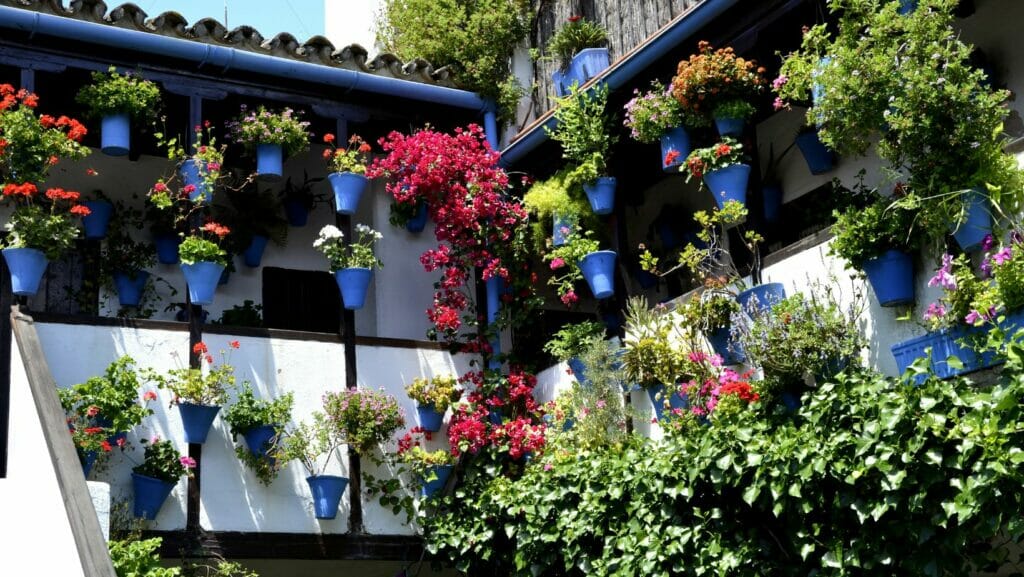
The most photographed spot in the neighbourhood. A short alleyway with plant pots on the walls, leading onto a small square from which the minaret of the Mosque is visible in the background.
Go first thing. By mid-morning, there’s a queue to have your photo taken – quite literally.
And the rest: the Judíos Streetthe Deanes Street and the adarves, dead-end alleys that were closed off at night and which shed light on how life in the neighbourhood was organised.
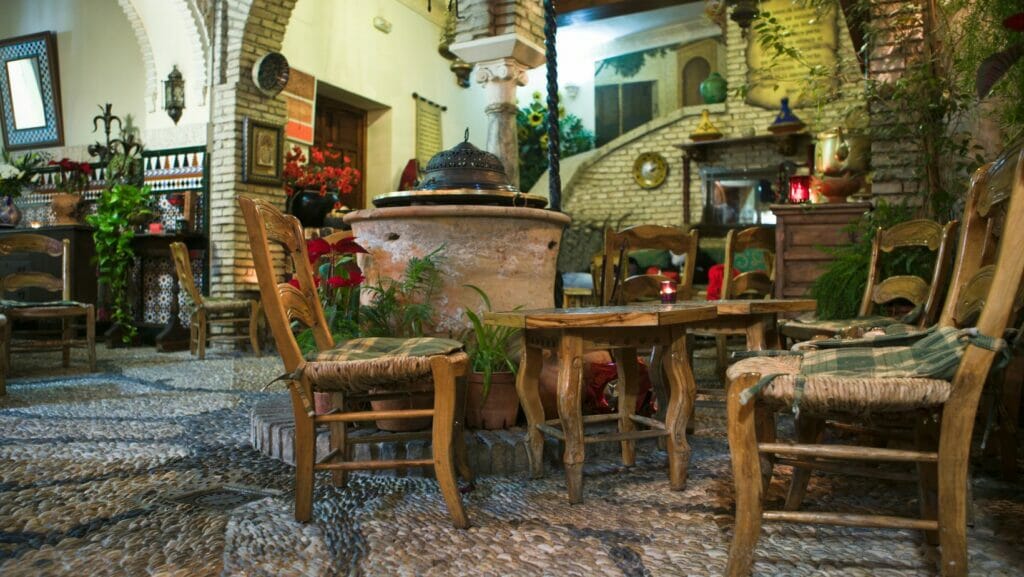
The Municipal Souk It is housed in a courtyard-style house on Calle Judíos, featuring workshops specialising in Cordoba crafts: silver filigree y embossed leather, a technique with Andalusian roots. The central courtyard is a nice place to sit in the shade.
And the courtyards are the heart of the neighbourhood. It is Intangible Cultural Heritage of Humanity, and many can be seen from the street through the gates.
They will open to the public in May during the Festival of the Patios. The rest of the year, you only need to peek into the entrance halls to see the contrast between the narrow street and the greenery inside. More at the courtyards of Córdoba.
Inside the Jewish Quarter, on the streets of the neighbourhood:
Right next to the Mosque, just a stone's throw away but just outside the neighbourhood:
A general word of warning: it’s a very touristy area. Staying two streets away from the circuit offers much better value for money. More options at Where to eat in Córdoba.
We are a local tour operator based in Málaga with over 50 years’ experience organising trips around Andalusia. Córdoba is best explored in a day:
The Jewish Quarter is the perfect place to spend your free time: It has no entrance; you walk through it, and it is right next to the Mosque.
For the rest of the day: What to see in Córdoba, the Mosque-Cathedral, what to watch for free y Córdoba in three days.
The medieval synagogue, the Casa de Sefarad, the Municipal Souk, Calleja de las Flores, Calleja del Pañuelo and the Almodóvar Gate with the statue of Maimonides. Everything can be explored on foot and free of charge, except for the Synagogue and the Casa de Sefarad, which charge an admission fee.
Because the little square where it ends is about the size of a handkerchief held out flat. There is also a romantic tale doing the rounds, according to which lovers would bid each other farewell there by exchanging a handkerchief, but this is a later invention: the name refers to a unit of measurement.
An hour and a half spent strolling through the main streets and highlights. If you visit the Synagogue and the Casa de Sefarad and stop for lunch, it’s best to set aside half a day. As it’s a compact neighbourhood, it can easily be combined with a visit to the Mosque-Cathedral and the Roman Bridge on the same day.
No, and they are often confused. The Puerta de Almodóvar is one of the surviving gates in the walls of Córdoba and marks the entrance to the Jewish quarter within the city. The castle at Almodóvar del Río is a fortress situated 24 kilometres from the city.
Precisely because its use changed. Following the expulsion of 1492, it served as a chapel, a hospital and a school, and so it remained standing whilst other synagogues were demolished. It is one of only three medieval synagogues remaining in Spain and the only one in Andalusia.
In May, during the Festival of the Patios, when local residents open their patios to the public. For the rest of the year, many can be glimpsed from the street through the gates, and the patio at the Zoco Municipal is open every day. The tradition of the patios of Córdoba is recognised as Intangible Cultural Heritage of Humanity.