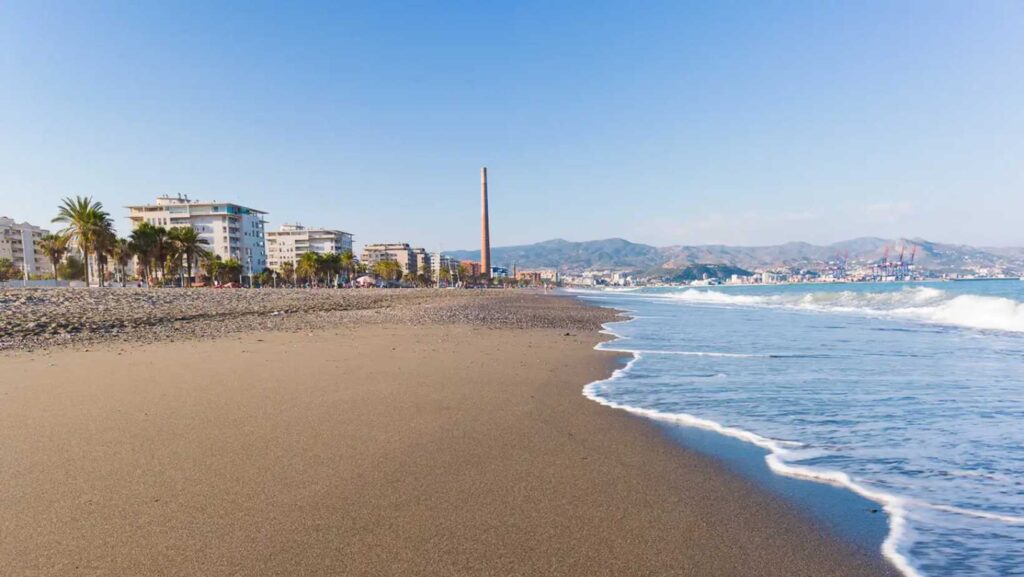
The Misericordia Beach It is the most ‘Málaga-like’ of Málaga’s city beaches: about 2 kilometres a stretch of dark sand on the west coast, between Huelin and Sacaba, with bonfires burning and local residents.
It has a blue flag and it’s just a short walk from the city centre. Here are the practical details, and whilst we’re at it We’ve corrected a misconception about his name.
It is often said that the name comes from an old factory. That’s not the case.
It comes from the House of Mercy, a provincial care home and hospice which was located here and gave its name to the whole area. The institution was one of the oldest in Spain — it was founded in 1862, in the former convent of Santo Domingo — and the building in this area It was designed in 1903 by the provincial architect José Novillo Fertrell.
It operated until 1978 providing shelter for homeless children and elderly people.
And the building is still standing, very close by: it’s today La Térmica, the Provincial Council’s cultural centre, one of the city’s most vibrant venues for contemporary art. It’s worth bearing in mind when you walk past.
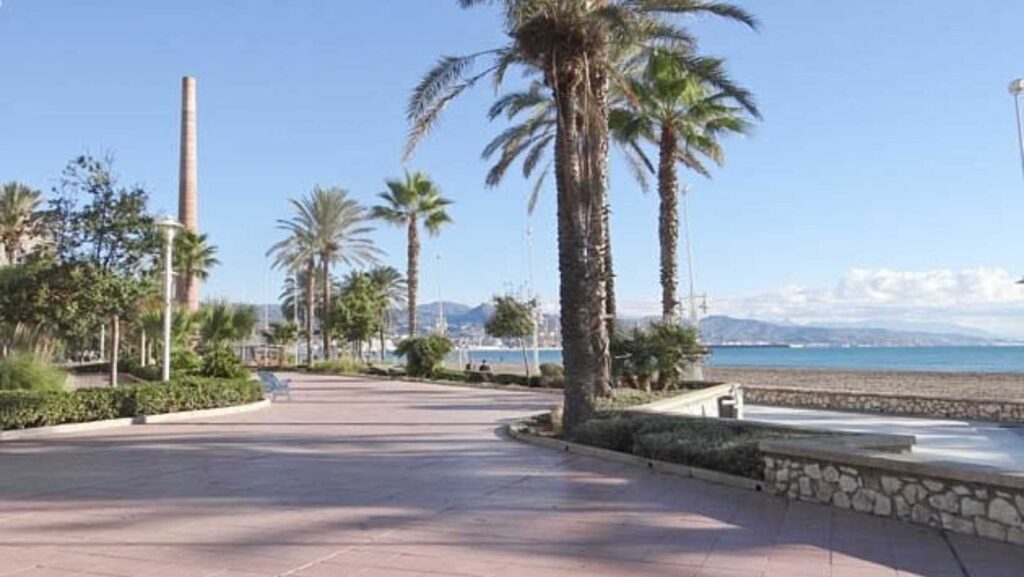
This used to be the industrial area. Along the promenade several chimneys are still standing, a remnant of Málaga’s industrial past from the 19th century.
The best known is The Guindos Chimney, also known as Monica Tower, from the old lead foundry. It has a history behind it, which we recount in Sacaba Beach.
This happens here and takes those who aren’t aware of it by surprise. In the middle of the afternoon, the shore is suddenly flooded by waves that sweep away towels and bags.
It’s not the sea: is the the wake of the ferry arriving from Melilla when braking on the mountain pass. The people of Málaga call it «the locust swarm» and they’ve come to terms with it so much that they leave earlier.
If you go near the water in the afternoon, don’t leave anything on the shore. Find out more about this phenomenon at the seafront promenade in Málaga.
And this is what sets it apart from its neighbours, which have far fewer:
This is the plan that almost nobody knows about: the City Council is organising summer cinema on the beach in June, July and August. Check the council’s programme, as it changes every season.
It’s a classic in the area: sardines threaded onto a bamboo skewer and grilled over a wood fire on the boat itself, stuck in the sand.
When to order them: The Malaga rule states that in the months without an ‘r’ —May, June, July and August—which is when sardines are at their fattest and tastiest.
What more could you ask for, at traditional dishes from Málaga.
When to go: early in the morning or at dusk. And take sun protection seriously: dark sand absorbs a lot of heat and reflects light differently to light-coloured sand.
An interesting fact: this was filmed here the final scene of Gypsy King, in a wooden beach bar painted blue, and it also appears in Genius: Picasso, the National Geographic series starring Antonio Banderas, after which the promenade is named.
It continues westwards He was taking as far as the mouth of the Guadalhorce. At the opposite end of the city, Pedregalejo y the Peñón del Cuervo, the one with the barbecues.
And if you’re after sunsets, the La Térmica Breakwater It’s at the end of the promenade. More places in the best sunsets in Málaga.
It’s a free plan: The beach, a stroll and the summer cinema are all free. More ideas at free things to do in Málaga, and to leave the capital, the towns in Málaga with beaches.
We are a local tour operator based in Málaga with over 50 years’ experience organising trips around Andalusia. Departures are from Avenida de Andalucía 10, next to El Corte Inglés, which is easily reached from the seafront promenade:
You’ve got the city in What to see in Málaga in three days and destiny in The Malaga Guide.
Named after the Casa de la Misericordia, a provincial almshouse and hospice which gave its name to the whole area. The institution was founded in 1862, and the building in this neighbourhood was designed in 1903 by the provincial architect José Novillo Fertrell. It remained in operation until 1978, providing shelter for homeless children and the elderly. Contrary to what is sometimes claimed, it was not originally a factory: today the building houses La Térmica, the Provincial Council’s cultural centre.
Yes, and several other awards. It has been awarded the Blue Flag, the Ecoplayas Flag, the Paediatric Green Flag since 2018 — an award endorsed by paediatricians which designates it as suitable for children — and the UNE 170.001 accessibility certification since 2008, which is renewed every year.
A phenomenon that occurs on this beach: in the middle of the afternoon, the shore is suddenly flooded by waves that take those unfamiliar with them by surprise. These are not caused by the sea, but by the wake of the ferry from Melilla as it slows down on approaching the harbour. It is advisable not to leave towels or bags near the water at that time of day.
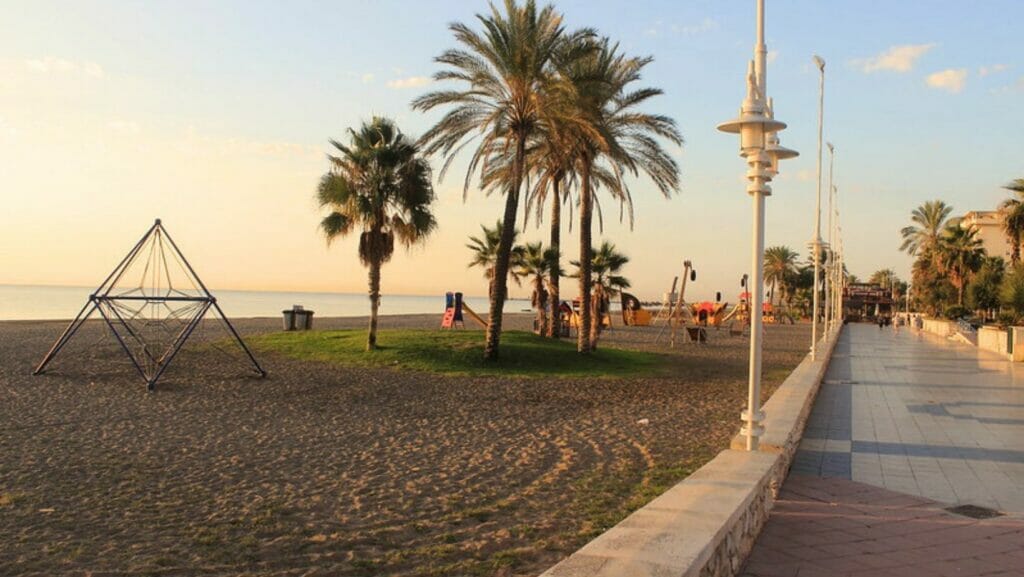
It is one of the best-equipped in the city: showers and foot wash basins, daily cleaning, security and lifeguard service, a water sports area, floating platforms, sports facilities including beach volleyball and beach football, children’s play areas, green spaces, car parks, sun lounger and parasol hire, beach bars and accessible facilities with a bathing area for people with reduced mobility.
Yes. The City Council organises summer film screenings on the beach during June, July and August, as part of the municipal services provided at the beach. It is free of charge and it is advisable to check the programme for each season, as it changes from year to year.
According to a Malaga saying, it’s in the months without an ‘r’ – that is, May, June, July and August – that sardines are at their fattest and tastiest. They are grilled on bamboo skewers over a wood fire, right on the boat itself, which is beached in the sand, and the beach bars along the promenade prepare them in full view of the customers.