Málaga brings together over two thousand years of history in a walkable old town: a Roman theatre, an Andalusi fortress, a Renaissance cathedral and Picasso’s birthplace, all within ten minutes of each other.
These are the eight must-see sights, with practical details and a sensible order for visiting them.
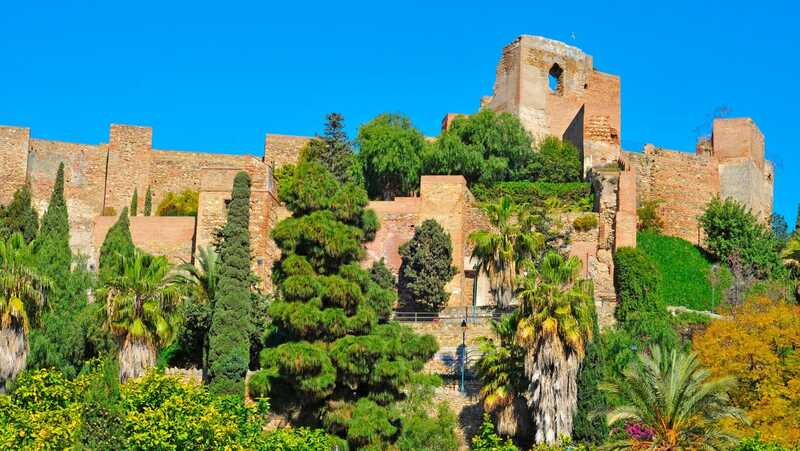
This is Málaga’s landmark monument. A palace-fortress built between the 11th and 14th centuries on Gibralfaro’s slopes, and one of the country’s best preserved.
It combines military features—walls, towers and bent entrances to slow attackers—with palace courtyards, fountains and horseshoe arches. It also reuses material from the Roman theatre directly below, clearly visible in the columns and capitals.
An important correction to outdated information: the Alcazaba no longer houses the Archaeological Museum. That location closed in 1997, and since 2016 the collections have been in Málaga Museum, in the Palacio de la Aduana right next door.
Paid admission, with a combined ticket for Gibralfaro. More details at Málaga’s Alcazaba.
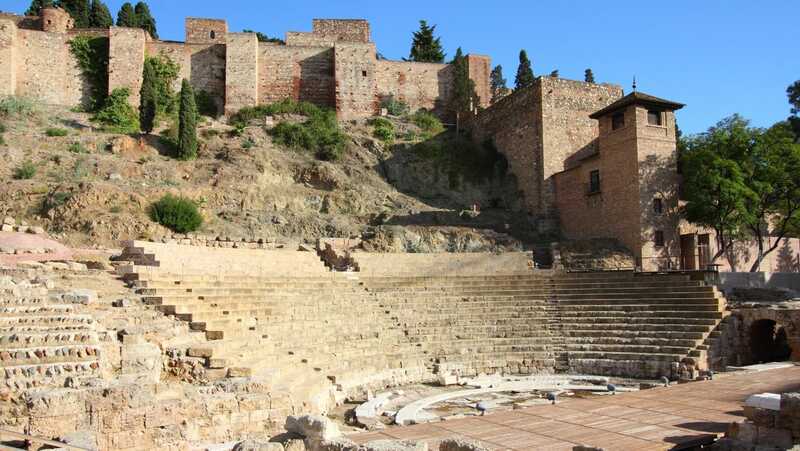
The city’s oldest monument. It was built in the 1st century BC, under Augustus, when the city was Malaca.
It remained lost for centuries. It lay buried under later buildings until it was discovered by chance in 1951, during work at the former Casa de la Cultura.
It retains the cavea with its seating, the orchestra and part of the stage, and hosts performances again in summer. There is an interpretation centre, and admission is free.
One detail: it stands at the foot of the Alcazaba on Calle Alcazabilla. It does not have panoramic views; those are from above.
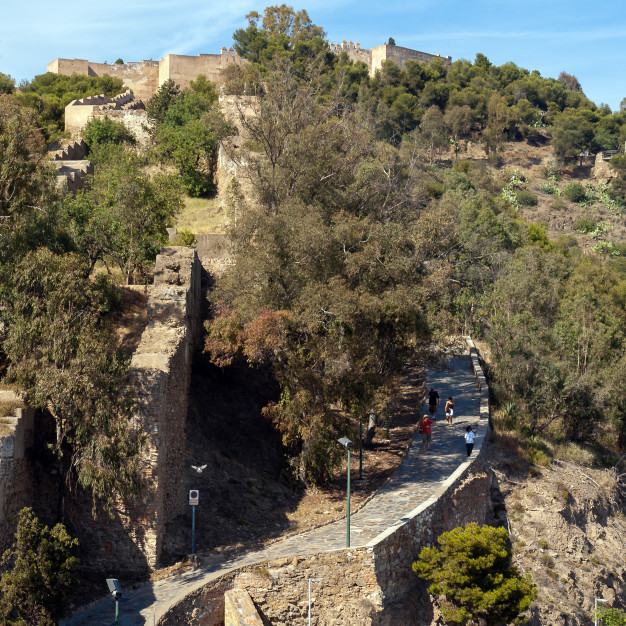
It crowns the hill above the Alcazaba. It was built by the Nasrids in the 14th century to strengthen the defences, and the two fortresses were connected by La Coracha, the walled passage still visible on the climb.
What to do here is the wall walk along the ramparts: it goes all the way around, with panoramic views of the harbour and bullring.
Paid admission, but the external viewpoint is free. Find the three walking routes up in the best viewpoints in Málaga and more details in the Gibralfaro viewpoint.
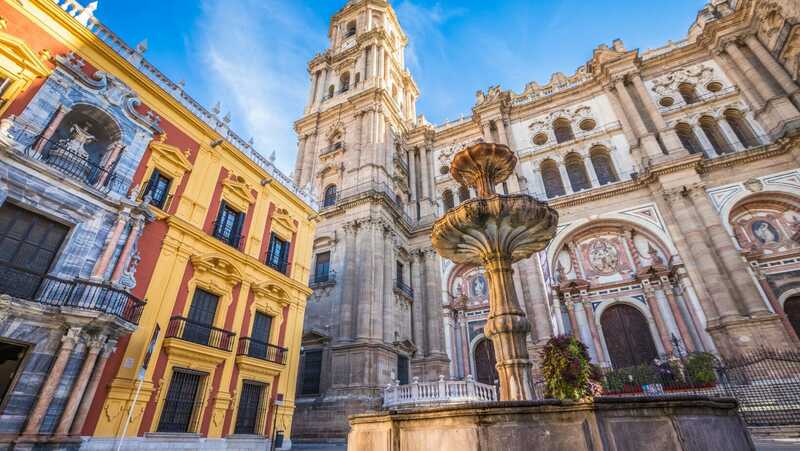
Construction began in 1528 on the former main mosque and continued until the 18th century, hence its mixture of Renaissance and Baroque styles.
The nickname comes from the missing tower: the south tower remained unfinished, hence «La Manquita».
Inside, do not miss the choir stalls, with carvings by Pedro de Mena. Admission includes the rooftops, visited at set times and best booked in advance: you walk above the church with the old town at your feet.
In Malaga Cathedral.
In the Plaza de la Merced, the building where Picasso was born in 1881. Today it houses the Picasso Foundation and preserves personal belongings, documents and graphic works, recreating the family atmosphere of the period.
One clarification: this is not the Picasso Museum Malaga, a different museum housed in the Buenavista Palace. The Birthplace is smaller and biographical.
Paid, with free entry slots that you should check beforehand.
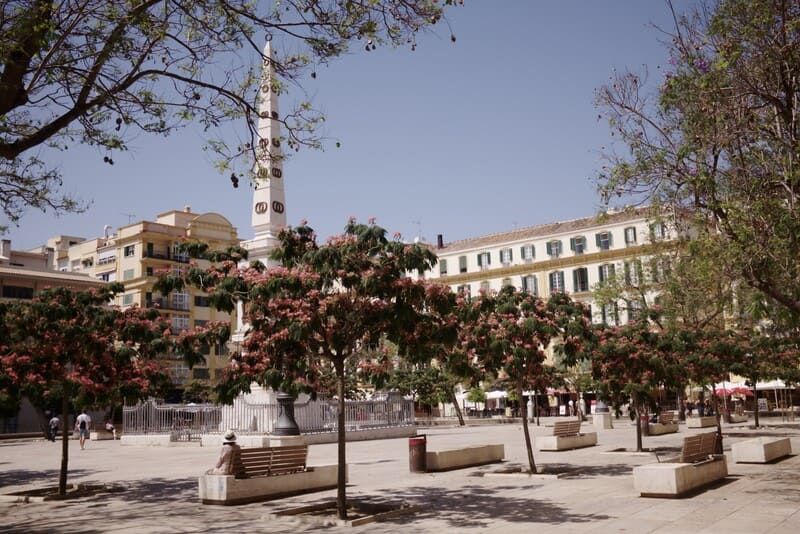
A meeting place in the centre, surrounded by café terraces, with Picasso’s Birthplace on one side.
The central obelisk is not merely decorative: it is dedicated to General Torrijos, and his remains lie beneath it alongside those of his companions, executed on San Andrés beach in 1831 after a failed landing against Ferdinand VII’s absolutist regime.
Free access. It is the natural starting point for the Roman Theatre and Alcazaba.
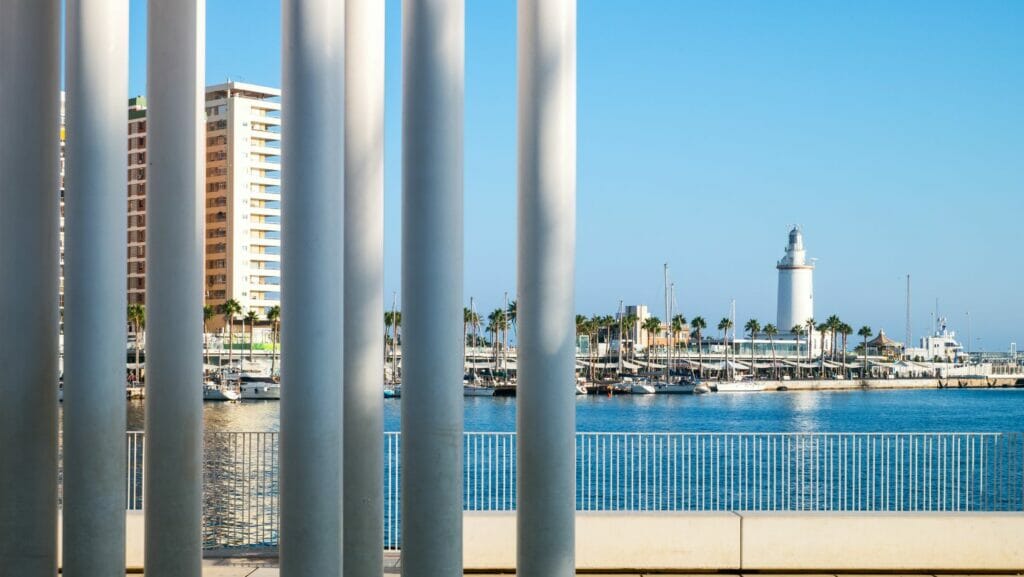
The harbour lighthouse, dating from 1817, built during the reign of Ferdinand VII. It rises around 38 metres above sea level.
What makes it unusual: it is one of Spain’s very few lighthouses with a feminine name, which is why locals say “la Farola” rather than “el faro”.
You cannot visit the interior, but it presides over the promenade bearing its name, between the harbour and La Malagueta. Find the walk in the Paseo de la Farola.
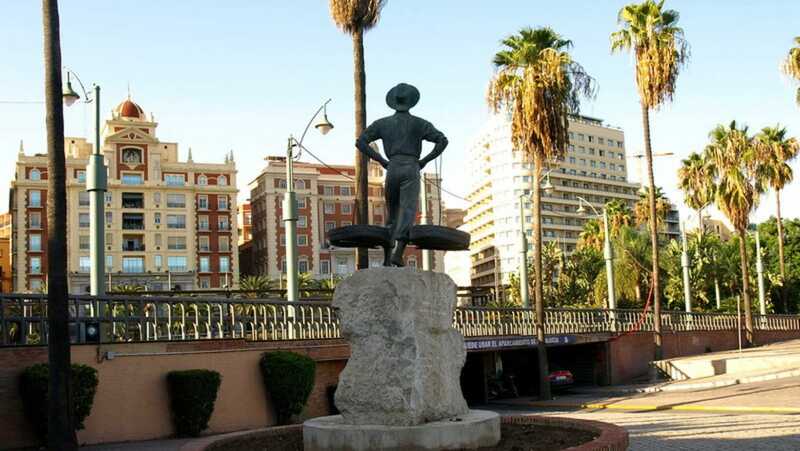
The city’s most beloved sculpture, by Jaime Fernández Pimentel inaugurated in 1968.
What it represents: the cenachero, a street fish seller carrying two cenachos—esparto-grass baskets—filled with anchovies and sardines. This was an everyday occupation well into the 20th century.
It stands in Plaza de la Marina, beside the park, not on the seafront promenade as sometimes claimed. Free access.
The system that works, entirely on foot:
Four of the eight are free: the Roman Theatre, Plaza de la Merced, the Cenachero and La Farola. So is Gibralfaro’s external viewpoint. More free things to do in free things to do in Málaga and in free museums.
The list is deliberately short. Nearby you will also find:
We are a local Málaga operator with over 50 years of experience organising trips around Andalusia. If you want guided monument visits or to combine the city with the province:
Find the full itinerary in What to see in Málaga in three days and the destination in The Malaga Guide.
The Alcazaba, one of Spain’s best-preserved Andalusi fortresses. Built between the 11th and 14th centuries, it combines walls, towers and bent entrances with palace courtyards and gardens. It also reuses material from the Roman theatre directly below, visible in its columns and capitals, and is within walking distance of the Roman Theatre and Gibralfaro Castle.
No. That location closed in 1997, and since 2016 the archaeological collections have been in Málaga Museum, in the Palacio de la Aduana, right beside the Alcazaba entrance. At 18,402 square metres, it is Andalusia’s largest state museum, bringing together over 15,000 archaeological pieces and 2,000 works of fine art.
The Roman Theatre has free admission, and Plaza de la Merced, the Cenachero and La Farola can be viewed freely. Gibralfaro Castle’s external viewpoint is also free. The Alcazaba offers free entry on Sunday afternoons, while Picasso’s Birthplace has free time slots that you should check before going.
Because it is missing a tower. Construction began in 1528 on the former main mosque and continued until the 18th century, but the south tower was never completed, leaving just one finished tower. This asymmetrical outline earned it the affectionate nickname used by everyone in Málaga.
He was a street fish seller who walked Málaga’s streets carrying two cenachos, esparto-grass baskets suspended from his shoulders and filled with anchovies and sardines. It was an everyday occupation well into the 20th century. The sculpture honouring him is by Jaime Fernández Pimentel, inaugurated in 1968 in Plaza de la Marina, beside the park.
Start at Plaza de la Merced and Picasso’s Birthplace, then walk down to the neighbouring Roman Theatre and Alcazaba, before climbing to Gibralfaro via the Coracha. Then descend to the Cathedral and old town, finish at Plaza de la Marina with the Cenachero, and continue to La Farola. The whole route is on foot.