In Morocco, 25 December is a working day. There are no lights, no nativity scenes, and no shop closures.
And that’s a real advantage when it comes to travelling: Everything’s open, there are fewer people about and the weather’s on our side. Here’s what you’ll find and what you won’t.
🎄 What to really expect
Morocco is a predominantly Muslim country and Christmas is not part of its calendar. On 25 December, shops are open, schools are in session and life goes on as normal.
One detail that sums it up: There are people who don’t realise that those days are Christmas in other cultures. It’s not indifference; it’s simply not part of the calendar here.
And there is a big difference between town and country:
- In Marrakech, Casablanca, Rabat or Tangier There is, however, one thing: hotels, riads and restaurants on the international circuit organise and host dinners on Christmas Eve and New Year’s Eve. It is designed for foreign visitors, it is not a local tradition.
- In rural areas, practically nothing. Christmas doesn’t exist there in any form.
⛪ Where there is a Midnight Mass
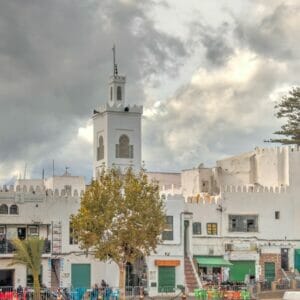
In Tangier and Tetouan, due to the Spanish and French presence in the north until the middle of the last century, There are still active Catholic churches where Midnight Mass is celebrated.
In Casablanca, where there is a larger Christian community, there are also celebrations.
If you’re looking to experience a bit of tradition, the north is the place to go.
🎉 The New Year’s Eve celebration that actually takes place: Yennayer
This is what almost no guidebook tells you.
Yennayer is the Amazigh New Year —Berber—, and It takes place on 12 and 13 January. It marks the start of the agricultural calendar, and for the past few years It is a nationally recognised public holiday.
What life is like: family meals, music and traditional dances. The dish of the day is seven-vegetable couscous.
Where: especially in the Atlas Mountains and the Souss region, in Amazigh communities, although it is also found in towns and cities.
And here’s a useful tip for planning: Preparations are getting underway in the days leading up to it, towards the end of December. If you’re going at that time of year and you head towards the Atlas Mountains, you’ll come across them.
To put it another way: if you were looking for a proper New Year’s Eve party, it’s not on 31 December. It’s on 12 January.
🐪 What to do on those days

The fact that it isn’t a public holiday is precisely the advantage. Everything is still on, with no break for European fixtures:
- The medinas and souks of Marrakech and Fez, with shops operating as normal.
- The desert, with an overnight stay at the campsite. The nights are cold: You need to be prepared.
- The monuments and palaces without the summer queues. December is the off-season in almost the whole country.
- New Year’s Eve in a riad, if you fancy a special dinner. Jemaa el-Fna is packed that night.
🎬 And something that coincides with those dates
The Marrakech International Film Festival takes place in early December and has been running since 2000. It features premieres and top-class guests, and draws huge crowds to the city.
If your break falls during the December bank holiday weekend, it’s worth checking whether it coincides with it.
🏂 The surprising fact: people go skiing
Oukaimeden is just over an hour’s drive from Marrakech, in the High Atlas, and it is no ordinary resort: It is the highest ski resort in Africa.
The season kicks off in December.
And it offers a package that’s hard to beat: Medina in the morning, snow in the afternoon. All in the same day and just a short distance away.
🌡️ The weather, and how to pack your suitcase
| Where | Day | Night |
|---|---|---|
| Marrakech | 13–20 °C | around 5 °C |
| Desert | Pleasant | Cold |
| High Atlas | Cold | Snow |
The rule is layers. The difference between midday and night is stark, and in the desert it is even more so. With a difference of fifteen degrees, one jacket isn’t enough to see you through the whole day.
📍 Where to go, depending on what you’re looking for

Marrakech, if you’re after a lively atmosphere
That’s where the date is most noticeable, because it has the widest choice of riads and restaurants organising dinners on Christmas Eve and New Year’s Eve. Days with temperatures of 15 to 18 °C, which, compared with northern Europe, is a welcome change.
And it serves as a base for day trips, including the snow at Oukaimeden.
Chefchaouen, if you’re looking for peace and quiet
The Blue City in the off-season is a different story: Far fewer people than in summer and a leisurely pace for wandering through the medina.
It’s ideal for a trip up north, alongside Tetouan and Tangier.
Fez, if you’re after heritage
Its medina is one of the largest in the world and it is a World Heritage Site. Mosques, madrasas and craft workshops open all year round, also in December.
This is the option for you if you’re interested in history above and beyond the festive atmosphere.
Tangier or Tetouan – or both, if you like
These are the ones that hold Midnight Mass and, at the same time, they are just a stone’s throw from Spain. It is the most accessible part of the north from Andalusia.
🍬 And for a sweet treat
There are no Moroccan Christmas sweets, because there’s no Christmas. But The country’s pastries are available in the souks all year round: gazelle horns, chebakia, briouats.
More at traditional Moroccan sweets.
How to get there
We are a local tour operator based in Málaga with over 50 years’ experience organising trips around Andalusia. From the south of Spain, you can reach Morocco in a day:
-
Excursion to Tangier from Tarifa€115,00 -
Excursion to Morocco from Algeciras€125,00Rated 5.00 out of 5 based on 1 customer rating -
Excursion to Morocco from Malaga and from Costa del Sol€160,00Rated 4.72 out of 5 based on 111 customer ratings
⚠️ A valid passport is essential. You cross the border and your national identity card isn’t valid. This is the procedure that causes the most problems.
And in December there’s an added bonus: With fewer crowds, the medinas are easier to explore and haggling in the souks is more relaxed.
Before you go: entry requirements, Morocco over the December bank holiday weekend y all the sights to see in the country.
Frequently asked questions
Is Christmas celebrated in Morocco?
It is not celebrated as a holiday in its own right. 25 December is a working day: shops are open, schools are in session and there are no decorations in the streets. In large cities, hotels and restaurants catering to international visitors organise Christmas Eve and New Year’s Eve dinners, but these are intended for foreign visitors. In rural areas, there are no celebrations of any kind.
Which New Year’s Eve celebration is actually observed in Morocco?
Yennayer, the Amazigh or Berber New Year, which falls on 12 and 13 January and marks the start of the agricultural calendar. It is celebrated with family meals, music and dancing, and the dish of the day is seven-vegetable couscous. It is most widely observed in the Atlas Mountains and the Souss region, and preparations begin as early as the end of December.
Where can you attend Midnight Mass in Morocco?
In Tangier and Tetouan, there are still active Catholic churches where services are held, a legacy of the Spanish and French presence in the north of the country. In Casablanca, which has a larger Christian community, religious and private services are also held.
Can you go skiing in Morocco in December?
Yes. The Oukaimeden resort, in the High Atlas Mountains and just over an hour from Marrakech, is Africa’s highest ski resort, and its season kicks off in December. It allows you to combine a morning in the medina with an afternoon on the slopes on the very same day.
What’s the weather like in Morocco in December?
In Marrakech, temperatures range from 13 to 20 degrees during the day and around 5 degrees at night. The desert has pleasant days and cold nights, whilst the High Atlas is covered in snow. It’s a good idea to pack layers, as the temperature difference between midday and night is considerable.
Is it worth travelling to Morocco at Christmas?
Yes, precisely because it isn’t a public holiday there. The monuments, souks and museums remain open, without the lull experienced by many European destinations at that time of year, and December is the off-season in much of the country, so there are far fewer visitors. What you shouldn’t expect, however, is a festive atmosphere in the streets.